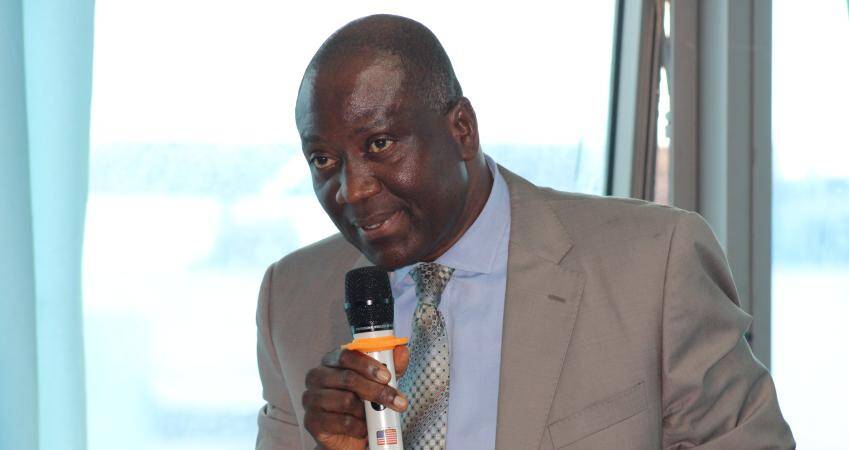
ACCRA, Ghana, October 1, 2026 — Liberia’s Inclusive Instant Payment System has processed more than 5.3 million interoperable transactions since its launch in December 2025, Central Bank of Liberia Executive Governor Henry F. Saamoi has disclosed.
Saamoi said the transactions include about 4.2 million Liberian-dollar transfers valued at more than L$4.1 billion and 1.1 million United States dollar transactions valued at US$22.2 million.
He disclosed the figures while delivering a keynote address at MojaCom 32 in Accra, Ghana, where central bank governors, regulators, financial institutions, development partners and technology providers gathered to discuss digital payments, interoperability and financial inclusion.
Speaking on the theme, “Accelerating Financial Inclusion Through Instant and Interoperable Payments: Liberia’s Journey and Lessons for Africa,” Saamoi highlighted Liberia’s transition from a fragmented payments landscape toward real-time, interoperable digital financial services.
He said while access to financial services has expanded significantly across Africa, greater connectivity among financial institutions and payment platforms is becoming increasingly important to achieving broader financial inclusion.
“Financial inclusion is no longer primarily constrained by access and affordability. It is increasingly constrained by connectivity,” Saamoi said.
He identified the introduction of the Pan-African Payment and Settlement System (PAPSS) and deployment of the Inclusive Instant Payment System (IIPS) as two major developments under Liberia’s payment-system modernization agenda.
The IIPS enables real-time interoperability between Liberia’s leading mobile money providers, Lonestar MTN Mobile Money and Orange Money Liberia, allowing users to transfer funds across the two networks.
Saamoi said Liberia’s broader digital payments ecosystem has also recorded significant transaction volumes.
According to him, mobile money transactions in 2025 reached approximately L$585.88 billion and US$6.92 billion, while the country’s systemically important payment systems processed about 230,367 transactions valued at US$8.5 billion.
The CBL Executive Governor said the figures indicate growing use of digital financial services and demonstrate the role interoperable payment infrastructure can play in advancing financial inclusion, economic efficiency and private-sector growth.
Drawing lessons from Liberia’s experience, Saamoi said successful payment-system transformation requires strong leadership, collaboration among stakeholders and recognition of interoperable payment systems as critical national infrastructure.
He also called for greater cooperation among African central banks to strengthen regional payment connectivity and support implementation of the African Continental Free Trade Area (AfCFTA).
According to Saamoi, Africa’s economic integration will depend not only on the movement of goods and services across borders, but also on the ability to move money quickly, securely and affordably across the continent.
“Africa does not need to wait for the future of payments. Africa can build it,” Saamoi said. “The future of African financial inclusion will not be determined by the number of institutions we create. It will be determined by how effectively those institutions connect.”
He reaffirmed Liberia’s commitment to building a modern, inclusive and interconnected financial system while contributing to Africa’s broader digital transformation agenda.
MojaCom 32 brought together central banks, regulators, financial institutions, development partners and technology providers to discuss emerging trends and innovations in digital payments, interoperability and financial inclusion.
See more Liberia News Network stories in Google Search by adding LNN as one of your Preferred Sources.
★ Add LNN as a Preferred Source