By Kruah Thompson
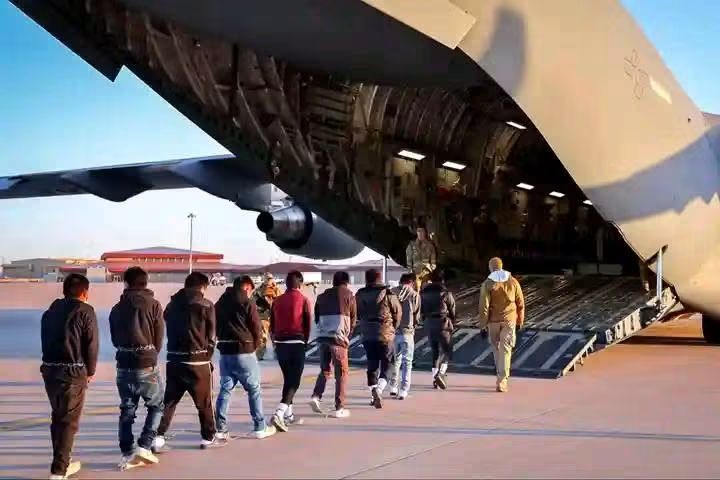
MONROVIA, August 19, 2026: The Government of Liberia says it has agreed with the United States to receive up to 1,200 third-country nationals transferred from the U.S., with the first group of 20 expected to arrive Thursday, August 20.
Information Minister Jerolinmek Matthew Piah disclosed the arrangement Tuesday during the Ministry of Information’s regular press briefing, saying it is based on an exchange of diplomatic notes between the Liberian and U.S. governments on September 4 and September 10, 2025.
According to Piah, the arrangement covers citizens or nationals of African and Western Hemisphere countries who are medically cleared to travel. Some of those transferred could subsequently seek asylum in Liberia.
The disclosure comes amid the Trump administration’s expanded use of third-country removals for migrants who cannot be returned to their countries of origin.
In 2025, the U.S. Department of Homeland Security announced efforts to deport certain migrants to third countries, including people whose home countries would not accept them. The policy has generated legal and human-rights debate in the United States and internationally.
Piah, however, rejected suggestions that the people being transferred to Liberia are being sent as convicted criminals.
He said they are not being prosecuted under U.S. or Liberian law and will be received as “guests of the Republic of Liberia.”
His characterization contrasts with international reporting on some of the Trump administration’s third-country deportation operations, which have included migrants with criminal convictions.
The Liberian government did not immediately provide individual details on the 20 people expected Thursday or indicate whether any had previous criminal convictions in the United States.
Piah said the government has made preparations for their reception at Roberts International Airport and their stay in Liberia.
According to him, those transferred will be free to leave Liberia whenever they choose, while individuals wishing to remain in the country will be allowed to apply for asylum under Liberian law.
“Any person being brought to Liberia who desires to make Liberia their home will be accorded the opportunity to apply for asylum in keeping with Liberian laws,” Piah said.
“The Government of Liberia intends to provide the transferred persons with the necessary support to seek protection in Liberia and to be safe during their stay here.”
Piah also denied that Liberia agreed to receive the third-country nationals in exchange for financial or political concessions from Washington.
According to him, Liberia neither demanded nor received compensation or a promise of reward in return for participating in the arrangement.
He said, however, that the country will receive support to manage the program and strengthen its broader migration system.
“Liberia’s gesture is entirely humanitarian and in keeping with the country’s longstanding traditions,” Piah said.
The Information Minister argued that Liberia has historically provided refuge to people fleeing political persecution, conflict and instability and said the latest agreement should be viewed within that tradition.
He called on Liberians to treat those arriving under the program with dignity and hospitality.
“The Government of Liberia calls on our citizens and residents to treat those being transferred to Liberia with due courtesy and to accord them our true African hospitality,” he said.
Third-country deportations have attracted legal scrutiny over whether migrants can be transferred to countries other than their own and what protections must be provided before such removals occur.
A central issue is the international legal principle of non-refoulement, which generally prohibits returning or transferring people to places where they face specified serious threats, including persecution or torture.
Legal experts have argued that governments must consider whether the third country itself is safe for the person being transferred and whether affected individuals have an adequate opportunity to raise protection claims.
The planned arrival of the first 20 people on Thursday is expected to draw further scrutiny over the terms of the U.S.-Liberia arrangement, the legal status of those transferred and the government’s plans for accommodating them.
See more Liberia News Network stories in Google Search by adding LNN as one of your Preferred Sources.
★ Add LNN as a Preferred Source