
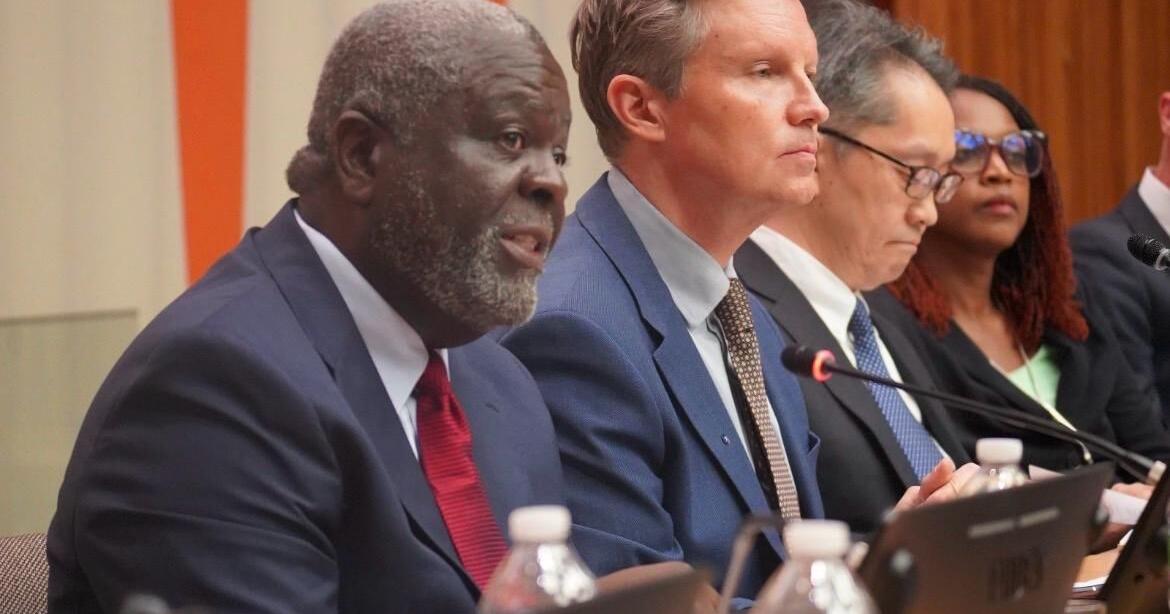
Liberia has urged the United Nations to plan for the departure of peacekeepers from the start of every peace operation, while giving local communities a stronger voice in shaping the work needed to sustain peace after a mission leaves.
Speaking at the Challenges Annual Conference 2026 at UN Headquarters in New York on Thursday, October 8, Liberia’s Permanent Representative to the United Nations, Ambassador Lewis G. Brown II, called for peacekeeping, peacebuilding, development and governance support to be treated as connected parts of a broader process.
The proposal addresses a practical question with particular relevance for Liberia: what must a country be ready to manage when peacekeepers leave?
Liberia hosted the United Nations Mission in Liberia, UNMIL, for nearly 15 years following its civil war. The mission supported the peace process, civilian protection and security-sector reform before completing its mandate on March 30, 2018.
That experience provides a local context for Brown’s recommendations. Preparing for a mission’s departure involves the institutions and relationships that must carry the peace forward, including the ability of citizens to raise concerns and hold those responsible accountable.
Brown advocated beginning transition planning at the outset of an operation. Under that approach, decisions about a mission’s work would also consider how its gains could be sustained as its presence is reduced and responsibilities pass to national institutions.
Alongside that preparation, Liberia called for continuing dialogue between peace operations, host governments, communities and civil society throughout a mission’s deployment.
Brown argued that host-country consent—the agreement allowing a peace operation to function—should be understood as a continuing relationship requiring attention and cooperation.
“If we are truly committed to turning the tide and building momentum for peace operations in a demanding world, then we must move beyond viewing consent as permission and begin treating it as a sustained partnership grounded in reciprocal accountability,” Ambassador Brown indicated.
That position gives communities a place in a discussion often centered on governments and international institutions. People living in areas served by a mission would have channels to communicate their concerns, assess its work and help identify what is needed to preserve peace.
Liberia urged greater investment in legislative oversight, independent institutions, civil society engagement and community feedback systems.
In practical terms, those proposals would strengthen opportunities for lawmakers to scrutinize decisions, independent bodies to examine performance and citizens to report problems. They would also help peace operations hear from the people most directly affected by their activities.
Brown emphasized that accountability must extend across the partnership. Host governments, peace operations, regional organizations, international partners and local communities should each fulfill their responsibilities.
The proposal recognizes that a mission’s effectiveness depends partly on the cooperation and conduct of those working alongside it. Clear responsibilities and regular dialogue would help partners identify problems during the operation and address gaps before its departure.
Liberia also called for regional organizations and strategic partners to be empowered, drawing on their local knowledge, political influence and long-term engagement.
Their participation would support the wider process Brown described, in which security, governance, peacebuilding and development efforts remain connected through a mission’s deployment and transition.
For Liberians, the issue has a familiar significance. UNMIL’s departure marked the completion of its peacekeeping mandate, while the work of sustaining peace and strengthening institutions continued. At the time, the UN reaffirmed that its agencies, funds and programmes would remain engaged in supporting Liberia’s outstanding reforms.
Brown’s recommendations bring that longer view into the planning of future operations. From the beginning, missions would need to consider who will carry their work forward, how institutions will prepare and whether communities have a meaningful voice in the process.
Liberia’s appeal places preparation for departure and accountability to citizens at the center of sustainable peace operations: a mission should leave behind both stronger institutions and a public able to help hold them to their responsibilities.
See more Liberia News Network stories in Google Search by adding LNN as one of your Preferred Sources.
★ Add LNN as a Preferred Source