Published: August 26, 2026
MONROVIA — Government prosecutors say former Vice President Jewel Howard-Taylor did not have to handle cocaine to become part of an alleged trafficking operation. They accuse her of accepting US$135,000 from members of an international drug network and agreeing to use her office and influence to protect its activities in Liberia.
By Lennart Dodoo
That is the central allegation contained in a police charge sheet dated Aug. 19 and a writ of arrest issued by the Monrovia City Court on Aug. 25.
The government’s case covers a period from 2021 to August 2026 and centers on Howard-Taylor’s alleged meetings and financial dealings with people investigators describe as members of a transnational cocaine-trafficking organization.
Howard-Taylor, who served as vice president from 2018 to 2024, faces nine charges, including illicit trafficking, criminal conspiracy, criminal facilitation and money laundering.
She has denied the allegations. Her lawyers have called the case baseless and politically motivated and said they will defend her vigorously.
How the alleged network began
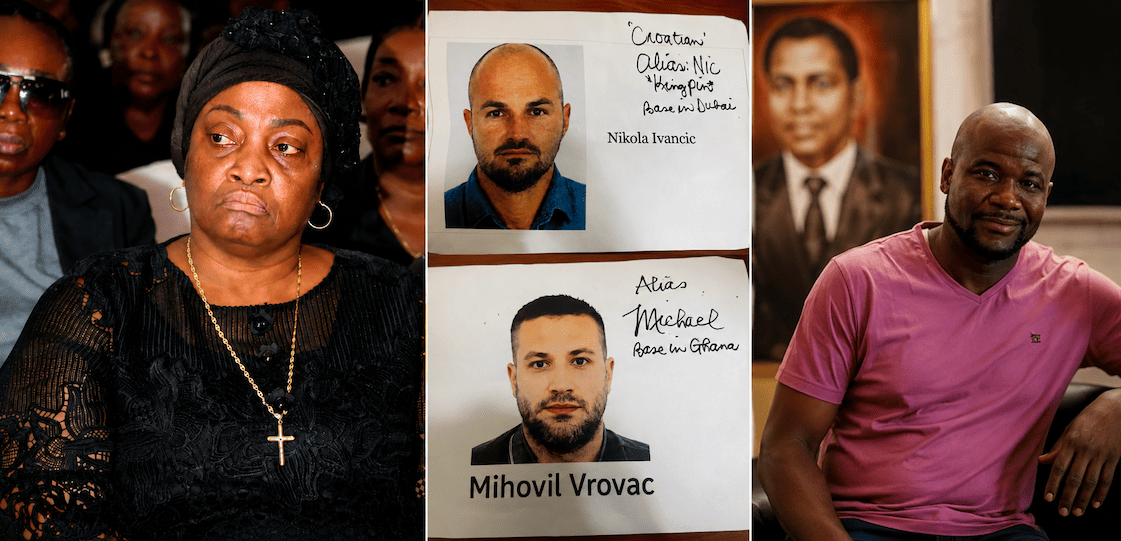
The government’s account begins in 2021, when Sheik Bashiru Kante allegedly brought Taras Zadereiko, also known as Tony, and Mihovil Vrovac, also known as Michael, to Liberia.
Investigators allege that Kante, Zadereiko and Vrovac conspired to import cocaine into Liberia and move it onward to Europe.
According to the charge sheet, members of the alleged network later decided to establish relationships with senior Liberian officials who could provide protection for their trafficking operation.
The government says that effort led them to Howard-Taylor.
How Howard-Taylor allegedly became involved
The charge sheet describes Kante as a close associate of Howard-Taylor and alleges that he introduced Zadereiko and Vrovac to her in early 2022, while she was serving as vice president.
The meeting allegedly took place at Howard-Taylor’s Sophie community residence in Congo Town.
During that meeting, the government says, Zadereiko and Vrovac invited Howard-Taylor to Dubai to meet Nikola Ivancic, a Croatian national whom investigators identify as the leader of the alleged trafficking organization.
According to the charge sheet, Howard-Taylor accepted the invitation and traveled to Dubai.
What the government says happened in Dubai
Investigators allege that Howard-Taylor stayed at what the charge sheet identifies as the H. Hotel, near the Trade Centre Roundabout on Sheikh Zayed Road.
The government says a meeting was held at the hotel to discuss using Liberia as a transit point for cocaine destined for Europe.
Prosecutors allege that Howard-Taylor agreed to support the operation.
The charge sheet further alleges that Ivancic gave Howard-Taylor US$45,000 for shopping during the Dubai trip. It says Kante, Zadereiko and Vrovac were present when the money was provided.
That is the first of three payments cited by the government.
The alleged US$75,000 foundation payment
After Howard-Taylor returned to Liberia, the government alleges that she maintained contact with members of the suspected trafficking network.
The charge sheet says she requested and received US$75,000 from the network’s leadership through Kante for an organization identified as the Jewel Star Fish Foundation.
Investigators include that transaction as part of their allegation that Howard-Taylor accepted money from the organization while supporting and protecting its operations in Liberia.
The payment also forms part of the government’s money-laundering case against her.
The alleged August 2026 payment
The government alleges that the relationship continued after Howard-Taylor left office in January 2024.
According to the charge sheet, she requested and received another US$15,000 through Kante in August 2026.
Investigators say Howard-Taylor later thanked Ivancic for the money during a conversation captured in an audio recording.
The three alleged payments cited by the government total US$135,000:
- US$45,000 allegedly received in Dubai for shopping;
- US$75,000 allegedly requested for the Jewel Star Fish Foundation; and
- US$15,000 allegedly received through Kante in August 2026.
What role does the government say she played?
The state’s case does not depend on an allegation that Howard-Taylor physically possessed or transported cocaine.
Instead, investigators allege that she knowingly joined the operation by meeting its members, agreeing to their plan, accepting money and using her position and influence to support and protect their activities in Liberia.
In the government’s account, Howard-Taylor’s value to the alleged network was the political access and protection she could provide as the country’s sitting vice president.
The charge sheet alleges that she knew cocaine was an illegal controlled substance but nevertheless maintained contact with members of the organization and consented to their use of Liberia as a trafficking route.
That alleged supporting role is why prosecutors have charged her with offenses normally associated with the people directly running or moving drugs.
Why is she facing trafficking charges?
Liberian criminal law allows prosecutors to charge people accused of helping to plan, facilitate or protect a criminal operation, even when they are not alleged to have physically carried out every part of the crime.
The government is relying on that principle in charging Howard-Taylor with criminal conspiracy, criminal facilitation, aiding the consummation of a crime and trafficking-related offenses.
Its theory is that Howard-Taylor allegedly contributed to the operation by giving its members access to the protection and influence of her office.
Prosecutors also accuse her of criminal solicitation and money laundering in connection with the alleged meetings and payments.
What are the charges?
The police charge sheet lists nine offenses:
- Unlicensed importation of controlled drugs or substances;
- Unlicensed exportation of controlled drugs or substances;
- Unlicensed sale, delivery, distribution, transit and transportation of controlled drugs or substances;
- Illicit trafficking;
- Criminal facilitation;
- Criminal solicitation;
- Criminal conspiracy;
- Money laundering; and
- Aiding the consummation of a crime.
The charges were brought under the Controlled Drugs and Substances Act of 2023, the New Penal Law and the Anti-Money Laundering and Countering the Financing of Terrorism Act of 2021.
The writ of arrest also refers to abuse of office.
Who else is named?
In addition to Howard-Taylor, the government has charged three foreign nationals in absentia:
- Nikola Ivancic, a Croatian national described as the alleged leader of the network;
- Mihovil Vrovac, a Croatian national also known as Michael; and
- Taras Zadereiko, a Ukrainian national also known as Tony.
The government has said it will pursue domestic and international measures to locate and apprehend them.
Kante is repeatedly named in the narrative as the alleged intermediary who introduced Howard-Taylor to members of the organization and transmitted two of the three payments.
What happens next?
Howard-Taylor has been remanded to the Monrovia Central Prison while the case proceeds.
Her lawyers have requested a preliminary examination, during which the government would be required to present sufficient evidence to justify continuing the prosecution.
The proceeding would not determine Howard-Taylor’s guilt or innocence. If the case advances, the government would still have to prove the charges at trial.
Howard-Taylor has rejected the allegations and is presumed innocent unless proven guilty beyond a reasonable doubt.
See more Liberia News Network stories in Google Search by adding LNN as one of your Preferred Sources.
★ Add LNN as a Preferred Source