MONROVIA — Liberia’s emergence from years of civil conflict to holding four consecutive competitive elections and achieving two peaceful transfers of presidential power has been highlighted as a major example of democratic resilience in Africa.
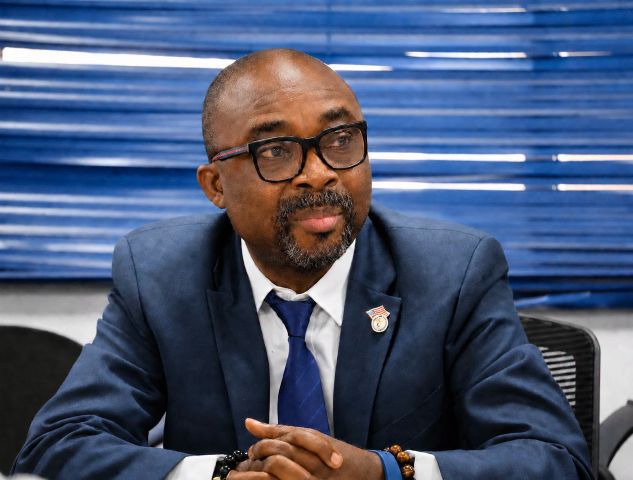
Speaking over the weekend at the second quarterly convening of the FixPolitics Africa Conference under the theme, “Credible Elections in Africa: Lessons from Cape Verde and Liberia,” Eddie D. Jarwolo, executive director of Naymote Partners for Democratic Development, said Liberia’s experience demonstrates how repeated elections can strengthen constitutional governance, peaceful political competition and public confidence.
Since the end of its civil conflict, Liberia has held four postwar general elections — in 2005, 2011, 2017 and 2023 — establishing the ballot box as the legitimate means of determining political leadership.
“Liberia’s greatest democratic success is not simply that elections have been held, but that repeated elections have increasingly established peaceful political competition and constitutional transfer of power as the accepted democratic norm,” Jarwolo said.
He pointed to key milestones, including the 2005 election of Ellen Johnson Sirleaf as Africa’s first elected female president, George Weah’s 2017 victory that produced Liberia’s first transfer between elected presidents in more than 70 years, and Joseph Boakai’s defeat of incumbent Weah in 2023.
Jarwolo described the 2023 presidential election as one of the strongest tests of Liberia’s democratic resilience. The election recorded 2,471,617 registered voters, with first-round turnout reaching 78.86%.
The presidential runoff was decided by just 20,567 valid votes, with Boakai receiving 814,481 votes, or 50.64%, against Weah’s 793,914 votes, or 49.36%.
Despite the narrow margin, Weah conceded after progressive results from 99.8% of polling places showed Boakai ahead, before the National Elections Commission announced the final results.
“The real strength of democracy is revealed when elections are close, political power is at stake, and leaders and institutions still respect the rules. Liberia passed an important democratic test in 2023,” Jarwolo said.
He credited Liberia’s progress to citizens, the National Elections Commission, political actors, civil society, the media and international partners, stressing that credible elections require shared national responsibility.
Jarwolo also highlighted political and civic education, including Naymote’s Young Political Leadership School Africa, as important to developing young people beyond their traditional roles as campaign mobilizers into informed leaders, election observers, advocates and democratic decision-makers.
“Institutions alone cannot sustain democracy. Political education and civic participation help build the democratic culture that allows institutions to work and enables citizens to protect democratic gains,” he said.
Despite the progress, Jarwolo warned that Liberia’s democratic consolidation remains unfinished. He cited delayed electoral reforms, outdated constituency boundaries, late financing for the NEC, weak campaign-finance enforcement, misuse of state resources, misinformation, barriers confronting rural voters and persons with disabilities, and limited political representation for women and young people.
He called for reforms well ahead of the 2029 elections, including predictable NEC financing, updated constituency boundaries, stronger political-finance oversight, greater inclusion and sustained investment in civic education and information integrity.
“Liberia’s democratic progress shows that repeated credible elections, peaceful transfers of power, responsible political leadership, informed citizens, and strong institutions can gradually transform a post-conflict society into a more resilient democracy,” Jarwolo said. “But the 2029 test begins now.”
See more Liberia News Network stories in Google Search by adding LNN as one of your Preferred Sources.
★ Add LNN as a Preferred Source