
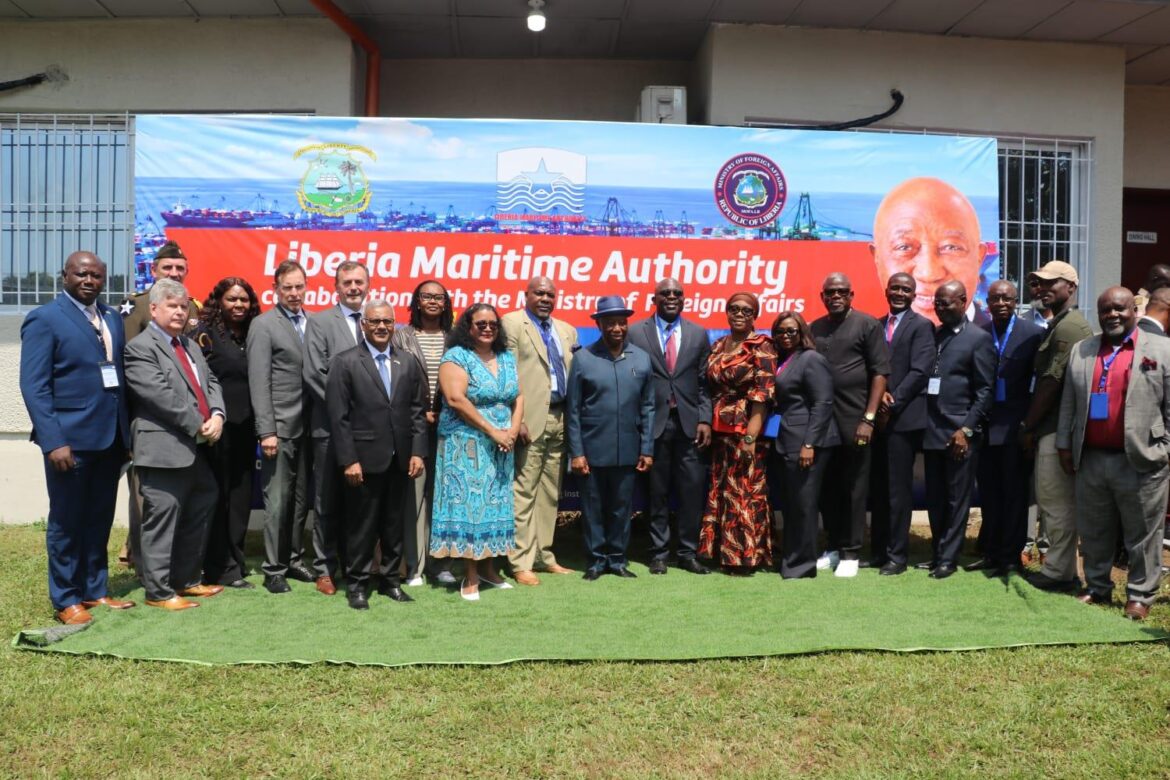
MONROVIA – Liberia is a major player in global shipping. Its message therefore carries weight. The Liberia Maritime Authority (LiMA) now wants a louder voice on the people behind it. Opening the Marshall High-Level Dialogue, Cllr. Neto Zarzar Lighe cast seafarers as the unseen heroes of world trade. His warning was pointed. Conflict, piracy and cyber-attacks are turning corridors from the Red Sea to the Gulf of Guinea into danger zones. The timing is also strategic. Liberia assumes the UN Security Council presidency in December, giving seafarers’ welfare a seat at the peace table. Scholarships, new training facilities and China-bound inspectors show progress on the home front. As THE ANALYST reports, Lighe wants commitments, not declarations.
The Commissioner and Chief Executive Officer of the Liberia Maritime Authority (LiMA), Cllr. Neto Zarzar Lighe, Sr., has emphasized that seafarers remain indispensable to the functioning of the global economy, stressing that their safety, security, dignity, and welfare must be treated as a shared international responsibility.
Speaking on Thursday, November 19, 2026, at the opening of the Marshall High-Level Dialogue on Global Maritime Safety, Security and the Welfare of Seafarers, held at the Liberia Maritime Training Institute (LMTI) in Marshall, Margibi County, Lighe described seafarers as the unseen heroes of international commerce whose daily sacrifices sustain global shipping, international trade, and economic activities across nations.
Addressing His Excellency President Joseph Nyuma Boakai, Sr., senior government officials, representatives of the diplomatic community, international organizations, maritime industry stakeholders, and other distinguished guests, Lighe underscored the direct relationship between the welfare of seafarers and the stability of the global economic system.
Maritime Week Officially Inaugurated
In a significant announcement, Lighe declared that the Marshall High-Level Dialogue officially inaugurates Liberia Maritime Week, an annual national event intended to celebrate Liberia’s maritime heritage, promote innovation, attract investment, and strengthen international partnerships within the maritime sector.
He noted that nearly everything people depend on daily, including fuel, food, medicine, construction materials, and electronic devices, travels through maritime transportation at some point in its supply chain. Behind this enormous global movement of goods, he said, are millions of seafarers who work tirelessly aboard ships to ensure that international trade and commerce continue uninterrupted.
“Behind every ship carrying essential goods across the world’s oceans are seafarers whose commitment, courage, and professionalism keep the wheels of the global economy turning. They are the unseen heroes and heroines of international trade. Without them, global shipping would not be possible, supply chains would be disrupted, and the economic connections that sustain nations would be severely threatened,” Lighe emphasized.
Seafarers in the Crossfire
He warned that escalating geopolitical tensions, armed conflicts, piracy, cyber-attacks, and other maritime security threats are increasingly exposing seafarers to dangerous and life-threatening conditions, particularly in strategically important shipping corridors, including the Black Sea, Red Sea, Strait of Hormuz, and the Gulfs of Guinea and Aden.
Citing the growing human cost of maritime insecurity, Lighe referenced figures presented in his address concerning attacks on commercial vessels, fatalities among seafarers, and the thousands of maritime workers reportedly stranded in conflict-affected waters. He stressed that seafarers must never become forgotten casualties or collateral victims of geopolitical conflicts.
“Behind every statistic is a human being: a father separated from his children, a mother unable to return home, a young officer confronting danger on her first voyage, and families anxiously waiting for news from loved ones at sea. These men and women did not create the conflicts that threaten their lives, yet they are often among those who bear the greatest consequences. Their protection must therefore remain a fundamental humanitarian and international maritime priority,” he stated.
The Commissioner further emphasized that disruptions to maritime transportation extend far beyond the immediate shipping industry, affecting food security, energy supplies, international commerce, the cost of living, and the economic stability of nations. He called for stronger international cooperation, effective maritime governance, and practical measures to safeguard commercial vessels and protect seafarers operating in high-risk maritime environments.
He stressed that the Marshall High-Level Dialogue provides an important platform for elevating maritime safety, security, and seafarers’ welfare within broader international peace and security discussions, particularly as Liberia prepares to assume the presidency of the United Nations Security Council (UNSC) in December 2026.
Training, Scholarships and Cadets
Lighe also highlighted Liberia’s commitment to strengthening international maritime partnerships and leveraging its position as a major player in the global shipping industry to advance maritime governance, institutional cooperation, and the protection of seafarers.
He disclosed that the LMTI is preparing to graduate newly trained cadets in various maritime disciplines, while new training facilities and dormitories will be dedicated in January 2027 to expand the institution’s capacity and increase enrollment in accordance with the President’s development agenda.
Additionally, Lighe announced that LiMA has increased and awarded scholarships to deserving young Liberians pursuing studies in nautical science, marine engineering, electrical and electronic engineering, international maritime law, sustainable ocean governance, and other maritime-related disciplines at institutions around the world.
As part of efforts to strengthen Liberia’s maritime regulatory and enforcement capacity, he disclosed that a delegation of 20 personnel is being dispatched to the People’s Republic of China for specialized training in Port State Control procedures and inspections at Shanghai University. The delegation is drawn from LiMA, the Liberia Immigration Service (LIS), the Liberia Revenue Authority (LRA), the National Port Authority (NPA), and the Liberian National Coast Guard.
According to the Commissioner, the training will strengthen interagency cooperation and enhance Liberia’s capacity to identify and eliminate substandard vessels operating within its maritime domain and calling at its seaports. He explained that the initiative will provide a sustainable national platform for advancing maritime development, creating opportunities for young Liberians, and ensuring that the country’s maritime resources contribute more meaningfully to national economic transformation.
From Declarations to Commitments
Lighe called on international partners, maritime institutions, governments, shipping companies, and other stakeholders to move beyond declarations and embrace practical commitments that deliver measurable results. These, he said, include safer ships, better-trained maritime professionals, stronger institutions, and improved protection and welfare for seafarers. He emphasized that no country or institution can independently address the complex challenges confronting the global maritime industry, making international solidarity and sustained cooperation indispensable.
The Marshall High-Level Dialogue is being held under the theme “Enhancing Global Maritime Security and the Welfare of Seafarers for International Peace and Shared Prosperity in a Period of Heightened Insecurity.” The gathering brings together national and international stakeholders to deliberate on pressing maritime safety and security challenges and develop practical approaches to protecting seafarers, strengthening global maritime governance, and safeguarding the international shipping system.
Lighe concluded by expressing optimism that the Dialogue would establish an enduring tradition of international cooperation. He said it would also reinforce Liberia’s commitment to a safer, more secure, and prosperous maritime future.
See more Liberia News Network stories in Google Search by adding LNN as one of your Preferred Sources.
★ Add LNN as a Preferred Source