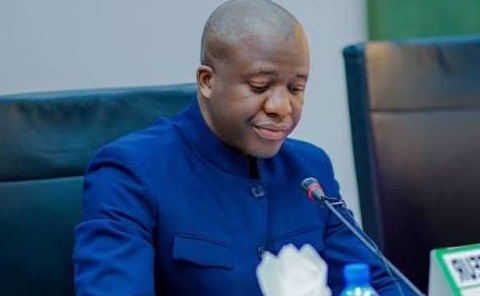
MONROVIA, LIBERIA – Telecommunications Authority (LTA) Board Chairman Clarence Massaquoi has once again refused to disclose the entity’s revenue collections over the past year, insisting that he is accountable only to the President and not directly to the Liberian public.
In an interview with The New Republic, Massaquoi defended the LTA’s partnership with Numtel Liberia, the company contracted to monitor all calls in the country for the next three years. He noted that the government will review Numtel’s performance at the end of the contract period before deciding whether to extend it.
“After three years, government will review it. Based on the work of the contract, a determination will be made whether to stay or not,” Massaquoi said.
He confirmed that Numtel has an established office, adding that he personally visited the facility. “As chairperson, I have been to Numtel’s office. I will tell you where Numtel office is located after this interview.” He did not give the location after the interview, but promised to do so this week. “The board has not been there, but I have. This is an established business,” he stated, dismissing claims that Numtel is disconnected from Liberia’s GSM operators.
Refusal to Disclose Revenue
Despite mounting public pressure, Massaquoi maintained that he will not reveal financial figures to Liberians.
“I am not afraid at all to disclose. But who are the Liberians? I cannot disclose to them. My reporting line is to the President,” he said, adding that any public disclosure could expose him to litigation.
He argued that ongoing disputes surrounding the suspension of the Telecom International Alliance (TIA) contract make it legally risky to comment on revenue figures. “Even if I did not receive a letter from anybody, it is reasonable for me to believe that this is an active ongoing dispute,” he explained.
Oversight and Investigations
Massaquoi stressed that only auditors or institutions legally empowered to access information can verify LTA’s accounts. He denied knowledge of any investigation by the Liberia Anti-Corruption Commission (LACC).
“LACC has not told me that they are coming to conduct investigation. If LACC writes me and asks for any document, I would walk in the yard and give it to them,” he said.
His remarks have reignited debate over transparency and accountability in Liberia’s telecom sector, with critics arguing that withholding revenue figures undermines public trust in one of the country’s most lucrative industries.
See more Liberia News Network stories in Google Search by adding LNN as one of your Preferred Sources.
★ Add LNN as a Preferred Source