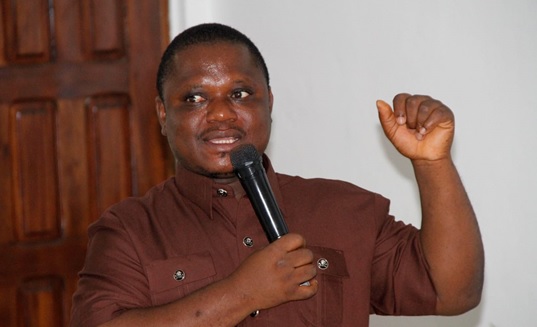
MONROVIA — Governance and accountability advocate Anderson Miamen has criticized President Joseph Nyuma Boakai for failing to address Liberia’s delayed transitional justice process during his recent address to the United Nations General Assembly, describing the omission as a “missed opportunity” to reaffirm Liberia’s commitment to accountability.
\n
Miamen, in a strongly worded commentary, recalled that when President Boakai addressed the UN General Assembly in September 2025, he appealed for international support for the establishment of a War and Economic Crimes Court, describing the process as essential to achieving lasting peace and genuine national healing.
According to Miamen, that position had generated renewed expectations among victims of Liberia’s civil wars, corruption and other abuses that the long-delayed pursuit of justice and accountability was finally receiving serious attention from the government.
\n
However, Miamen said those expectations were disappointed when President Boakai returned to the UN General Assembly approximately a year later and made no reference to Liberia’s transitional justice process.
“There was not a single mention of the country’s transitional justice process,” Miamen wrote, arguing that the President’s failure to address the issue represented a significant missed opportunity to update the international community and Liberians on the government’s progress.
\n
‘What Happened to the Commitment?’
Miamen questioned why the President did not use his international platform to renew Liberia’s appeal for support for the War and Economic Crimes Court or provide a detailed account of progress toward implementing transitional justice.
\n
He argued that the government’s submission of legislation to the Legislature, while important, should not be regarded as the ultimate measure of progress.
For Miamen, the real test is whether Liberia can establish courts that are properly funded, operational, independent, inclusive and capable of fairly prosecuting those responsible for war crimes, economic crimes and corruption.
\n
“We have now passed the stage of praising the President and his government for belatedly submitting the Bills,” Miamen said, emphasizing that the ultimate objective should be functioning institutions capable of delivering justice.
Victims Still Waiting
\n
Miamen said victims of Liberia’s civil wars and corruption have waited for years for meaningful accountability and are becoming increasingly frustrated by what he described as unnecessary delays.
He specifically highlighted women, children and other victims of the civil conflict, arguing that transitional justice should be victim-centered, human-rights-based and inclusive.
\n
He also linked Liberia’s domestic accountability record to its international responsibilities, particularly as the country seeks to present itself as a champion of human rights, good governance and democratic values.
According to Miamen, Liberia must ensure that the values it promotes internationally are reflected in its domestic institutions and practices.
\n
Security Council Presidency Raises Questions
Miamen further questioned whether Liberia should assume the presidency of the UN Security Council while significant accountability and governance questions remain unresolved at home.
\n
He argued that Liberia’s international responsibilities should be accompanied by stronger domestic action on war and economic crimes, corruption and alleged human rights violations.
His criticism comes amid continuing national debate over the implementation of recommendations arising from Liberia’s transitional justice process, including the establishment of mechanisms for investigating and prosecuting serious crimes committed during the country’s civil conflicts.
\n
‘Accountability Delayed Is Accountability Denied’
Miamen warned that prolonged delays in addressing historical crimes could have broader consequences for Liberia’s development and democratic consolidation.
\n
“Accountability delayed is accountability denied,” he wrote, arguing that failure to address impunity could contribute to social instability, underdevelopment, poverty and continued impunity.
He called on President Boakai and his administration to move beyond political commitments and legislative submissions toward the actual establishment and operation of Liberia’s proposed accountability institutions.
\n
For Miamen, the question is no longer whether Liberia should pursue transitional justice, but whether the government has the political will to turn its promises into functioning institutions capable of delivering justice to victims.
The criticism places renewed attention on the gap between Liberia’s repeated commitments to accountability and the pace at which those commitments are being translated into concrete institutional action.
See more Liberia News Network stories in Google Search by adding LNN as one of your Preferred Sources.
★ Add LNN as a Preferred Source