
MONROVIA, May 8, 2026 — As Liberians prepare to mark Mother’s Day on May 10, renewed attention is falling on a landmark 2022 reform that wiped out a long-standing gender bias in the country’s nationality law, finally allowing Liberian mothers to pass citizenship to their children at birth just as fathers do.
The Act, signed on July 22, 2022, amended sections of the 1973 Aliens and Nationality Law that, for decades, had given only Liberian fathers the automatic right to confer citizenship on children born outside Liberia.
Women’s rights and child-protection advocates are calling change a major win for gender equality, national identity, and efforts to curb statelessness.
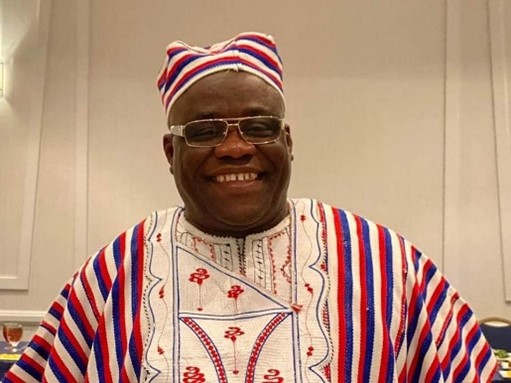
The reform again drew public notice on July 24, 2025, during Liberia’s 178th Independence Day program, when President Joseph Nyuma Boakai honored dual-citizenship advocate Emmanuel S. Wettee for his role in the campaign that helped push the amendment.
Wettee was admitted into the Humane Order of African Redemption as a Knight Commander, a national honor, supporters say, that reflects years of lobbying for equal nationality rights.
For years, Liberia was listed among countries whose nationality laws discriminated against women, drawing repeated criticism from the United Nations High Commissioner for Refugees (UNHCR) and international human rights groups.
Under the previous regime, thousands of children born abroad to Liberian mothers were left in legal limbo—especially where the father was foreign, absent, deceased, or unable to provide required documentation.
Advocates insist the consequences went far beyond paperwork: children at risk of statelessness often struggled to secure birth certificates, enroll in school, access healthcare, travel, or later qualify for legal protection and employment.
The problem deepened during the civil war years, when many Liberian women fled and gave birth outside the country.
UNHCR estimates that nearly 3,200 children outside Liberia and about 4,000 within the country are at risk of statelessness because of nationality restrictions affecting women.
Rights groups have long pointed to cases in which children born to Liberian mothers abroad faced prolonged uncertainty after the death or disappearance of a foreign father.
Civil society groups, women’s organizations, legal advocates, and diaspora institutions mounted years of pressure for reform, with the All-Liberian Conference on Dual Citizenship (ALCOD), headed by Wettee, among the leading voices.
International partners, including UNHCR, repeatedly urged Liberia to align its nationality framework with global human-rights standards and instruments aimed at reducing statelessness.
Liberia is party to the 1954 Convention Relating to the Status of Stateless Persons and the 1961 Convention on the Reduction of Statelessness, commitments advocates cited in demanding change.
After years of lobbying and public debate, the 54th Legislature moved to amend the law, formally striking out the discriminatory provisions and placing mothers and fathers on equal footing in passing on Liberian citizenship.
Supporters say the measure was not merely legislative; it was a moral correction with practical benefits for families.
They argue it restores dignity to Liberian women while securing legal identity and a sense of belonging for children who previously fell through the cracks.
Today, a Liberian mother may transmit citizenship to her child at birth regardless of the father’s nationality or race, an equality campaigner says, a situation that should have been settled long ago.
With Mother’s Day near, advocates describe the reform as a fitting tribute to mothers’ role in nation-building and a concrete step toward gender equality.
“A mother gives life, protection, and sacrifice; she should also be able to give identity,” one advocate said.
For Liberian mothers in the diaspora, the shift has carried strong emotional weight, many say.
“It is recognition and dignity—and for many children, it finally means belonging to Liberia,” a mother told this paper.
