By Edwin N. Khakie
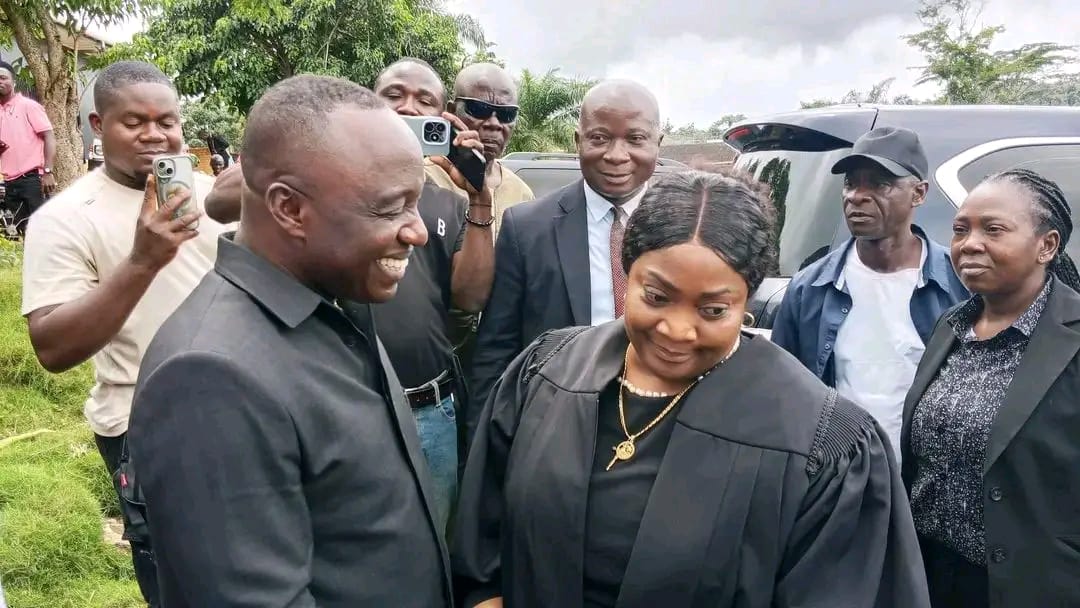
GBARNGA, Bong County, August 10, 2026 – Bong County Senator Prince Kermue Moye Sr. has defended his role in the political campaign that contributed to former Vice President Jewel Howard-Taylor’s removal from national leadership, saying the decision was intended to send a message that Bong County deserved better representation and greater benefits from government.
Speaking August 8 at the Bong Athletic and Social Intellectual Center in Gbarnga, Moye said he has no regrets over opposing the former vice president and the George Weah-led administration during the 2023 elections.
“I do not regret that we took our daughter, Jewel Howard-Taylor, from the bondage of the vice presidency,” Moye said. “We did not do it because we hated or disrespected her, but to send a clear message to the past regime that our county and its residents deserve better.”
Howard-Taylor served as vice president from 2018 to 2024 under former President George Manneh Weah. She left office after the Weah-led Coalition for Democratic Change (CDC) lost the 2023 presidential runoff election to President Joseph Nyuma Boakai and the Unity Party.
Moye, a senior member of the Unity Party, was among political leaders who supported Boakai’s successful presidential bid.
The Bong County senator said political leadership should not be measured simply by the positions politicians occupy, but by the tangible benefits their leadership delivers to their constituents.
He maintained that his decision to oppose Howard-Taylor and the former administration was part of a broader effort to demand stronger representation and greater attention to the development needs of Bong County.
According to Moye, the political action was not driven by personal hostility toward Howard-Taylor, but by dissatisfaction with what he viewed as inadequate benefits accruing to Bong County despite having one of its prominent political figures serving as vice president.
His comments have triggered a response from Howard-Taylor, who rejected Moye’s assertion that she was “in bondage” during her tenure.
The former vice president has maintained that Bong County was not marginalized under the Weah administration, arguing that several projects and government interventions were undertaken in the county despite challenges she encountered while serving as vice president.
The exchange between the two prominent Bong politicians has intensified debate over the county’s political influence and whether its leaders have effectively leveraged their positions in successive governments to secure development benefits for residents.
See more Liberia News Network stories in Google Search by adding LNN as one of your Preferred Sources.
★ Add LNN as a Preferred Source