
n
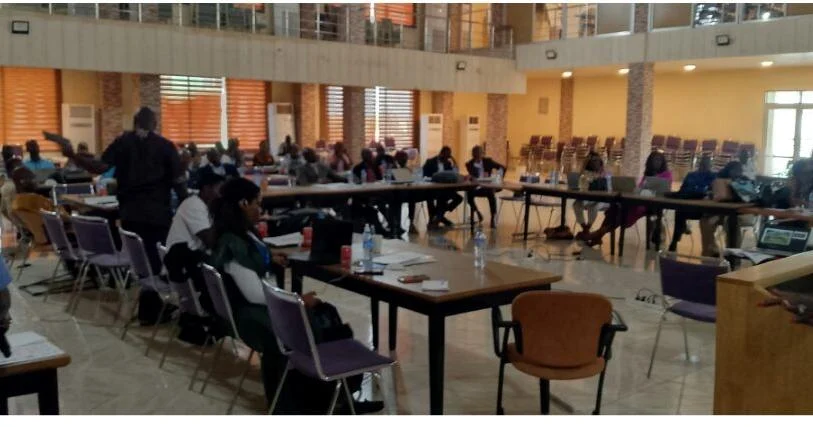
Health experts from Liberia, Sierra Leone, Guinea and Côte d’Ivoire have convened in Ganta City to strengthen cross-border cooperation and accelerate efforts to control and eliminate neglected tropical diseases (NTDs) across the Mano River Union by 2030.
The regional meeting, held under the theme, “Sustaining the Momentum: Cross-Border Collaboration to Achieve Neglected Tropical Diseases Control and Elimination by 2030,” brings together health officials and partners to examine common challenges and identify coordinated approaches to reducing the burden of the diseases.
Addressing the gathering, Dr. Cuallau J. Howe, Liberia’s Assistant Minister of Preventive Services, welcomed delegates on behalf of the Government and people of Liberia, describing the meeting as an important opportunity to strengthen regional cooperation in public health.
“I sincerely appreciate our distinguished delegates from Guinea, Sierra Leone, and Côte d’Ivoire for joining our team here in this very important regional gathering,” Howe said.
“It is with great honor and privilege to welcome you to the Republic of Liberia and, particularly, in Ganta City, Nimba County, for this important cross-border meeting on Neglected Tropical Diseases among the Mano River Union countries,” she added.
Howe said the participation of the four countries demonstrated their shared commitment to addressing diseases that continue to affect vulnerable populations and communities with limited access to essential healthcare.
She also acknowledged the contributions of the World Health Organization (WHO), development partners, implementing organizations and other stakeholders supporting efforts to improve public health and reduce the burden of preventable and treatable diseases.
According to Howe, neglected tropical diseases remain a significant public health challenge across Africa, particularly in remote and underserved communities where access to healthcare, safe water, adequate sanitation, hygiene and health education is limited.
She cited WHO figures indicating that NTDs affect more than one billion people worldwide, while approximately 1.495 billion people require preventive or curative interventions, according to the 2026 report referenced at the meeting.
“NTDs can cause disability, disfigurement, stigma, social exclusion, loss of productivity, and economic hardship for affected individuals, families, and communities,” Howe explained.
She warned that the consequences extend beyond health, undermining educational opportunities, household incomes, community development and national progress toward universal health coverage and the Sustainable Development Goals.
“The fight against NTDs is therefore not merely a medical undertaking; it is also a development priority, a matter of equity, and a shared responsibility to ensure that no individual or community is left behind,” she said.
The meeting comes as countries work toward the WHO’s 2021–2030 roadmap for controlling and eliminating neglected tropical diseases. The framework promotes integrated, people-centered approaches to prevention, treatment and disease surveillance.
With the 2030 deadline approaching, participants stressed the need for countries to intensify implementation, strengthen national ownership, mobilize sustainable resources and improve coordination to meet their shared targets.
Director of Liberia’s Neglected Tropical Diseases Program, Anthony K. Betee, emphasized that cross-border cooperation was essential because the four countries share communities, families, markets, transport corridors, ecosystems and public health challenges.
“People move regularly across our borders for trade, education, employment, family visits, and other social activities,” Betee said.
“While this movement contributes to regional integration and economic development, it also means that public health threats cannot always be effectively addressed within the boundaries of a single country,” he added.
Participants noted that population movement, environmental conditions, gaps in treatment coverage and differences in surveillance and healthcare delivery can contribute to the transmission, persistence or reintroduction of certain diseases.
The diseases discussed include onchocerciasis, lymphatic filariasis and its complications, including lymphoedema and hydrocele; schistosomiasis, including urogenital schistosomiasis; and soil-transmitted helminthiasis.
Other conditions include leprosy, Buruli ulcer, yaws and rabies. Participants also discussed surveillance for human African trypanosomiasis and Guinea worm, which was reported during country presentations as having been eradicated.
The gathering includes NTD program directors and coordinators from the four Mano River Union countries, WHO representatives, international and national health organizations, development partners, Nimba County officials, joint security personnel and other health experts.
Through the regional discussions, participants are seeking to strengthen information-sharing, coordinate cross-border interventions and improve surveillance and treatment coverage.
The meeting underscores the importance of sustained regional cooperation in ensuring that progress made by one country is not undermined by gaps in neighboring countries as the Mano River Union works toward its 2030 NTD control and elimination targets.
See more Liberia News Network stories in Google Search by adding LNN as one of your Preferred Sources.
★ Add LNN as a Preferred Source