
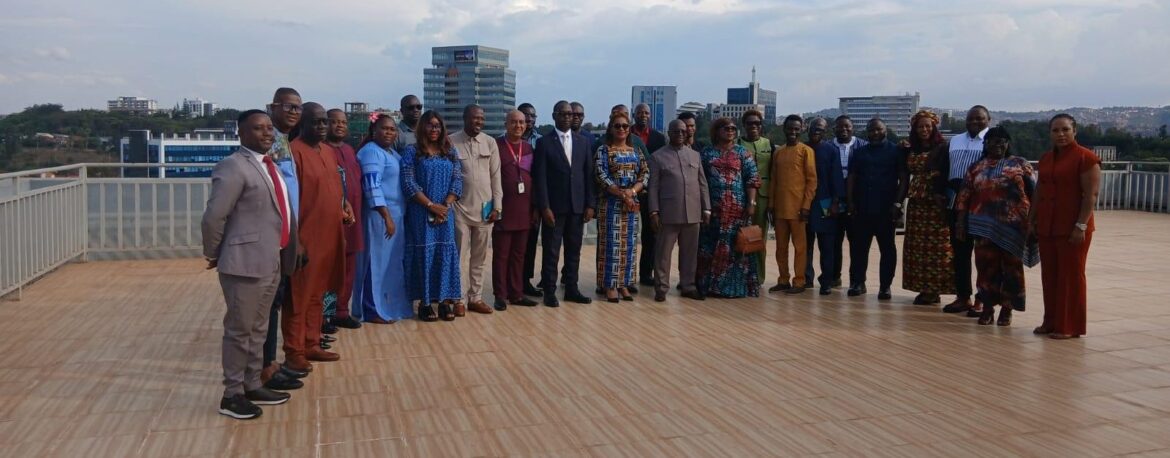
MONROVIA –Liberia has decentralization laws on paper. Its counties still wait for decentralized delivery. That gap explains why a government delegation is in Kigali for 12 days. Deputy Minister Edward K. Mulbah stated the paradox plainly. Liberia has gold, diamonds and bauxite, yet struggles to turn them into benefits for its people. Rwanda offers a pointed comparison. It rebuilt after the 1994 genocide through performance contracts, community work and digital government. Liberia emerged from war in 2003 and passed its Local Government Act in 2018. Eight years on, local planning, revenue and budgeting remain weak. Study tours are easy to organize. Adoption is harder. THE ANALYST reports.
\n
KIGALI, RWANDA, October 20, 2026 – Liberia has begun a study tour in Rwanda to examine how local government, public financial management and community participation can improve public services, as the West African country seeks practical lessons to advance its decentralization reforms.
\n
The mission brings together representatives of the Ministry of Finance and Development Planning (MFDP), the Ministry of Internal Affairs (MIA), the Governance Commission (GC) and the United Nations Development Program (UNDP), with engagements coordinated by the Rwanda Cooperation Initiative (RCI), the institution responsible for sharing Rwanda’s development experiences with other countries.
\n
The visit comes as Liberia works to move governance closer to communities, strengthen local institutions and ensure that public resources translate into better services for people beyond the capital, Monrovia.
\n
Speaking at the opening engagement, Liberia’s Head of Delegation and Deputy Minister for Local Government Edward K. Mulbah intimated that the country is looking to understand how Rwanda rebuilt its institutions after the 1994 genocide against the Tutsi and turned its recovery into a broader program of national development.
\n
Liberia’s Own Post-War Challenge
\n
Liberia, which emerged from 14 years of civil conflict in 2003, faces its own challenge of ensuring that the benefits of peace, economic growth and public investment reach communities across all its 15 counties.
\n
Mulbah indicated that Liberia had made progress in establishing local governance structures but still needed to strengthen their capacity to deliver services and respond to the needs of citizens.
\n
“We have gold, we have diamonds, we have bauxite and we have the ocean of affection. But how can we translate these resources into benefits for our people?” Mulbah said, underscoring the importance of learning from Rwanda’s experience.
\n
Liberia’s decentralization program is guided by the Local Government Act of 2018 and related policy and legal frameworks designed to strengthen local administration, citizen participation and the management of public resources at county and community levels.
\n
However, the government continues to face the task of making these structures more effective, particularly in local planning, revenue mobilization, budgeting and service delivery.
\n
Rwanda’s Homegrown Development Approaches
\n
RCI’s Chief Executive Officer, Hon. Richard Niwenshuti, welcomed the Liberian delegation and asserted that his institution was established to help countries learn from Rwanda’s homegrown development approaches through South-South and triangular cooperation.
\n
Niwenshuti disclosed that Rwanda had received delegations from more than 70 countries since the institution was established in 2018, with its exchanges covering governance, public financial management, digital services, social protection and other areas of development.
\n
He explained that Rwanda’s recovery following the genocide was driven by national unity, ambitious development goals and accountability, alongside locally developed solutions and lessons drawn from international experience.
\n
Among the approaches presented to the Liberian delegation were Imihigo, Rwanda’s performance-contract system, which links agreed development targets to the performance of public officials and institutions; Umuganda, a monthly community work program; and digital government platforms designed to improve access to public services.
\n
The delegation is expected to examine how Rwanda coordinates planning and implementation across different levels of government, monitors performance and encourages citizens to participate in local development.
\n
The exchange will also provide an opportunity to study how responsibilities, financial resources and accountability mechanisms are distributed between central and local authorities.
\n
The study tour will continue on Wednesday, October 21, with Rwanda’s Ministry of Local Government and Ministry of Finance and Economic Planning, among others, in the coming days. The Liberian study tour of Rwanda started on October 18 and is expected to end on October 29, 2026.
\n
The lessons gathered in Rwanda are expected to inform discussions on how Liberia can strengthen its own decentralization framework and turn existing reforms into tangible improvements in the lives of its citizens.
See more Liberia News Network stories in Google Search by adding LNN as one of your Preferred Sources.
★ Add LNN as a Preferred Source