Finance and Development Planning Minister Augustine Kpehe Ngafuan has set a US$1.3 billion domestic revenue target for Liberia by December 2026, as the government steps up efforts to strengthen tax administration, expand compliance, harness technology and reduce the country’s dependence on external financing.
Minister Ngafuan said the target is achievable based on the country’s recent revenue performance and the continuing reforms being implemented by the Ministry of Finance and Development Planning (MFDP) in collaboration with the Liberia Revenue Authority (LRA).
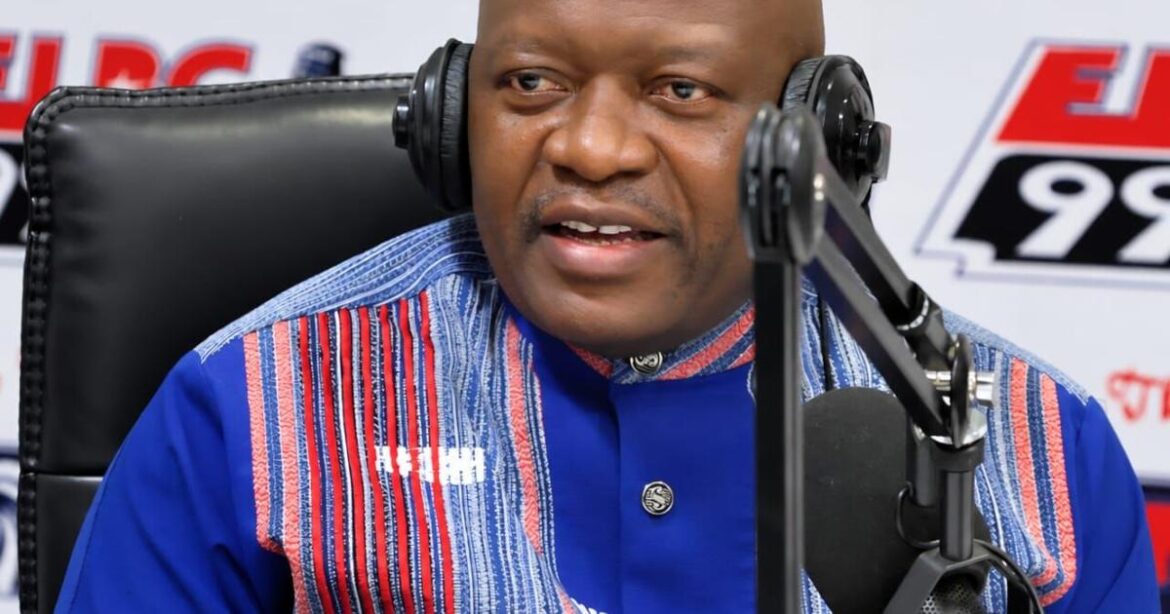
Speaking Wednesday, September 9, 2026, on the Super Morning Show of State Radio ELBC, Ngafuan said Liberia’s improving domestic revenue collections provide a strong indication that the country can reach the ambitious target before the end of the year.
The Minister’s declaration comes as Liberia approaches the US$1 billion threshold in domestic revenue collections, with the LRA recently reporting that it had collected US$954.7 million.
With collections already standing at nearly US$1 billion, Ngafuan said the government remains focused on moving beyond that milestone and achieving the broader US$1.3 billion domestic revenue target by December.
The target represents a major push by the government to increase the resources generated internally to finance national development and create greater fiscal space for public investment.
Ngafuan said stronger domestic revenue mobilization is critical to financing government priorities, including roads, education, healthcare, infrastructure and other essential public services.
He emphasized that Liberia must continue strengthening its domestic resource base if the government is to reduce its reliance on external financing and take greater ownership of the country’s development agenda.
The Finance Minister attributed the improvement in revenue collections to a number of reforms being undertaken within Liberia’s revenue administration system.
Among the measures, he cited improved tax compliance, modernization of revenue administration, digital transformation, strengthened taxpayer engagement and enhanced enforcement.
The increasing use of technology in tax administration, according to the Minister, is helping to improve the government’s capacity to identify taxpayers, monitor economic activities and strengthen the collection of taxes owed to the state.
Ngafuan said the government’s revenue mobilization strategy is not solely focused on reaching a particular financial target, but is intended to establish a stronger and more sustainable domestic revenue system.
He described Liberia’s progress toward the US$1 billion mark as a historic development in the country’s revenue mobilization efforts and said the country is entering a new phase in its ability to generate domestic resources.
However, he cautioned revenue authorities and other institutions against losing focus once the US$1 billion threshold is achieved.
The Finance Minister stressed that the real objective is to sustain revenue growth and ensure that increased collections translate into tangible development outcomes for Liberians.
He urged revenue institutions to maintain their momentum and continue improving collection systems, compliance and enforcement even after the immediate revenue milestones have been achieved.
For Ngafuan, increased revenue must ultimately result in greater government capacity to deliver public services and finance projects that directly affect the lives of citizens.
He said the government’s broader revenue drive is therefore aimed at creating the fiscal space needed to accelerate investment in infrastructure and human development while strengthening the country’s financial independence.
The Minister also praised Liberia Revenue Authority Commissioner General James Dorbor Jallah and members of the LRA team for their efforts to maximize domestic resource mobilization across Liberia.
Ngafuan said the performance of the LRA demonstrates the importance of continued institutional commitment, effective tax administration and collaboration between revenue-generating agencies and the Ministry of Finance.
His commendation comes as the LRA works to sustain the growth in domestic collections and close the gap between current collections and the government’s US$1.3 billion target.
The government’s ambitious target also places increased responsibility on revenue institutions to broaden the tax base, improve compliance and ensure that revenue leakages are minimized.
At the same time, the government is expected to balance its revenue mobilization efforts with the need to maintain a fair, transparent and predictable tax system that encourages businesses and individuals to comply with their obligations.
The US$1.3 billion target would mark a significant expansion of Liberia’s domestic resource mobilization capacity if achieved, particularly given the country’s longstanding dependence on external assistance and development financing.
Ngafuan’s announcement therefore places domestic revenue at the center of the government’s fiscal strategy as Liberia seeks to strengthen public finances and provide more resources for national development.
With US$954.7 million already collected, the government is within reach of the US$1 billion mark but must generate substantially more revenue to meet the US$1.3 billion target before December.
The Finance Minister’s confidence suggests that the government expects the ongoing reforms in tax administration, technology, compliance and enforcement to continue delivering stronger collections over the remaining months of 2026.
For the government, the challenge now is not only to reach US$1.3 billion but to ensure that the revenue gains are sustained beyond 2026 and converted into visible improvements in roads, schools, healthcare facilities, infrastructure and other public services.
Ngafuan’s US$1.3 billion target consequently represents more than a revenue figure; it is a test of Liberia’s capacity to strengthen domestic resource mobilization, expand fiscal space and finance a greater share of its development priorities from resources generated within the country.
See more Liberia News Network stories in Google Search by adding LNN as one of your Preferred Sources.
★ Add LNN as a Preferred Source