
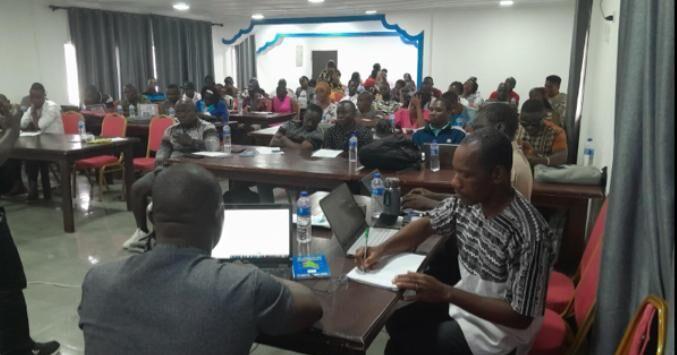
The National Leprosy and Tuberculosis Control Program (NLTCP) under the Ministry of Health has begun a two-day nationwide integrated External Quality Assessment (EQA) training aimed at strengthening laboratory services for tuberculosis, HIV, and malaria across Liberia.
The engagement, which started Monday, March 9, 2026, is being held at the National Social Security and Welfare Corporation (NASSCORP) Guest House in Kakata City and will run through Tuesday, March 10.
The exercise has brought together about 50 participants from Liberia’s 15 counties, including representatives from the National Diagnostics Division (NDD), the National Public Health Institute of Liberia (NPHIL), NLTCP, County Diagnostic Officers, laboratory personnel from participating health facilities, and partners such as Plan International.
The Medical Laboratory Quality Manager of the National Diagnostics Division at the Ministry of Health, Prince P. Gbondin, said the meeting is intended to review data collected from two rounds of EQA conducted in 2025, which focused on HIV, tuberculosis, and malaria diagnostics.
According to him, the training also seeks to identify strategies to improve laboratory performance and ensure accurate diagnostic services for these priority diseases.
Gbondin explained that while the primary focus remains on HIV, TB, and malaria, discussions will also address broader laboratory system issues, including human resource competencies and operational challenges faced by laboratory professionals across the country.
“We are here as a team of laboratorians involved in diagnostic services for HIV, TB, malaria, and other diseases in the country,” he said.
He emphasized the critical role laboratories play in the healthcare system, noting that medical studies show about 75 percent of doctors’ clinical decisions are based on laboratory findings that guide patient diagnosis and treatment.
Gbondin also stressed the importance of strengthening key elements that ensure reliable laboratory results, including well-trained personnel, quality testing kits and equipment, and proper environmental conditions for storage and laboratory operations.
“The combination of these three plays a crucial role when it comes to quality results,” he stated.
He encouraged participants to remain fully engaged during the two-day training and focus on addressing the key issues affecting laboratory services across Liberia.
