
By Lincoln G. Peters
Temple of Justice, Monrovia, March 12, 2026: Former Finance and Development Planning Minister Samuel D. Tweah, Jr. and his co-defendants have rejected the Liberian government’s claims that they admitted to crimes of economic sabotage.
The prosecution, however, insists that the defendants are guilty and asserts there will be no escape from justice.
On Thursday, March 13, 2026, Criminal Court ‘C’ commenced proceedings in the high-profile corruption and economic sabotage case involving former Finance Minister Tweah and four co-defendants.
The trial began with jury selection. Out of fifteen jurors, nine have been selected so far, with the remaining six expected to be chosen today, March 13, 2026.
Recently, Solicitor General Cllr. Augustine Fayiah alleged that the defendants had openly confessed to misappropriating funds—an assertion the defense has strongly denied. The defense clarified the difference between making a statement and making a confession.
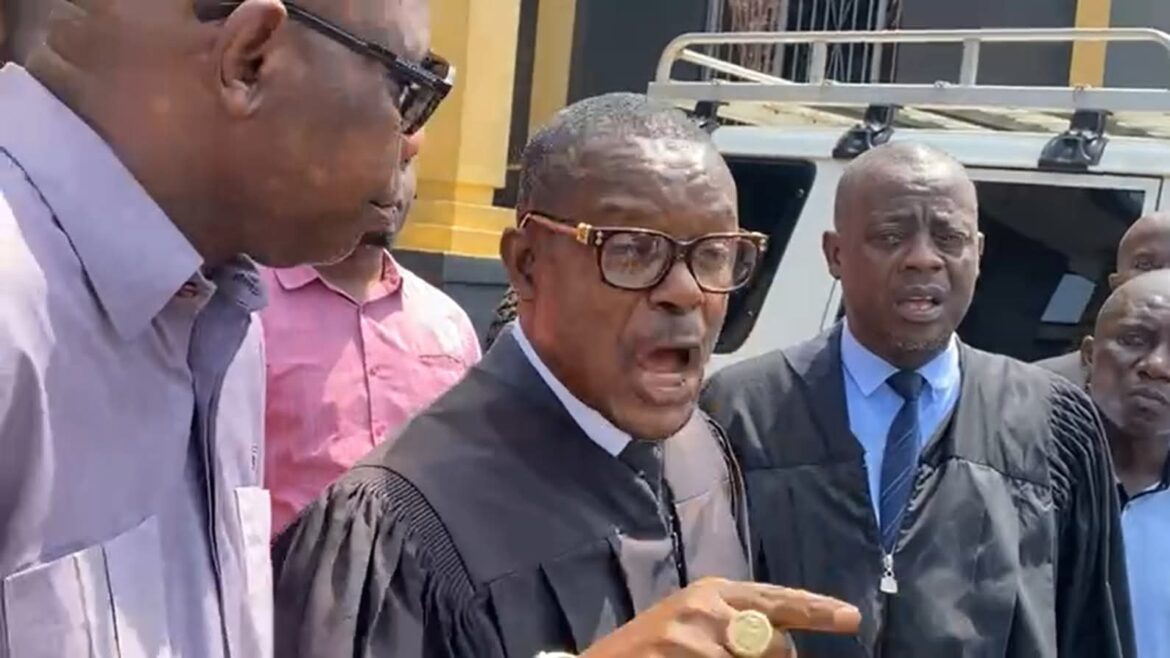
Speaking to journalists after the trial’s first day, lead defense lawyer Cllr. Arthur Tamba Johnson described the Solicitor General’s claims as false and misleading, intended to sway public opinion and influence potential jurors.
“If the Solicitor General truly believes the defendants confessed, why is a jury being selected?” Cllr. Johnson questioned, accusing the prosecution of conducting a “trial by television and Facebook.”
“Let me be clear: the Solicitor General claimed the defendants admitted to the crime. That’s a lie, it’s not true. No one confessed. There’s a difference between a confession to criminality and making a point. Confession means someone admitted the crime as stated in the indictment. That never happened—neither Mr. Tweah nor any defendant admitted guilt,” Cllr. Johnson clarified.
He further explained that the actions in question were part of the statutory duties of the former Finance Minister, as permitted under Section 14.2 of the Public Finance Law.
Cllr. Johnson argued that the defendants acted on the instructions and approval of then-President Weah, with the intent to maintain stability and security during the 2023 presidential and legislative elections.
“The law authorizes the finance minister to make payments recommended by any branch of government within the national budget or budgetary law. That’s exactly what was done, following authorization from the National Security Council headed by President George M. Weah at the time. No one should be criminalized for this—there was no confession,” Cllr. Johnson stated.
In response to the defense’s rejection of the crime admission, Solicitor General Cllr. Augustine Fayiah insisted that the defendants had, in fact, confessed to stealing public funds and diverting them for personal use, particularly for campaign activities.
“We assure you, there is absolutely no room for escape. The money was never used for national security purposes—it was stolen and diverted for personal use. We understand national security protocols, and if the funds had been used for such purposes, we would know. There are strict rules governing the use of money for national security,” Cllr. Fayiah asserted.
He argued that no single person can claim government funds were used for national security, especially when the money was allegedly found in their homes or used for campaigns.
“The National Elections Commission has a budget for national security during elections. How can you deplete the national coffers and then say it was for national security? If there’s any disagreement with Mr. Tweah and others admitting to these crimes, their own statements will reveal the truth. In court, Cllr. Johnson himself admitted the funds were taken, albeit under the guise of national security,” Fayiah concluded.http://
For more updates on this story and other Liberia news, stay tuned to The New Dawn Liberia.
