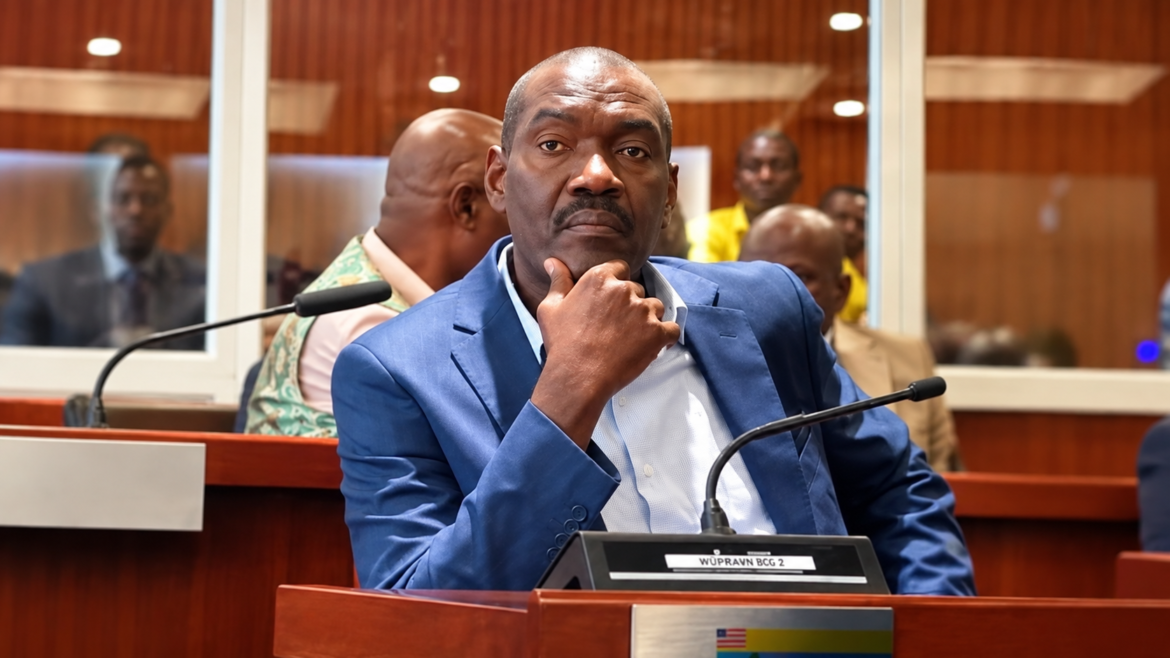
Maryland County Senator James Biney is pushing for investment in the Port of Harper, arguing that the rehabilitation of the facility could unlock new economic opportunities, create jobs and transform Maryland County into a stronger trade and investment hub.
Biney said the port, which he noted has not been dredged since Liberia’s civil war, is operating below capacity and is unable to make the level of contribution expected to Maryland County’s economy.
Speaking during a press engagement in Maryland County, the Senator said efforts are underway to attract investors who could support the rehabilitation and expansion of the port, positioning it to play a greater role in shipping, logistics, warehousing, transportation and other related sectors.
He disclosed that his recent trip to France included discussions with the Liberian diplomatic mission about investment opportunities surrounding the Port of Harper.
According to Biney, the objective is to attract investors capable of supporting the port’s rehabilitation while creating employment and stimulating economic activity in Harper and surrounding communities.
“A fully functional port” could significantly expand economic opportunities for Maryland County, he said, noting that increased port activity could benefit businesses, farmers, traders and other economic actors by improving access to markets and reducing transportation-related constraints.
Biney, however, acknowledged that restoring the port to a level where it can serve as a major economic engine would require proper planning, substantial investment and coordination among the government, investors and relevant agencies.
He said Maryland County’s broader development strategy should therefore move beyond small, individually driven community projects and focus increasingly on major investments capable of producing long-term economic and social benefits.
Biney identified roads, electricity, health infrastructure and pipe-borne water as other critical priorities, particularly in Baribo and Callaway districts.
He said improved roads would help connect farmers and businesses to markets, reduce transportation costs and improve access to schools and health facilities. Reliable electricity, he added, would be essential for attracting businesses, supporting small enterprises and improving public services.
The Senator also reported ongoing electrification efforts, including a planned ceremony in Gedetarbo within the next three to four weeks. He said the project is expected to improve access to electricity and support community development, although he did not provide details on the number of households or facilities expected to benefit.
He declined to disclose the project’s total cost, saying the appropriate government authority should provide the final figure upon completion. Biney said releasing an unverified amount could create confusion and that the responsible authority should make the official disclosure.
On the broader question of development, Biney said Maryland County could no longer depend primarily on projects initiated by individual lawmakers.
He argued that initiatives such as town halls, markets and pit latrines, while useful, should complement larger government-backed investments in transportation, energy, health, education, water and job creation.
According to the Senator, projects implemented and maintained through government institutions are more likely to survive political transitions and remain available to communities over the long term.
Citing the Barraken project, which he said the community requested be paused, Biney said the experience highlighted the importance of community consultation and institutional ownership.
He maintained that communities should help identify their priorities, while government institutions should provide the technical and financial framework necessary to ensure that development projects are properly implemented and sustained.
In education, Biney said he plans to engage Tubman University over its activity fees, proposing that government consider absorbing the difference between the university’s fees and those at the University of Liberia.
Using preliminary figures, he estimated that a US$50 difference for approximately 3,000 students could amount to about US$150,000. He said the proposal would require further discussions with university authorities and relevant government officials to determine the actual number of affected students and the precise financial obligation.
Biney said reducing the financial burden on students could improve access to higher education, particularly for families struggling to meet tuition and related costs.
The Senator also rejected claims that he provides no educational assistance to Maryland students, saying he supports some students, including those studying abroad, but avoids publicizing the beneficiaries because he considers the assistance humanitarian rather than political.
He disclosed that an educational assistance program coordinated by Emmanuel Toe is expected to be announced on radio the following week.
Biney said he has held about 10 town hall meetings during his current visit to Maryland County, with additional engagements planned in Harper. The meetings, he said, have allowed residents to raise concerns about roads, electricity, education, health services, water and other community needs.
Responding to criticism over his limited radio appearances, Biney said he prefers to be judged by tangible results rather than frequent public statements. He said public officials should be evaluated based on the impact of their work and the extent to which their initiatives improve citizens’ lives.
He said Maryland County has significant economic potential in trade, agriculture, fisheries, tourism and other sectors, but that realizing this potential will require improved infrastructure, reliable electricity, better education and deliberate investment planning.
Biney maintained that the Port of Harper could form an important part of this transformation if the necessary investment is secured.
He called for stronger collaboration among lawmakers, government ministries, local communities, development partners and private investors, saying Maryland’s development should increasingly be driven by sustainable institutions and investments rather than projects dependent on individual political leadership.
For Biney, the long-term measure of development should not simply be the number of projects completed, but whether those investments create jobs, expand public services, stimulate economic activity and remain functional for future generations.
The Senator said a revitalized Port of Harper, combined with improved roads, electricity and other essential infrastructure, could help position Maryland County for sustained economic growth and greater participation in Liberia’s national and regional trade.
See more Liberia News Network stories in Google Search by adding LNN as one of your Preferred Sources.
★ Add LNN as a Preferred Source