
Published: October 16, 2026
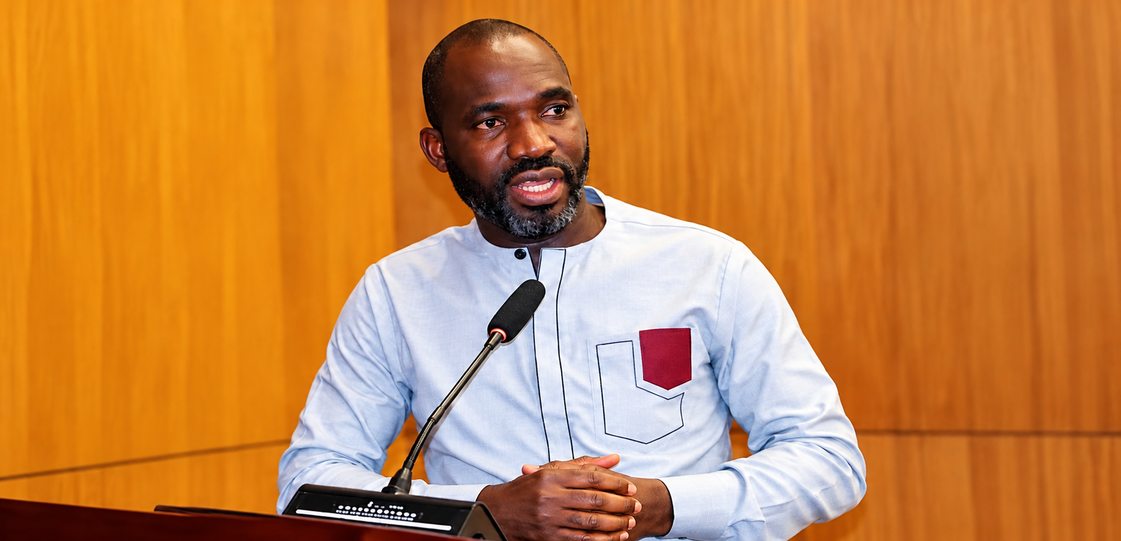
Sen. Francis S. Dopoh II has called for Senate intervention over what he describes as premature enforcement of Liberia’s Cybercrime Law.
MONROVIA – The Executive Branch is enforcing Liberia’s new Cybercrime Law before setting up the Cybersecurity Council and the specialized cybercrime team the act requires, River Gee County Sen. Francis S. Dopoh II, one of the law’s leading advocates, told the Senate Thursday.
By Blamo N. Toe
Dopoh, chairman of the Senate Committee on Posts and Telecommunications, asked Senate President Pro Tempore Nyonblee Karnga-Lawrence and his colleagues to formally notify the Executive and demand corrective measures before the law is applied further.
“I want to be very clear here that the Act was being prematurely implemented by the Executive in recent times and we want the Senate to inform the Executive about that,” he said.
His warning comes days after the reported arrest of Jerry Nyantee Wrotto, a young Liberian accused of cyberbullying Vice President Jeremiah Kpan Koung with artificial intelligence-generated images and videos shared on social media.
Dopoh said the law also assigns roles to the National Security Agency, the presidency, and the Ministry of Justice, including executive directives meant to coordinate enforcement and ensure it aligns with citizens’ constitutional rights. He said the Justice Ministry in particular must address the human rights questions that arise from applying the law.
The Executive, as the branch responsible for enforcing legislation, should have had those institutions and procedures working first, Dopoh said. Failing to do so, he said, could create confusion, weaken public confidence in the law and expose the government to avoidable controversy.
Koung has distanced himself from the case. In a statement on his official Facebook page Saturday, he called for Wrotto’s immediate release and said he had no intention of pressing charges against Wrotto or anyone else for creating or sharing such content about him. Criticism, ridicule and provocation are realities of public service that elected officials must be prepared to face, he said.
Alexander B. Cummings, political leader of the opposition Alternative National Congress, told reporters in Monrovia Tuesday that Liberia needs a cybercrime law but warned that broadly worded provisions could be used selectively against critics of public officials.
“You cannot be a public official and not expect people to criticize you,” Cummings said.
The law must clearly separate genuine cyber offenses from political commentary, he said. “We should protect people from cybercrime, but we should also protect freedom of speech,” Cummings said.
Latim Dathong, founder and board chairman of Starz University and a former deputy education minister for administration, said in a weekend Facebook statement that the government should run a nationwide public-awareness campaign before fully enforcing the law. Without one, he said, thousands of Liberians, particularly young social media users, could face legal consequences for conduct they do not know is criminal.
Dathong asked “how many Liberians know that a cybercrime law exists?”
The House of Representatives passed the bill Sept. 28, 2023, during the 54th Legislature under former President George Manneh Weah. The Senate approved it Nov. 20, 2025. President Joseph Nyuma Boakai approved it July 3, 2026, and the Ministry of Foreign Affairs printed it into handbill in early August.
The law aims to create a framework to prevent, investigate, and prosecute offenses involving information and communications technology, including digital fraud, and to strengthen protections for the country’s digital infrastructure.
See more Liberia News Network stories in Google Search by adding LNN as one of your Preferred Sources.
★ Add LNN as a Preferred Source