
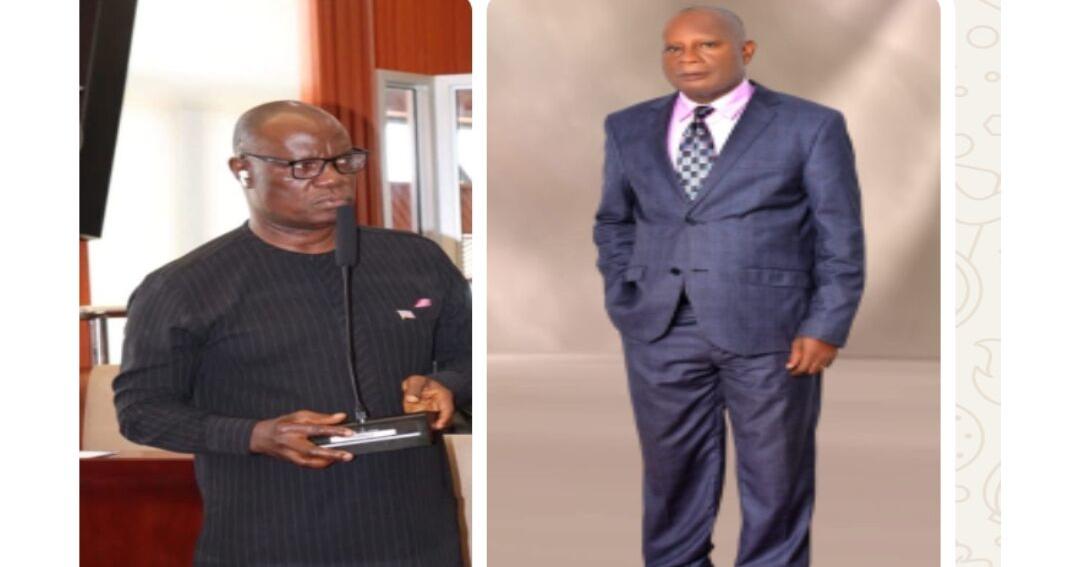
Nimba County Senator Samuel Kogar and Sinoe County Senior Senator Cllr. Augustine S. Chea has intensified pressure on President Joseph Nyuma Boakai to ensure that Liberia’s ongoing cocaine investigation reaches what they describe as the “big players” behind the country’s growing narcotics crisis, warning against targeting only junior officials while alleged masterminds remain untouched.
The two lawmakers, speaking separately, argued that the credibility of the government’s fight against illicit drugs will depend on whether accountability extends beyond low-ranking security personnel to individuals they believe may have played greater roles in facilitating the movement of massive cocaine shipments through Liberia.
Their comments come amid heightened national debate following the seizure and destruction of major cocaine consignments valued at hundreds of millions of United States dollars and the subsequent investigation involving security personnel and other individuals suspected of links to international drug trafficking networks.
Senator Kogar, speaking on OK Morning Conversation on OK FM Radio, said he would continue to mount pressure on President Boakai to take decisive action against senior officials allegedly connected to the cocaine investigation, arguing that removing only junior personnel would not address the root of the problem.
“The fight against drugs cannot be selective,” Kogar declared. “We cannot only go after the small fish and leave those who are believed to be the major actors.”
The Nimba County lawmaker said he intends to join civil society groups and other stakeholders in demanding broader accountability, including the removal of senior security officials who may have failed in their responsibilities or allegedly participated in activities connected to the drug trade.
According to Kogar, the government’s response to the cocaine crisis must demonstrate that no individual, regardless of position or influence, is beyond investigation.
“The President must begin to chastise those officials who want to become Representatives, Senators, and even President while he is serving as President. Most of them are faking,” Kogar said in a separate political context while discussing accountability among government officials.
However, turning his attention specifically to the drug crisis, the senator argued that Liberia’s narcotics problem has become increasingly sophisticated and dangerous.
He described the current situation as having reached what he called the “PhD level,” suggesting that drug trafficking networks operating in Liberia have become more organized, complex, and deeply connected than in previous years.
Kogar also linked the country’s growing drug challenge to broader political consequences, arguing that public frustration over illicit drugs contributed to the defeat of former President George Manneh Weah during the 2023 presidential election.
While he did not predict a similar outcome for President Boakai, he warned that failure to decisively address the narcotics crisis could damage public confidence in the current administration.
“The Liberian people are watching,” Kogar said, emphasizing that the government’s credibility would be measured by whether justice reaches all individuals involved.
Meanwhile, Sinoe County Senior Senator Cllr. Augustine S. Chea expressed similar concerns, accusing the government of removing only what he described as minor actors while failing to pursue those allegedly responsible for organizing and financing the cocaine operations.
In a Facebook post, Chea used a traditional fishing analogy to criticize what he believes is selective accountability.
“So, so, ‘gbar-pleh!’—to borrow the words of President Samuel Doe’s Defense Minister, Maj. Gen. Gray D. Allison. But where are the Gortons?” Chea wrote.
The comparison references “gbar-pleh,” a small and less valuable fish, and contrasts it with “Gortons,” a larger and more desirable fish. Through the analogy, Chea suggested that authorities have focused on minor figures while leaving more powerful individuals untouched.
The legal practitioner and former Senate Judiciary Committee Chairman argued that Liberia’s drug investigation must identify and prosecute those who have the capacity, resources, and influence to coordinate large-scale narcotics operations.
His remarks followed recent government actions involving the suspension, dismissal, or investigation of some security personnel allegedly connected to the cocaine case.
Chea questioned whether those actions represented genuine accountability or whether they were merely attempts to satisfy public demand while protecting individuals with greater responsibility.
The statements from Senators Kogar and Chea add to growing calls from lawmakers, civil society organizations, and citizens for a comprehensive investigation into Liberia’s largest recent drug trafficking cases.
Authorities have maintained that investigations are ongoing and that all individuals linked to the criminal network will face justice regardless of rank or status.
Minister of Justice Cllr. Oswald Tweh has repeatedly stated that the government’s objective is not only to arrest individuals directly involved in transporting narcotics but to dismantle the entire network, including financiers, facilitators, and anyone who enabled the operations.
“We are determined to dismantle the entire criminal network,” Tweh said. “Everyone connected to these operations will be investigated regardless of status or influence.”
Liberia’s Inspector General of Police Gregory O.W. Coleman has also described the drug situation as a national security crisis, saying investigators will follow the evidence wherever it leads.
“No one is above the law,” Coleman stated. “The investigation will go wherever the evidence leads.”
The ongoing cocaine investigation has attracted international attention, with Liberian authorities receiving support from foreign partners as they seek to identify the full scope of the alleged trafficking network.
President Boakai has elevated the matter to the National Security Council, underscoring the government’s view that large-scale narcotics trafficking represents a threat not only to public health but also to national security, governance, and economic stability.
As the investigation progresses, Senators Kogar and Chea are demanding that the government demonstrate that its anti-drug campaign will not stop at lower-level operatives but will pursue every individual allegedly involved in the trafficking chain.
