By Paul Ejime
Another International Day for the Remembrance of the Slave Trade and its Abolition passed almost quietly on August 23, with major descendants of the slavers and beneficiaries of the trade still in hypocritical denial even after the United Nations’ May 2026 landmark Resolution describing the trade as the gravest crime against humanity.
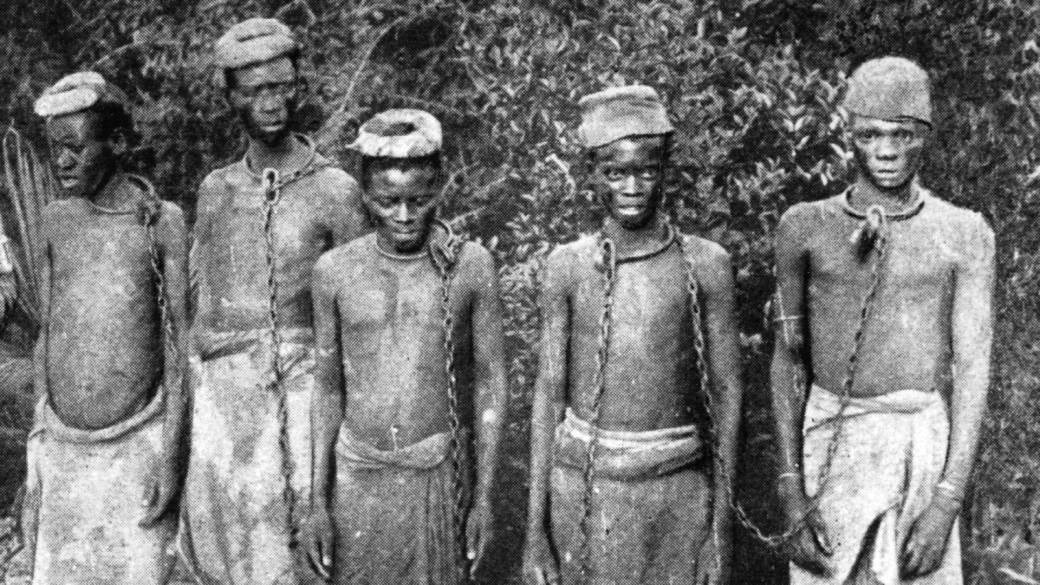
Khaled El-Enany, Director-General of UNESCO, stated in his message to mark this year’s occasion that the International Day calls on humanity to remember the victims and survivors of slavery and serves as a reminder that its damage lives on. He affirmed that remembering is an act of collective responsibility and dignity. Speaking during a similar occasion last year, El-Enany’s predecessor, Audrey Azoulay, noted that between the 16th and 19th centuries, around 27 million Africans were forcibly removed from their homes and shipped across the Atlantic and elsewhere. Only 7.4 million arrived at their destination, where they were objectified, exploited, and abused, with their labor being given greater value in the eyes of the slavers than their lives.
Azoulay added that the International Day is intended to inscribe the tragedy of the slave trade in the memory of all peoples. In accordance with the goals of the intercultural project, it offers an opportunity for collective consideration of the historic causes, methods, and consequences of this tragedy, alongside an analysis of the interactions it gave rise to between Africa, Europe, the Americas, and the Caribbean.
From these descriptions by senior UN officials, slavery, whether Transatlantic, Arabic, or modern-day, is far too grave a crime to be classified merely as a cultural project. Such an institutionalized crime must carry commensurate consequences, including formal reparations and reparatory justice. In an article written two decades ago to commemorate 200 years of the official abolition of the Transatlantic Slave Trade in 1807, it was argued that sorrow, condemnation, and simple acknowledgment will never suffice to bring closure to a criminal enterprise that enriched the Church of England, the British Monarchy, parliamentarians, and prominent European and American companies.
The rebellion by enslaved people in Saint-Domingue, present-day Haiti, on August 22–23, 1791, played a crucial role in forcing the abolition of the Transatlantic slave trade. Ironically, Haiti, the first Black nation to become an independent republic in 1804, has never known lasting peace or fully recovered from the crippling debt peonage France later imposed upon it. While Haiti’s case is particularly dramatic, it serves as a broader metaphor for the plight of Africa, from where millions of men and women were uprooted and shipped like commodities into forced labor on sugarcane, cotton, tobacco, and rice plantations.
Instituted in 1998 by UNESCO, the International Day for the Remembrance of the Slave Trade and its Abolition was first celebrated in several countries, notably Haiti in 1998 and Gorée Island in Senegal in 1999. It is well-documented that profits from the slave trade financed the British Industrial Revolution and early industrialization in the United States. Modern cities like Bristol, Leeds, Liverpool, London, and Glasgow owe much of their historical opulence to wealth extracted from the slave trade.
Former Archbishop of Canterbury, Rowan Williams, previously described the slave trade as an offense to human dignity and freedom and the greatest cause of grief to God’s spirit. He noted that those who are heirs to slave-owning and slave-trading nations must face the fact that their historic prosperity was built in large part on this atrocity, while heirs of the ravaged communities know all too well that much of their present suffering is the direct result of centuries of systemic abuse.
Beyond symbolic remembrances and lamentations, calls for reparations are routinely dismissed on flimsy excuses, compounded by a historically uncoordinated response from African leadership. Some ill-informed commentators and revisionists attempt to shift blame onto African chiefs by accusing them of selling their own people. While a few local leaders participated in the trade, they never operated the international shipping or processing infrastructure. Furthermore, the mirrors, salt, and gunpowder received by local leaders pale in comparison to the immense fortunes generated by Western slavers. Tellingly, following abolition, European governments compensated slave owners for giving up their human property; the United Kingdom alone paid slave owners the equivalent of more than 21 billion US dollars in today’s currency.
Unlike the historically episodic efforts from Africa, the Heads of Government of the 15-nation Caribbean Community established the CARICOM Reparations Commission in 2013. The commission operates on a comprehensive framework demanding a full formal apology, financial reparations, the creation of indigenous development programs, and the establishment of cultural institutions such as museums and research centers to examine crimes against humanity. Their demands also encompass addressing regional public health crises, eradicating illiteracy, founding African knowledge initiatives, providing psychological rehabilitation for descendants of the enslaved, transferring technology, and granting total debt cancellation.
These demands are well-founded given the massive losses sustained by enslaved nations and the astronomical wealth accumulated by slaving powers. A 2023 report co-authored by UN Judge Patrick Robinson estimated that the United Kingdom alone owes over 24 trillion US dollars for its role in slavery across 14 nations, calling that figure a conservative underestimation. Despite these findings, successive Western governments continue to reject accountability and resist calls for financial restitution.
This stance stands in stark contrast to global precedents regarding other historic atrocities. Holocaust survivors have received ongoing compensation for more than seven decades. In September 2022, organizations representing Jewish survivors announced that Germany agreed to pay approximately 1.2 billion US dollars in 2023 alone, bringing total post-war compensation past 80 billion euros. In October 2024, additional direct payments were approved to assist survivors with recent crisis impacts.
These legal precedents demonstrate that state responsibility for historic crimes does not expire over time, rendering arguments that living generations cannot be held accountable for past atrocities legally fragile. While Holocaust denial and anti-Semitism are rightfully criminalized across Western nations, similar accountability is routinely denied for the transatlantic slave trade.
Even recent international measures highlight this ongoing division. The non-binding UN Resolution A/80/L.48, which declared the slave trade the gravest crime against humanity, saw 52 abstentions and opposing votes from Argentina, Israel, and the United States. Until participating nations and institutions fully own their historical responsibility in the manner Germany has regarding the Holocaust, the transatlantic slave trade remains unfinished business and a severe stain on global conscience. Reparation advocates across Africa and the diaspora, including CARICOM and the Commonwealth under Secretary-General Shirley Botchwey, must build strategic synergies and demand meaningful restitution.
See more Liberia News Network stories in Google Search by adding LNN as one of your Preferred Sources.
★ Add LNN as a Preferred Source