Agricultural extension services play a major role in a farming community’s success. From production to farmers’ livelihoods, extension is core to the success of Liberia’s farming community. Therefore, strengthening national extension agents’ capacity in Liberia remains a key focus for agri-economic growth in the country.
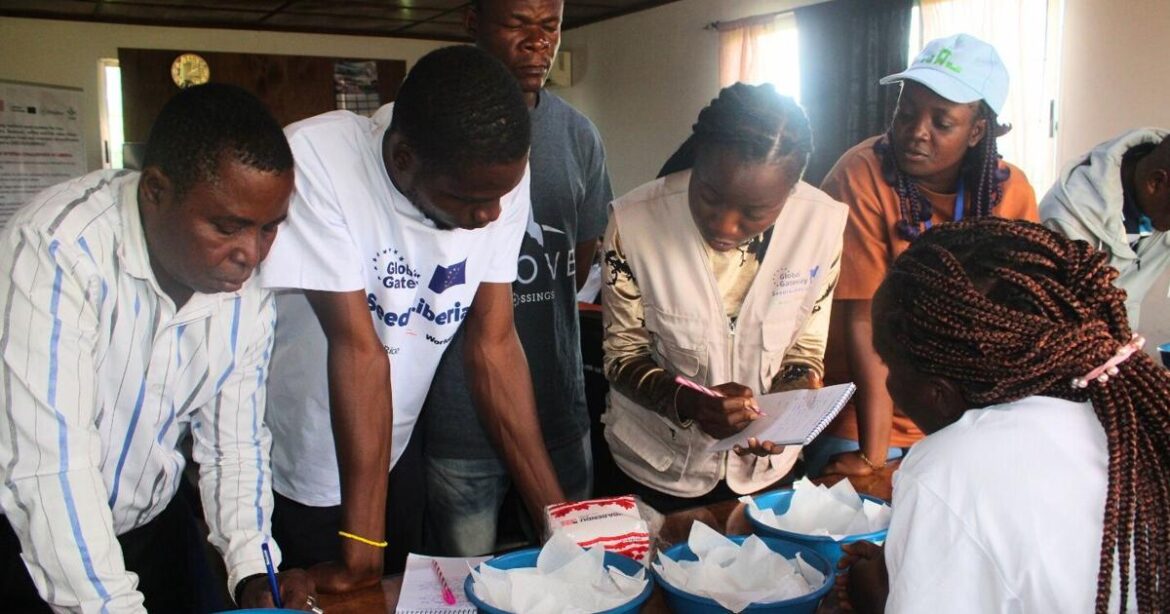
In this light, the EU-funded Seeds4Liberia Project, in collaboration with the Central Agricultural Research Institute (CARI), recently conducted a two-day intensive training for government extension officers and selected soybean private seed enterprises on soybean production and quality seed multiplication.
The training aimed to enhance participants’ technical knowledge and skills across the entire soybean seed production cycle, including site selection, land preparation, planting, crop and field management, rouging off-types, pest and disease management, harvesting, post-harvest handling, storage, and basic seed quality assessments.
The event also reflects the country’s bold drive for food security and agricultural economic growth through crop diversification. Soybean, a crop intended to be integrated into Liberia’s cropping calendar, could also benefit the country’s fisheries and livestock sectors, said the project’s soybean lead, Dr. Abebe Abush.
“Soybean is considered the best crop in protein content (about 40% of the dry grain) and useful for animal feed, especially for the poultry and fishery industries. It is also important for cooking oil production. So, you see, this crop has a lot of potential, and that potential cannot be exploited without you, the experts on the ground, promoting soybean cultivation in Liberia,” said Dr. Abush.
Also emphasizing the importance of extension agents in Liberia’s quest for agricultural growth, Akoi Mulbah, proxy for CARI’s Director General, said extension agents play a critical role in the success of Liberia’s agricultural story, which also includes the reintroduction of the soybean crop in Liberia.
“If our country is to prosper economically through agriculture, it will be from your contributions. So, I am encouraging you to make the most of this training,” he said. Mulbah, Assistant Program Officer at CARI, appreciated “the European Union and project implementing institutions for their role in Liberia’s drive to agricultural prosperity”.
In Liberia, extension delivery services face issues ranging from mobility to capacity-strengthening opportunities. According to an assessment under the EU-funded DeSIRA Integrated Rice-Fish Farming System Project (DeSIRA-IRFFS), the ratio of farmers to extension officers in Liberia is very low, far below the recommended ratio of 1:600, which is 1:35,000, one extension officer to 35,000 farmers, the report reveals.
However, with the EU-funded Seeds4Liberia Project, extension officers’ competencies are being strengthened to provide better advisory services, ensure seed producers’ compliance with national seed standards, and contribute to the production of quality-assured foundation and certified seeds for Liberia’s emerging soybean seed system.
The EU-funded Seeds4Liberia Project is jointly implemented by Africa Rice Center (AfricaRice), the International Institute of Tropical Agriculture (IITA), and WorldFish in collaboration with the Ministry of Agriculture (MoA), the Central Agricultural Research Institute (CARI), the National Fisheries and Aquaculture Authority (NaFAA), the Seed Development and Certification Agency (SDCA), and the Liberia Agricultural Commodity Regulatory Authority (LACRA). It supports national development frameworks for enhanced food and nutrition security and job creation in Liberia.
See more Liberia News Network stories in Google Search by adding LNN as one of your Preferred Sources.
★ Add LNN as a Preferred Source