
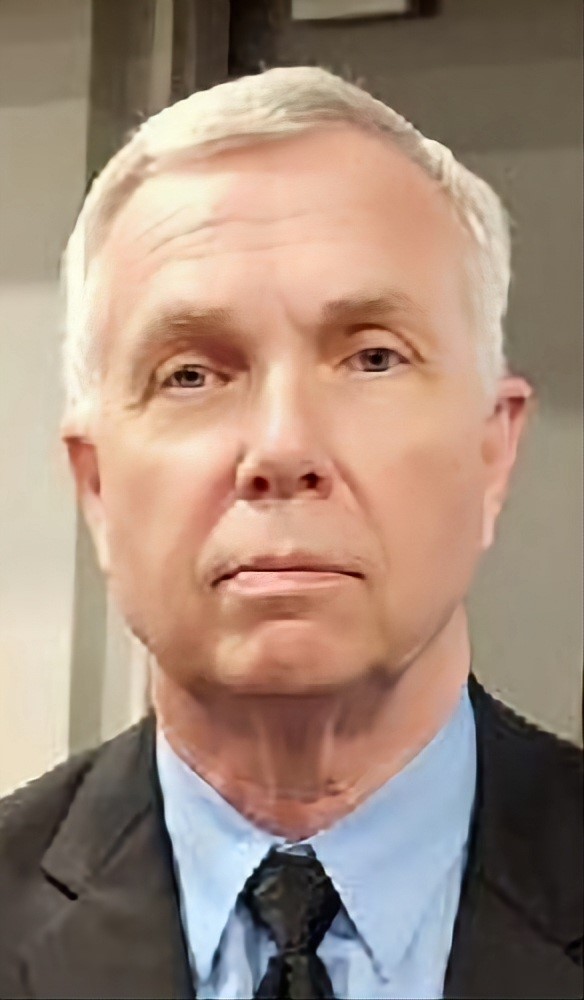
By Dr. Randy Nelson, Professor Emeritus of Education
Editorial Contributor
Liberia lives in a place of honor within my mind. The country has earned my deepest respect, a reverence stemming from a priceless national asset that has caught my eye and galvanized my conscience. It must not be ignored. It must not be diminished by relentless acts of complacency. It must not fall victim to the stain of hopelessness.
That priceless national asset is the people of Liberia and the greatness within them. Its value is evidenced in the people’s perseverance, their determination, their resilience, and their intelligence. Interaction with thousands of Liberians has led me to one overriding conviction: The people of Liberia must have the opportunity to reach their maximum potential by engaging in world-class education. They will then become empowered—unstoppable—and they will bring change to the country.
When I first visited Liberia in 2018, I saw something remarkable. I arrived here knowing I would be conducting a pedagogy workshop for practicing educators. Weeks before my arrival, I believed I would be teaching approximately 10 or 12 participants, all recently hired to serve a new school on the outskirts of Monrovia. But word about the training had spread through the surrounding communities, and by early morning on the first day, 145 spirited educators had enrolled. The auditorium was packed from wall to wall.
What I saw in those 145 educators impressed me deeply: hunger to learn, gratitude for the opportunity to improve, enthusiasm for the teaching profession, and generosity of spirit. Many expressed a desire to earn the next credential. Some spoke of university degrees and influential titles. They shared their dreams with energized, expectant voices, determined to overcome the challenges before them.
Within the education sector, the challenges are indeed abundant. They include teachers who sometimes struggle to read and write, inconsistent teacher training, poor salary or, at times, no salary. Educators face a lack of respect for the teaching profession and endure overcrowded classrooms. Children sometimes sit on broken benches or on the floor. Chalkboards are too often worn and faded, rendering the teacher’s writing indecipherable. Schools lack the finances required to purchase textbooks. Teachers stand before children who struggle to focus because they are hungry.
These challenges strike at the heart of any educator who must endure them. If they are not addressed, apathy, despondency, and low academic achievement will too often be the outcome. Low achievement will create impediments that may last a lifetime.
Amid the challenges, we must remember the successes.
A young man I know from that initial 2018 workshop has stayed in touch with me over the years. Whenever I am preparing to visit Liberia, he asks me for one type of gift from the United States: spare textbooks about the education profession. He does not ask for electronic gadgetry; he asks for books. And I say with great pride that less than a month ago, he graduated with a B.Sc. in School Administration.
I know a young man who teaches high school English in Montserrado County. His language skills are superior, easily rivaling those of the many wordsmiths I have known. When we are together, the conversation typically centers around the English language. We discuss the importance of precise usage, as well as effective strategies to help young people learn it. His mind is curious and alive.
I have interacted with administrators who are committed to offering professional development to their faculties. At some schools, the WAEC and WASSCE results deserve our thunderous applause. These successes are not accidents. They come from committed education professionals across the spectrum.
Dedicated agencies such as the Ministry of Education and the National Commission on Higher Education create the framework for educational success. Both are taking important steps to promote high standards and implement accountability measures.
I have now made 11 trips to this country to teach and work with education professionals from all levels of the sector—from nursery teachers to university professors. Each time I visit, one thought returns to me: High-quality education is essential for national development and an improved quality of life.
In the weeks ahead I will be writing about topics that, I believe, will be of importance to educators everywhere. I will never point the finger of blame. I will instead share my convictions and encourage a shared responsibility to find and implement solutions. I come to these convictions with more than 45 years of experience as an educator and an abiding faith in Liberia’s people.
Education is power. Let us aim for the sun and never settle for less.
