From Revolutionary Ideas to the Struggle for Democratic Power
The Liberian Progressive Movement began as an intellectual and political challenge to a political order that had dominated Liberia for generations.
In the 1970s, organizations such as the Movement for Justice in Africa (MOJA) and the Progressive Alliance of Liberia (PAL) challenged political exclusion, economic inequality, concentration of power and the absence of meaningful popular participation.
But Liberia’s history would subject the progressive movement to a difficult test.
Could a movement that had been highly influential in political thought transform itself into an effective electoral force capable of governing the country?
That question became particularly important after Liberia emerged from years of military rule and civil war.
The struggle had moved from the streets and university campuses into the ballot box.
FROM REVOLUTIONARY POLITICS TO ELECTORAL POLITICS
The 1980 coup and the subsequent civil wars fundamentally changed Liberia’s political landscape.
The old True Whig order had collapsed, but the country did not immediately become the democratic society many progressives had envisioned.
Instead, Liberia experienced military rule, repression, rebellion and two devastating civil wars.
By the time the 2003 Comprehensive Peace Agreement ended the second civil war, the central political question had changed.
It was no longer simply:
How should an entrenched political order be challenged?
It had become:
How can Liberia construct democratic institutions capable of preventing the return of authoritarianism while delivering social and economic justice?
The progressive movement itself had also changed.
MOJA and PAL were no longer the political vehicles they had been in the 1970s. Former progressives had moved into government, civil society, academia, diplomacy, opposition politics and other areas of national life.
The movement had fragmented.
But its ideas survived.
HENRY BOIMAH FAHNBULLEH JR.: FROM PROGRESSIVE ACTIVIST TO PRESIDENTIAL CANDIDATE
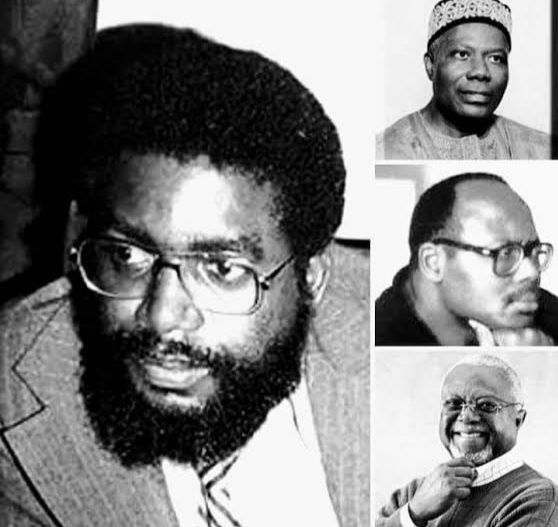
One of the most important figures in this transition was Dr. Henry Boimah Fahnbulleh Jr.
Fahnbulleh was not merely an intellectual associated with Liberia’s progressive tradition. He eventually carried those political ideas directly into presidential elections.
His first presidential campaign came in 1997, following Liberia’s first civil war.
Fahnbulleh contested the presidency on the Reformation Alliance Party (RAP) ticket, with Peter L. Naiagow as his running mate.
The 1997 election was overwhelmingly dominated by Charles Taylor and the National Patriotic Party. Fahnbulleh received approximately 2,067 votes, or 0.33 percent of the presidential vote.
The result demonstrated the enormous difficulty facing smaller ideological parties in post-war Liberia.
But the campaign itself was historically significant.
A prominent figure from the progressive tradition had attempted to translate progressive political ideas into a national electoral program at a time when Liberia was emerging from devastating conflict.
The question was no longer whether progressive ideas could influence political discussion.
The question was whether those ideas could command enough votes to govern.
They could not—at least not in 1997.
TWENTY YEARS LATER: FAHNBULLEH RETURNS
Two decades later, Fahnbulleh returned to Liberia’s presidential ballot.
In the 2017 presidential election, he contested under the Liberia People’s Party (LPP) banner, with Marcus S. G. Dahn as his running mate.
The National Elections Commission’s final results recorded Fahnbulleh with 11,560 votes, representing 0.74 percent of the presidential vote.
The number was considerably higher than his 1997 vote total, but the LPP remained a relatively small electoral force compared with the major presidential contenders.
The significance of Fahnbulleh’s two campaigns lies not simply in the percentages.
They represent two very different Liberias.
In 1997, the country was emerging from civil war and Charles Taylor dominated the political landscape.
In 2017, Liberia had experienced more than a decade of post-war constitutional government and was preparing for a peaceful transfer of presidential power.
Yet the progressive electoral vehicle remained relatively small.
That raises one of the most important questions in the history of Liberian progressivism:
Why have progressive intellectuals and activists exerted influence over Liberia’s political debate without building an equally powerful national electoral organization?
THE ELECTORAL PARADOX OF PROGRESSIVISM
This became one of the central paradoxes of Liberia’s progressive movement.
The movement produced intellectuals, organizers, government officials, diplomats, academics and political activists.
It helped introduce powerful arguments about social justice, inequality, political accountability and popular participation.
Yet its traditional political parties repeatedly struggled to convert that influence into presidential electoral strength.
The problem cannot simply be attributed to voters rejecting progressive ideas.
Liberian elections involve personalities, ethnic and regional considerations, party structures, campaign resources, political coalitions, historical loyalties and contemporary issues.
A political ideology alone does not determine electoral outcomes.
Fahnbulleh’s two presidential campaigns therefore provide an important case study of the gap between political influence and electoral organization.
THE 2005 ELECTION AND THE RETURN TO CONSTITUTIONAL POLITICS
The 2005 election represented another major turning point.
After the transitional government established under the 2003 peace agreement, Liberians returned to the polls.
Ellen Johnson Sirleaf eventually won the presidency, defeating George Weah in the runoff.
The election was important not only because it produced Liberia’s first elected woman president.
It also represented the return of competitive constitutional politics following years of war.
The issues that had concerned the progressive movement remained highly relevant: corruption, poverty, economic inequality, public accountability, institutional reform and the relationship between citizens and government.
But the political vehicles had changed.
Progressivism was no longer represented by one unified movement.
Its ideas were now scattered across political parties, civil society organizations, universities, the media and government institutions.
FROM MOJA TO THE LIBERIA PEOPLE’S PARTY
The Liberia People’s Party became one of the principal institutional descendants of Liberia’s progressive political tradition.
Its roots were connected to the earlier progressive movement and the political work associated with figures such as Togba-Nah Tipoteh.
But the LPP’s electoral history demonstrates the difficulty of maintaining a distinct ideological party in a political environment dominated by larger coalitions and personality-driven campaigns.
Tipoteh himself contested the presidency in 2005 under the Alliance for Peace and Democracy.
Henry Fahnbulleh later carried the LPP banner in 2017.
Tiawan Gongloe carried it again in 2023.
The candidates changed.
The political environment changed.
But the fundamental challenge remained:
How can a relatively small ideological movement develop the organizational structure necessary to compete nationally?
THE 2017 ELECTION
The 2017 election further demonstrated how far Liberia’s political system had moved beyond the traditional True Whig-versus-progressive divide.
George Weah’s Coalition for Democratic Change emerged as the leading force in the first round, while Joseph Boakai and other candidates competed for the presidency.
Fahnbulleh’s LPP campaign received only a small fraction of the national vote.
But the election produced an important historical development: Liberia experienced a peaceful transfer of presidential power from Ellen Johnson Sirleaf to George Weah.
For a country that had experienced coups and civil wars, this was significant.
The progressive generation had spent decades arguing for political participation and peaceful political competition.
By 2017, electoral democracy had become an established part of Liberia’s political system.
The unresolved question was whether democratic elections alone could deliver the broader economic and social transformation envisioned by earlier progressive thinkers.
THE PROGRESSIVE QUESTION UNDER WEAH
George Weah’s presidency introduced another political chapter.
His rise demonstrated that Liberia’s political competition had moved substantially beyond the ideological battles of the 1970s.
The central political struggle increasingly involved questions of economic opportunity, corruption, public services, infrastructure, employment and governance.
Many of these issues nevertheless remained connected to the concerns raised by the progressive generation.
The vocabulary had changed.
The underlying questions had not.
Who controls Liberia’s resources?
Who benefits from economic growth?
How accountable should government officials be?
How independent should public institutions be?
How should political power be distributed?
And how can ordinary citizens exercise meaningful influence over government?
THE 2023 ELECTION AND THE CONTINUING PROGRESSIVE QUESTION
The 2023 presidential election provided another illustration of Liberia’s fragmented political landscape.
The National Elections Commission recorded 20 presidential candidates.
George Weah and Joseph Boakai dominated the first-round vote, while Tiawan Gongloe of the Liberia People’s Party received 26,394 votes, or approximately 1.44 percent.
The result again demonstrated the difficulty smaller ideological parties face when competing against well-funded and broadly organized political coalitions.
But it also demonstrated something else.
The progressive tradition had survived across several generations.
From MOJA and PAL in the 1970s, to the political campaigns of Togba-Nah Tipoteh, Henry Fahnbulleh, and later Tiawan Gongloe, the tradition continued to appear on Liberia’s political ballot.
Its electoral strength remained limited.
Its intellectual and historical influence, however, continued to be part of Liberia’s political conversation.
FROM POLITICAL PARTIES TO CIVIL SOCIETY
Perhaps the most important transformation of the progressive movement was its migration beyond political parties.
Former progressives and people influenced by progressive thinking increasingly became active in civil society, academia, journalism, human-rights organizations, governance institutions and public-policy advocacy.
This meant that progressive politics could no longer be measured simply by the number of seats held in the Legislature or votes received in a presidential election.
Ideas about transparency, accountability, human rights, freedom of expression and responsible government became part of mainstream political debate.
This was an important historical development.
The progressive movement did not become Liberia’s dominant political party.
Instead, elements of its political vocabulary entered the broader national conversation.
THE UNFINISHED REVOLUTION
The greatest challenge facing Liberia’s progressive tradition today is therefore not simply whether MOJA or PAL can be recreated.
Liberia is no longer the Liberia of the 1970s.
The country has undergone war, democratic transition, globalization, technological change and generational transformation.
Young Liberians communicate through social media rather than the political networks available to the progressive generation of the 1970s.
Yet many of the underlying problems remain familiar.
Youth unemployment.
Economic inequality.
Corruption.
Natural-resource management.
Political accountability.
Weak institutions.
Limited economic opportunity.
Access to justice.
These were among the issues that helped generate progressive political activism decades ago.
They remain part of Liberia’s political conversation today.
WHAT DID THE PROGRESSIVE MOVEMENT ACTUALLY ACHIEVE?
The answer depends partly on how success is defined.
If success means capturing the presidency through a unified progressive political party, the historical record provides little evidence of such an outcome.
But if success includes influencing political thought, producing generations of political activists and intellectuals, challenging entrenched political assumptions and expanding public debate about accountability and social justice, the historical record is broader.
The movement’s legacy cannot therefore be reduced to election results.
The campaigns of Henry Fahnbulleh in 1997 and 2017, Tipoteh’s presidential campaigns, and the later LPP candidacies demonstrate both the persistence and the electoral limitations of the progressive tradition.
FROM REVOLUTION TO INSTITUTIONS
This may ultimately be the most important lesson of the progressive movement.
The generation of the 1970s understood that political change required challenging entrenched power.
Liberia’s civil wars subsequently demonstrated the catastrophic consequences of political competition without strong democratic institutions.
The post-2003 period demonstrated the importance of constitutional government, elections and peaceful transfers of power.
But elections alone cannot answer every question raised by the progressive movement.
A government can be elected and still face questions about corruption.
A political party can campaign on reform and still struggle with institutional resistance.
A country can conduct competitive elections while large sections of its population remain economically marginalized.
The progressive question therefore remains unfinished.
It is no longer simply about who occupies the Executive Mansion.
It is about whether Liberia can build institutions strong enough to protect citizens regardless of who occupies the presidency.
THE LEGACY FOR A NEW GENERATION
For many young Liberians, MOJA, PAL, the Rice Riots and the political struggles of the 1970s are distant history.
But the fundamental questions that produced the progressive movement remain relevant.
Who owns Liberia’s wealth?
Who controls political power?
Who benefits from economic development?
How accountable should public officials be?
How independent should the courts and Legislature be?
How can citizens hold government accountable?
And perhaps the most important question:
Can Liberia build a political system in which institutions are stronger than individuals?
That is where the history of the progressive movement meets the Liberia of today.
The movement began as a challenge to political exclusion.
It survived dictatorship and civil war.
Its members entered government, opposition politics, academia and civil society.
Its ideas moved into mainstream political discourse.
And its presidential candidates—including Henry Boimah Fahnbulleh Jr. in 1997 and 2017—continued to carry aspects of that tradition into the electoral arena.
But the movement never fully solved the central problem of converting progressive political thought into a durable mass political organization.
That unresolved contradiction sets the stage for the next chapter.
PART FIVE:
THE FRAGMENTATION OF THE PROGRESSIVE MOVEMENT — MOJA, PAL, LPP, CIVIL SOCIETY AND THE NEW OPPOSITION
Part Five will examine how the original progressive movement fragmented, what happened to its leading personalities, how its ideas entered Liberia’s civil society and political institutions, and whether a new generation of Liberians is beginning to revive the original questions under new political names.
See more Liberia News Network stories in Google Search by adding LNN as one of your Preferred Sources.
★ Add LNN as a Preferred Source