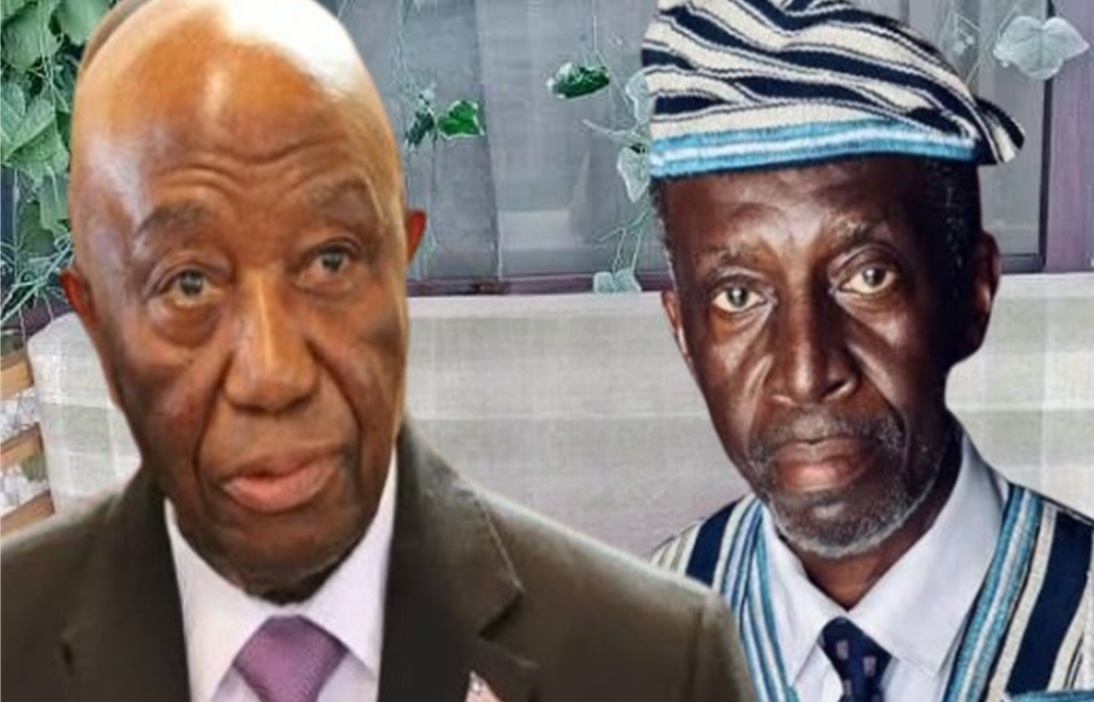
A Rejoinder to Tiawan Saye Gongloe—President Boakai Did Not Travel to America to Count Meetings—He went to Reposition Liberia
It’s perfectly reasonable to question what a President brings back from an international trip.
Mr. Tiawan Saye Gongloe is correct in emphasizing that the Liberian people deserve accountability regarding public funds, officials, and decisions.
Howbeit, accountability should also be contextualized. This is where Gongloe’s recent piece, “Welcome Back, Mr. President: After 23 Days Away, What Have You Brought Home for Liberians?”, falls short by presenting only part of the narrative.
President Joseph Nyuma Boakai did not spend 23 days in the United States merely attending events, taking photos, and shaking hands. He traveled to Washington, New York, and the United Nations. He met with members of the U.S. Congress, engaged with the Liberian Diaspora, and tackled issues related to trade, investment, infrastructure, security, and international cooperation.
Most importantly, he represented Liberia, which is set to hold a seat on the United Nations Security Council for the 2026–2027 term—a significant diplomatic opportunity for this small West African nation concerning international peace and security. This context is crucial.
THE PRESIDENT WAS NOT ON A VACATION
Let’s address the main point: President Boakai left Liberia on September 13 and returned on October 6. While that is indeed a long absence, the government must be ready to justify the expenses related to this mission.
Liberians should eventually learn about the commitments made during these discussions.
However, to imply that the mere mention of “23 days” indicates excess is to misinterpret the time spent pursuing national interests as time wasted.
Diplomacy isn’t like a taxi meter that runs on a simple fare system. A President doesn’t just fly to Washington, meet one person, then head to New York for a speech, and rush back to Monrovia just to say he made the trip in record time.
International diplomacy involves careful planning around calendars, access to key figures, bilateral and multilateral meetings, side events, conferences, and opportunities that unfold over several days.
Moreover, Liberia’s travel plans were made public before the President’s departure. The Liberian Embassy in the U.S. stated that the mission included meetings with Congress in Washington, participation in the 81st United Nations General Assembly in New York, the Liberia Annual Diaspora Conference in Alexandria, Virginia, and a special visit to the Liberian Maritime Registry.
This was not a last-minute itinerary created to justify a longer stay; it was clearly announced in advance.
THE REAL QUESTION IS NOT WHY “23 DAYS?”
The more pertinent question is: What did Liberia achieve during those 23 days, and what comes next? This is a question that this administration should embrace.
Based on the available record, there is much more to discuss than what Gongloe’s calculations imply.
President Boakai met with U.S. Congressman Gregory Meeks, the Ranking Member of the House Foreign Affairs Committee, in Washington. Their discussions revolved around Liberia’s diplomatic ties with the United States, trade and investment, democratic governance, peace and security, energy, infrastructure, and economic transformation. Additionally, the President met with U.S. Senator Angela Alsobrooks from Maryland. This meeting was particularly significant as it linked presidential diplomacy to the existing Liberia–Maryland partnership, which encompasses education, agriculture, technology, infrastructure, workforce development, and investment.
The Boakai administration has prioritized the implementation of this partnership.
Furthermore, there was engagement at the White House. President Boakai’s meeting with Dr. Paula White-Cain, a senior adviser from the White House Faith Office, centered on Liberia’s historic ties with the United States, faith, leadership, and opportunities for ongoing collaboration.
Are these discussions automatically equivalent to millions of dollars in investment? No, and it would be misleading to suggest otherwise.
Howbeit, it is equally misleading to claim that diplomatic access holds no value simply because an investment check wasn’t presented to the President in front of a camera.
LIBERIA’S PLACE IN THE WORLD HAS CHANGED
There’s another matter that requires much more focus. Liberia is no longer just one of many African nations making a standard national statement at the United Nations. Instead, Liberia is set to serve on the United Nations Security Council for the term of 2026–2027. This role significantly alters the way the President engages internationally.
The country now has a chance—albeit small compared to the major powers—to take part directly in discussions about peace, conflict, sanctions, security, and global governance.
In his address at the General Assembly, President Boakai highlighted issues like climate justice, the representation of Africa on the Security Council, and the urgent need for reform in the multilateral system.
He also interacted with world leaders, development partners, and international organizations regarding economic development, investment, climate action, and peace and security.
This is not just a trivial detour; it is a crucial aspect of foreign policy, which is one of the constitutional duties of a national government.
THE DIASPORA IS NOT A POLITICAL SIDE
Gongloe raises a valid question about the outcomes of the diaspora conference. However, the response shouldn’t just focus on the number of contracts signed before the President left for home.
President Boakai attended the conference with a clear and specific message: it’s time to move from dialogue to action.
He pinpointed five key areas for practical steps: enhancing coordination among Liberians overseas; aligning diaspora skills with national needs; transforming diaspora investments into productive ventures; engaging young Liberians living abroad; and establishing measurable follow-up mechanisms with accountable institutions, partners, timelines, and outcomes.
The last point is especially crucial, as the President is essentially stating: Don’t evaluate this conference based on speeches alone; assess it by the results. That’s a standard we should all support.
The President has also referred to the Liberian Diaspora as Liberia’s “16th County” and “Fifth Estate,” highlighting the financial resources, professional skills, international connections, and knowledge that Liberians abroad bring to the table.
For a nation whose citizens overseas send remittances, start businesses, gain expertise, and maintain global networks, diaspora diplomacy transcends mere ceremonial politics; it is a form of economic diplomacy.
SHOULD THE BGOVERNMENT DISCLOSE THE COST?
Yes!
There’s no reason for the Boakai administration to feel defensive about this issue.
If public funds were utilized, the public has a right to know the total amount spent.
If ministers undertook specific assignments, the government ought to clarify what those assignments were.
Any agreements made should be made public.
If commitments were established, there should be clear timelines associated with them.
When investments are discussed, the public should eventually be informed about which ones moved beyond mere conversation.
This isn’t an attack on President Boakai; it’s simply how a responsible government demonstrates transparency.
In fact, President Boakai recently reminded Liberians, “Behind every dollar stands a Liberian,” while committing to accountability as the government announced surpassing the US$1 billion mark in domestic revenue collections. Therefore, this standard should be upheld.
However, accountability should not be weaponized politically to suggest failure before the outcomes have had a chance to develop.
DIPLOMACY IS NOT A SUPERMARKET
One of the main flaws in Gongloe’s argument is the assumption that every foreign engagement should yield an immediate, measurable benefit. Diplomacy doesn’t typically function that way.
A meeting in Congress might pave the way for future investments. Engaging with an American senator could enhance a partnership between states. A UN intervention might place Liberia in a favorable position regarding an international issue. A diaspora conference could create a professional network that takes time to evolve into a business.
Similarly, discussions with development partners may lead to projects that require years of negotiation.
Moreover, conversations about security cooperation might avert issues that never become significant enough to make headlines.
If Liberia evaluates diplomacy solely based on what is agreed upon before the delegation returns home, we risk misunderstanding the complexities of international relations.
BUT LET THE ADMINISTRATION ALSO BE CAREFUL
This is where the government should listen to Gongloe—not solely because his arguments are convincing, but because he raises a significant warning.
The Boakai administration must ensure that the public is not left in the dark.
It is essential for the government to release a detailed post-trip accountability report, rather than a mere political press release.
This report should include: who traveled; who funded the trip; the total expenses; the assignments of each official; the meetings that took place; the agreements made; the commitments undertaken; the anticipated financial impact of those commitments where relevant; the ministries or agencies responsible; deadlines for implementation; and when Liberians can expect the next update on progress.
This approach would turn criticism into a chance for improvement and would also allow for a measurable assessment of President Boakai’s “From Dialogue to Delivery” initiative.
AND HERE IS THE POLITICAL POINT
Liberia has spent far too long looking at government through a narrow focus on individual personalities. When one president is in office, everything they do is seen as great; when another takes over, their actions are criticized. This is not how a republic should operate.
President Boakai should be held accountable, but he should also be recognized when his administration makes positive strides for Liberia. Both of these perspectives can exist simultaneously.
A responsible opposition should inquire: What was the cost of the trip? A responsible government ought to provide answers.
However, the opposition should also consider: What diplomatic opportunities were created? Which partnerships were enhanced? What investments are being sought? What international standing did Liberia achieve? What prospects were opened for Liberians both at home and abroad? And perhaps most crucially: What are the next steps? These questions are more complex than merely counting the days.
WELCOME HOME, MR. PRESIDENTS
Mr. President, it’s wonderful to see you back home. Liberians should not be led to think that every handshake signifies a victory.
Similarly, a 23-day foreign mission shouldn’t be seen as a waste of time.
The information we have suggests that this mission included several important aspects: engaging with Congress, collaborating with the UN, rallying the diaspora, strengthening U.S.–Liberia relations, discussing investments, enhancing security cooperation, and fostering institutional partnerships.
Now, we are entering a critical phase. It’s time to bring those agreements, investments, partnerships, and opportunities back to our country. Most importantly, we need to achieve tangible results.
Gongloe is right in saying that Liberians are less concerned about the number of influential people their President met. What truly counts is whether those meetings will result in better roads, more job opportunities, improved schools, enhanced healthcare, increased investment, greater security, and a thriving economy. That is the true measure of success.
Howbeit, this measure should only be applied after the diplomatic efforts have had a chance to produce results, not prematurely.
President Boakai has returned from his trips to Washington and New York, and now it’s time for the government to transform diplomacy into real outcomes.
When the first results start to surface, Liberia should evaluate the journey not by the 23 days spent, but by the impact those days had on the lives of 5.5 million Liberians.
See more Liberia News Network stories in Google Search by adding LNN as one of your Preferred Sources.
★ Add LNN as a Preferred Source