
By Stephen G. Fellajuah
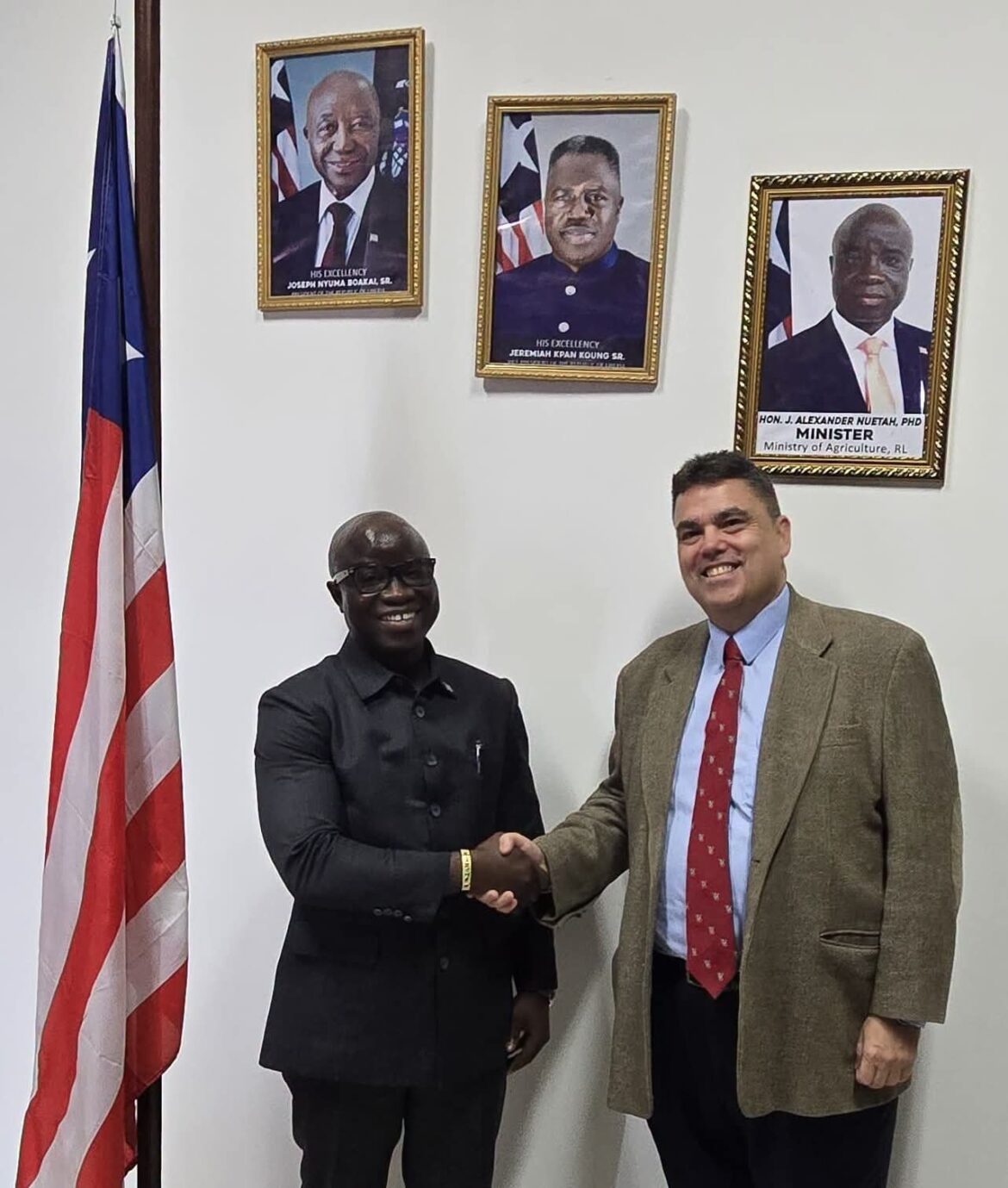
Monrovia, Liberia, August 5, 2026 – The United States Embassy in Monrovia has reaffirmed U.S. support for expanding private-sector investment in Liberia’s agriculture sector following a meeting between Chargé d’Affaires Joe Zadrozny and Agriculture Minister Dr. J. Alexander Nuetah.
The meeting, held August 3, focused on increasing U.S. private-sector investment in Liberia’s priority agricultural value chains, including cocoa, coffee, rice, rubber, maize and cassava.
Liberia has identified those commodities as key to increasing food production, improving processing, expanding market access, creating jobs and boosting exports.
According to the Embassy, Zadrozny said American companies are already investing in Liberia’s agricultural sector through poultry production, a proposed commercial dairy operation and diaspora-led investments.
The Embassy said the investments are intended to support employment, strengthen food security and promote economic growth.
The engagement comes as Liberia and the United States continue to shift parts of their long-standing partnership from traditional development assistance toward investment, trade and agricultural development.
In recent years, the two governments have emphasized American private investment as a tool for sustainable economic growth. Cooperation has also expanded into mining, infrastructure, energy and manufacturing.
Agriculture remains central to Liberia’s economic agenda. The sector employs a large share of the population, while the country continues to import a significant portion of its staple food, especially rice.
In April 2026, Liberia and partners from California launched an initiative aimed at reducing the country’s estimated US$200 million annual rice import bill. The initiative seeks to develop 50,000 hectares of rice fields, support agricultural technology transfer through the University of California, improve irrigation and access to quality seeds, and attract American agribusiness investment.
The government has also sought to attract U.S. investors through trade missions, diaspora engagement and investment forums, with priority areas including agriculture, infrastructure, mining, tourism and digital innovation.
The Special Agro-Industrial Processing Zone initiative is expected to support those efforts by attracting private investment, adding value to agricultural products, creating jobs and expanding exports.
