
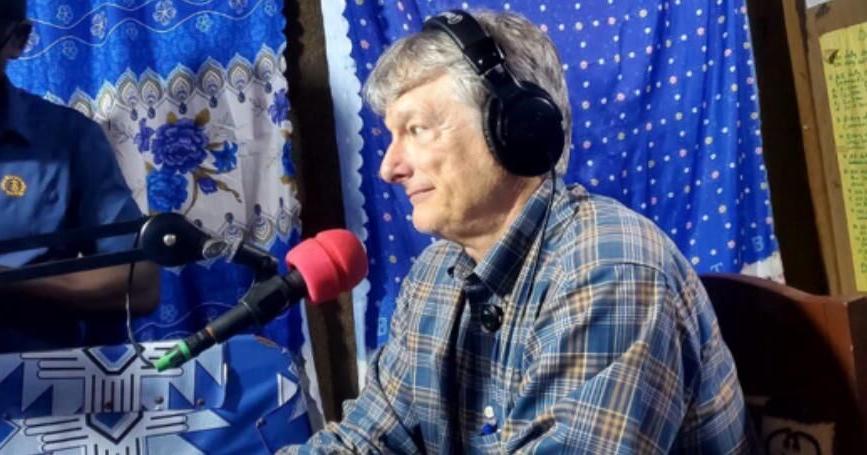
The Public Affairs Officer of the U.S. Embassy in Monrovia, Raymond Stephens, says the United States Government is conducting an assessment of community radio stations across Liberia to evaluate the impact and sustainability of years of support provided through the former United States Agency for International Development (USAID).
Speaking during an exclusive interview on July 8, 2026, with a community radio station in Pleebo-Sodoken District, Maryland County, Stephens said the exercise is intended to measure how previous U.S. investments have strengthened community broadcasting while identifying challenges affecting rural radio stations.
According to Stephens, the U.S. Government has over the years provided broadcasting equipment, technical assistance, and capacity-building support to community radio stations, recognizing their critical role in expanding access to information in underserved communities.
“Community radio remains one of the most effective platforms for reaching people in rural Liberia. It promotes civic participation, provides public education, and serves as a reliable source of information where other forms of media have limited reach,” Stephens said.
He explained that findings from the assessment will provide a clearer understanding of the achievements, operational challenges, and long-term sustainability prospects of community radio stations across the country.
Reflecting on his first official visit to Maryland County years ago, Stephens recalled the transportation difficulties that once characterized travel to southeastern Liberia.
He disclosed that what is now a more routine journey previously took three days because his team repeatedly became stranded in muddy sections of the road.
“My first visit to Maryland took three days because we got stuck in the mud several times. The roads were in such poor condition that reaching our destination became a major challenge,” he recalled.
Stephens acknowledged that while the highway linking Monrovia to Maryland County remains largely unpaved, accessibility has improved significantly over the years.
“Today, traveling to Maryland is much easier. While the road is still not fully paved, it is far more accessible than during my first visit,” he said.
He reaffirmed the U.S. Embassy’s commitment to supporting independent community media, describing local radio stations as essential partners in expanding access to information, promoting civic engagement, and strengthening democratic participation in Liberia’s rural communities.
