
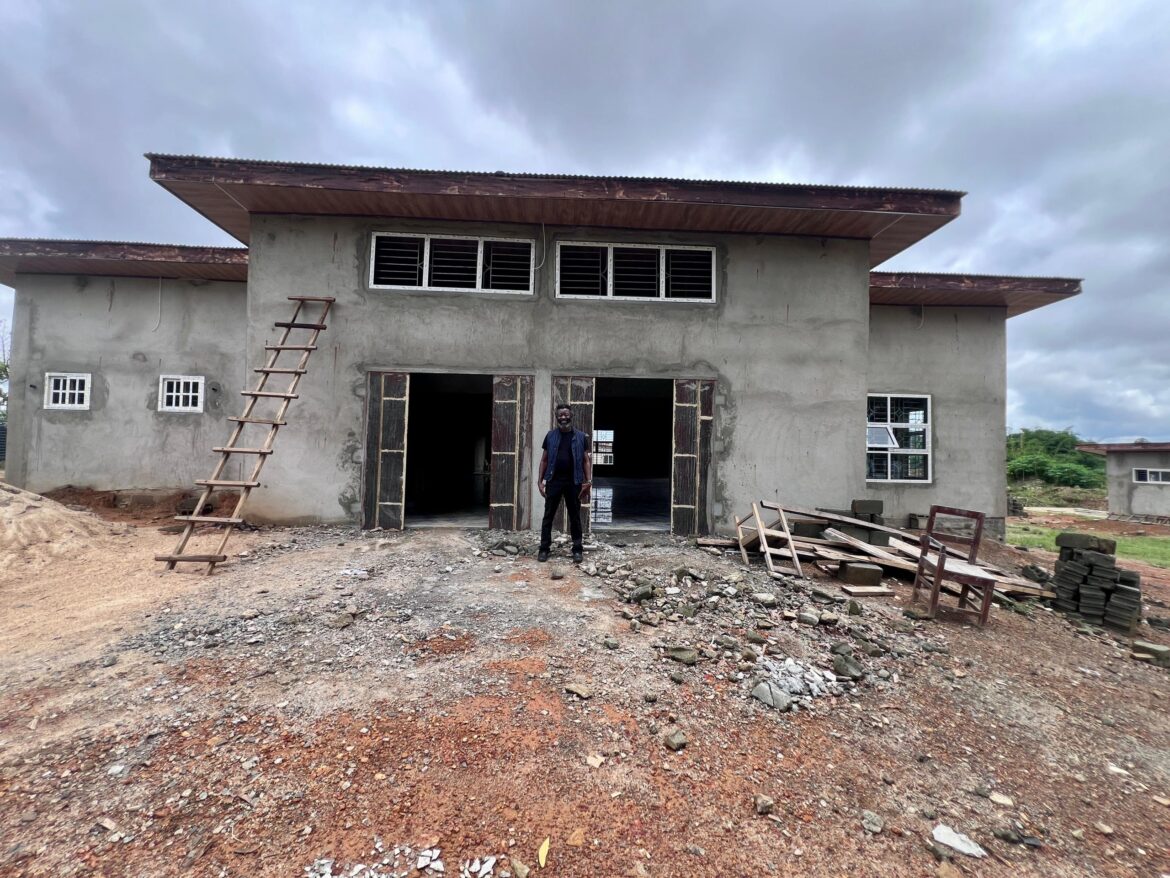
FENDALL, Liberia, October 14, 2026 – The University of Liberia (UL) is nearing completion of a US$680,000 solar-powered student utility park at its Fendall Campus, aimed at addressing longstanding sanitation challenges and improving access to electricity, clean drinking water and essential student services.
The Solar Oasis Student Utility Park, situated on 1.5 acres, is expected to open in December 2026, marking the university’s first major initiative to introduce renewable energy into its campus operations.
The facility features two modern restroom buildings containing 26 toilets and urinals, including 12 toilets for women and nine toilets and five urinals for men. Both buildings are accessible to persons with disabilities, with entrance ramps and designated stalls.
The complex also includes a mini student center with two additional bathrooms, indoor and outdoor drinking fountains, study areas and recreational space.
Powered by solar energy, the facility is designed to provide uninterrupted electricity, running water, sanitation services and Wi-Fi, alongside charging stations and printing services for students.
Speaking following a tour of the facility on Tuesday, October 13, UL President Dr. Layli Maparyan described the project as the first major infrastructure initiative of her administration, reflecting its commitment to innovation, sustainability and student welfare.
She said the Solar Oasis could serve as a model for expanding renewable energy across the university’s four campuses.
“The Solar Oasis was originally conceived as a renewable energy pilot project. Our theory was that, if the Oasis was successful, we could think about scaling solar energy to other aspects of campus and, ultimately, solarizing UL’s entire operation,” Dr. Maparyan explained.
She emphasized that the project goes beyond infrastructure development, demonstrating the university’s determination to improve the learning environment and quality of student life.
“We love you. We care about your future. We want you to thrive. We want you to prosper and to enjoy life. Things have been hard up to now, but they are going to get better,” she told students.
The project is being designed and constructed by a Liberian-owned company headed by a University of Liberia alumnus.
Meanwhile, UL student Thomas Theophilus Hallie, immediate former Speaker of the University of Liberia Student Interim Leadership (ULSIL), welcomed the development, describing it as a major step toward restoring dignity and improving student safety.
“It is a restoration of dignity, safety and a more conducive learning environment for students,” Hallie said.
He noted that inadequate restroom facilities, unreliable running water and poor internet connectivity have long affected students at Fendall, particularly women.
According to him, some female students have been forced to use nearby bushes because of the lack of functional bathrooms, exposing them to harassment, criminal attacks and the loss of personal belongings.
“That reality should never exist in a modern university,” he stressed.
Hallie expressed optimism that the facility would significantly improve campus life by allowing students to concentrate on academic activities rather than struggle with basic necessities.
The Solar Oasis is expected to provide a sustainable model for future infrastructure development at the university while addressing some of the most pressing welfare concerns facing students.
See more Liberia News Network stories in Google Search by adding LNN as one of your Preferred Sources.
★ Add LNN as a Preferred Source