
UN Women has called on the government to urgently reform the country’s care economy after a new report revealed that Liberian women contribute an estimated US$530 million annually through unpaid care and domestic work—an enormous economic contribution that remains largely unrecognized in national planning and public policy.
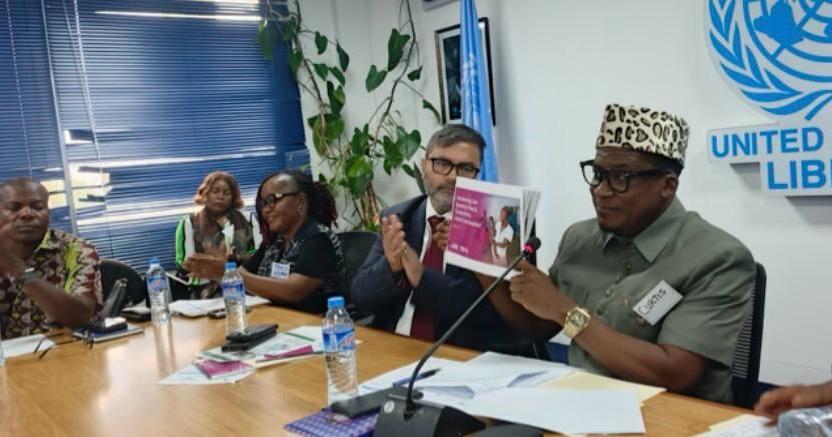
The appeal was made Thursday during the launch of the Liberia Care Snapshot Report 2026, jointly unveiled by UN Women and the Government of Liberia. The report describes care work—both paid and unpaid—as the invisible engine that sustains households, communities and economies across West and Central Africa, while warning that the burden continues to fall disproportionately on women and girls.
The report argues that despite its enormous economic value, unpaid care work remains excluded from development priorities and calls for major investments in childcare, elder care, healthcare, water and sanitation, electricity, transportation, and social protection systems to recognize, reduce and redistribute unpaid care responsibilities.
Launching the report, UN Women Country Representative Abul Hasnat Monjurul Kabir described it as a landmark publication that should fundamentally change how Liberia approaches economic development, gender equality and public investment.
“Today marks an important milestone for our collective effort to advance not only gender equality, women’s economic empowerment and inclusive national development for Liberia,” Kabir declared.
He said one of the greatest barriers to inclusive development is the continued invisibility of women’s unpaid work.
“The invisibility of women in care work has become the greatest challenge of our lifetime. Until and unless we recognize that, the whole discourse on development, GDP and economic growth will not deliver the inclusive growth that we want for everyone—men and women.”
Kabir disclosed that Liberian women generate approximately US$530 million every year through unpaid care and domestic work, while also contributing more than US$1 billion annually in market-based economic activities.
“These two figures are so powerful, yet so invisible, that you don’t see the translation of that figure into national policy priority,” he said.
“It begs the question: Why are we not looking into this? It is so present in our daily lives.”
According to the report, women in Liberia spend more than twice as much time on unpaid care and domestic work as men, despite the country having one of the highest female labor force participation rates in the world.
Kabir explained that the heavy burden of unpaid caregiving limits women’s economic opportunities and keeps many trapped in vulnerable and informal employment.
“Strategic investment in childcare, elder care and other care services has the potential to stimulate economic growth, create decent jobs, reduce poverty and expand opportunities for women and families across Liberia,” he emphasized.
“Investing in care is not only addressing a challenge—it is a smart investment that will yield substantial social and economic returns.”
The report projects Liberia’s population will grow from 5.7 million in 2025 to nearly 9 million by 2050, significantly increasing demand for childcare and elderly care services.
Without reforms, Kabir warned, existing gaps in childcare, healthcare, water and sanitation, electricity, transportation and social protection will place even greater pressure on women and girls, particularly those living in rural communities.
“The future of Liberia’s economic transformation and gender equality agenda depends on how we value, support and invest in care.”
He urged policymakers and development partners to embrace the principles of recognizing, reducing, redistributing, rewarding and representing care work and care workers.
“We must move from awareness to action and build a comprehensive and inclusive care system that leaves no one behind.”
Kabir also acknowledged the Governments of Norway and Sweden for supporting the preparation of the report and expressed optimism that Liberia would benefit from future international initiatives designed to strengthen care systems globally.
Launching the report on behalf of the Government of Liberia, Deputy Minister for Research, Policy and Planning at the Ministry of Gender, Children and Social Protection, Curtis V. Dorley, described the publication as much more than another government report.
“Today’s event is not merely the unveiling of another publication. It marks an important milestone in Liberia’s commitment to evidence-based policymaking, gender equality, social justice, inclusive economic transformation and sustainable human development.”
Dorley said care work has quietly sustained Liberia’s economy for generations.
“For generations, care has quietly sustained our families, communities and economy. Yet without care, there is no productive workforce, no healthy society and no sustainable development.”
The report forms part of a broader regional assessment covering ten West and Central African countries—Liberia, Côte d’Ivoire, Cameroon, the Democratic Republic of Congo, Ghana, Mali, Niger, Nigeria, Senegal and Togo.
Across the region, women perform substantially more unpaid care work than men. While women globally spend about 2.5 times more time on unpaid care work than men, the figure rises to 3.1 times in Sub-Saharan Africa. In Liberia, women perform 2.1 times more unpaid care work than men.
Dorley warned that unless governments act decisively, unpaid care responsibilities across the region could increase by 30 percent by 2050, driven by rapid population growth, demographic shifts and climate change.
“Care is not a social cost. Care is a productive investment.”
He noted that narrowing gender gaps associated with unpaid care responsibilities could increase Liberia’s Gross Domestic Product by an estimated 23.7 percent.
“Investing in care generates employment, expands women’s participation in the labor force, strengthens children’s development, improves health outcomes, supports climate resilience and contributes directly to national economic growth.”
According to him, the report aligns closely with President Joseph Nyuma Boakai’s ARREST Agenda for Inclusive Development, arguing that investments in childcare, social protection, clean energy, water and sanitation services and family-friendly workplace policies should now become national priorities.
“Sound public policy begins with credible evidence. This report is not only a diagnostic assessment; it is a policy roadmap.”
He urged legislators, policymakers and development partners to use the findings to guide future legislation, national budgeting and development planning.
“No single ministry can build an effective care system alone. It requires coordinated leadership, cross-sectoral collaboration, sustained investment, reliable data and political will.”
Also speaking at the launch, Tarlo Harrington Kekulah, Director for Gender at the National Disaster Management Agency (NDMA), described care as the foundation upon which every society is built.
Reading remarks on behalf of the NDMA Executive Director, Kekulah said investments in childcare, elder care, healthcare, disability support services and family-friendly workplace policies would increase productivity, reduce poverty and build stronger, more resilient communities.
“Recognizing, reducing and redistributing unpaid care work is not only a gender equality issue—it is an economic necessity.”
Meanwhile, Assistant Minister for Gender Ophelia J.S. Kennedy reaffirmed the Ministry of Gender’s commitment to ensuring women actively shape future care policies.
“We are looking forward to more collaborative efforts in advancing these issues that affect women in the care system in Liberia,” she said. “Let it not just be spectators or we take to them what we are discussing here. They also should form part of the discussion—from planning to implementation.”
