
By Evelyn Kapdeh Seagbeh
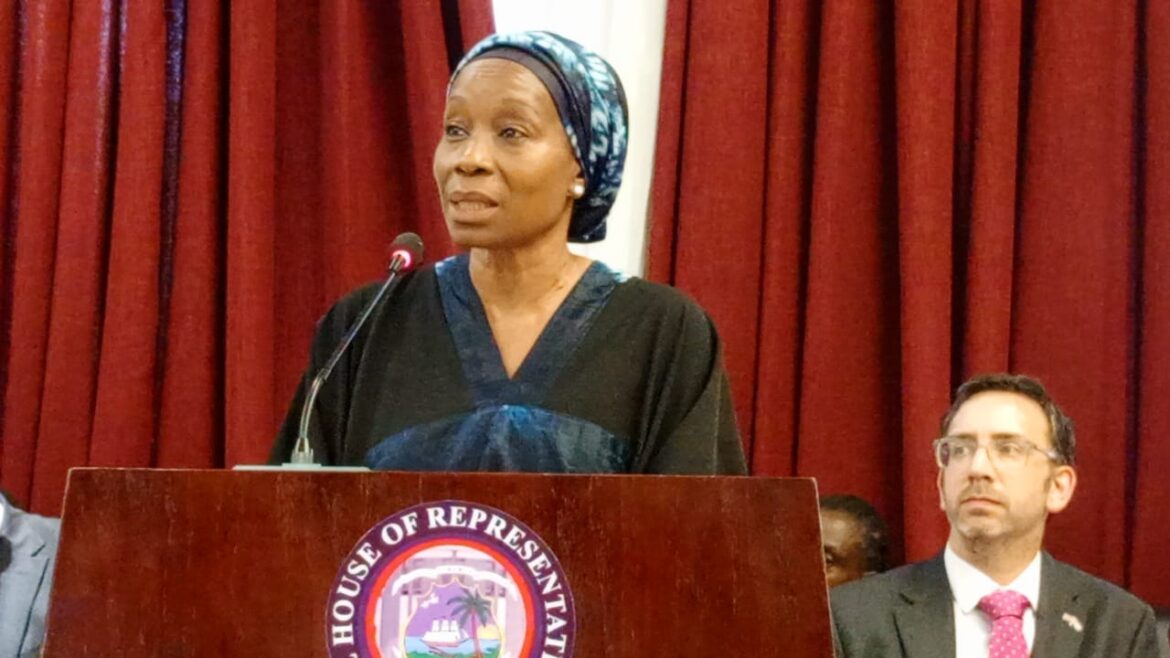
The United Nations Women Country Representative to Liberia, Comfort Lamptey, has called on Liberian lawmakers to translate global commitments into concrete national action by passing the proposed Women and Girls Protection Bill, which seeks to outlaw Female Genital Mutilation (FGM).
Speaking during a one-day legislative engagement organized by the National Coalition Against Harmful Practices (NACAHP) with members of the House of Representatives, recently, Lamptey emphasized the urgency of aligning Liberia’s laws with international standards to protect women and girls in Liberia.
She reaffirmed UN Women’s commitment to supporting Liberia’s efforts to end harmful practices, referencing the pledge made by the Liberian government at the United Nations General Assembly to eliminate such practices. According to her, the ongoing dialogue with lawmakers presents a critical opportunity to turn that global commitment into practical results.
Lamptey also reminded legislators that Liberia remains accountable to the international community. She noted that the country is expected to report progress during upcoming global platforms, including the Commission on the Status of Women, making it essential for decisive legislative action to be taken.
UN Women Country Rep. Comfort Lamptey at a one day meeting with members of the the House of Representatives Highlighting the complexity of the issue, she stressed that ending FGM requires a collective approach involving government, civil society organizations, and communities. She underscored that while passing the law is crucial, it must be accompanied by sustained community engagement and public education.
“Ending FGM is not a one-time event; it is a long-term process,” she noted, adding that awareness efforts must continue even after the law is enacted, given the deep cultural beliefs surrounding the practice.
On the issue of consent, Lamptey was firm, stating that FGM remains a harmful practice regardless of age and should not be legalized under any circumstances. She urged lawmakers to ensure the bill fully complies with international human rights standards.
She further pointed to growing community support as a positive sign, citing outcomes from recent nationwide awareness initiatives. However, she warned against losing momentum, calling on all stakeholders to intensify advocacy efforts to ensure the bill is passed.
Lamptey concluded by urging legislators to act decisively in the interest of future generations, emphasizing that the protection of Liberian women and girls must remain a national priority.
Efforts to end FGM in Liberia has thrive for more than two decades. In Liberia, 13 out of Liberia’s 15 counties practice Female circumcision globally know as Female Genital Mutilation or Cutting. (FGM/FGC).
The UN Women records that In Liberia, Female Genital Mutilation (FGM) remains a widespread harmful practice, particularly in rural areas and within traditional Sande society initiation rites.
The practice is reported in 11 of Liberia’s 15 counties, affecting a significant portion of the population. National estimates indicate that over 50% of women and girls aged 15–49 have undergone FGM, although some studies place the prevalence at about 38%.
Efforts to end FGM have evolved over time. Under former President Ellen Johnson Sirleaf, temporary bans were introduced through executive orders between 2018 and 2019, but these were not permanent.
Subsequent national and traditional leadership actions, including a 2023 ban by chiefs, have aimed to end the practice, suspending the practice for 3 years. However, advocates continue to push for a comprehensive legal framework to permanently end FGM in Liberia.
For his part, Swedish Ambassador to Liberia, Karl Backéus began his remarks first commending NACAHP and Liberian civil society organizations for taking the leadership role of carrying on county level and national engagement about the issue of FGM.

“I want to recognize the very important work that has been done by so many of the organizations that are represented here today, the women who are the victims, women survivors of this practice.”
But he fast acknowledged other beautiful aspects of the Liberia culture that he praised the importance of its that preservation adding that is essential to maintaining the country’s heritage while at the same time protecting the girls and women of Liberia.
Ambassador Backéus meanwhile put the responsibility to Liberia squarely to Liberia ending FGM squarely to members of the national legislature and Liberian themselves, while openly commending those law makers in the House who have shown interest in passing the girls and women protection act. For them as international partners he said they remain committed to supporting the country’s developmental efforts all geared towards that advancing the lives and wellbeing of Liberians.
“I recognize the legislators who are working tirelessly to push the debate for the passage of this bill that decision is in your hands. The ambassador told members of the house.
Efforts to criminalize Female Genital Mutilation (FGM) in Liberia have repeatedly faced setbacks in the Legislature. On several occasions, proposed laws aimed at ending the practice have been rejected or stripped of key provisions. Most notably, a previous Domestic Violence Bill once included measures to criminalize FGM, but lawmakers removed those provisions before the law was passed leaving a critical gap in protections for women and girls.
The meeting was also graced by Ireland’s Ambassador to Liberia, Gerard Considin. Ambassador Considine reaffirmed his country’s commitment to supporting local efforts to end Female Genital Mutilation (FGM), emphasizing the importance of community-led change.
He noted that Ireland’s approach is not to lead interventions, but to support trusted local organizations that understand the cultural context. According to him, sustainable progress happens when communities take ownership of the conversation, survivors feel safe to speak out, and traditional leaders become part of the solution.
The Ambassador highlighted Ireland’s partnership with organizations such as Medica Liberia and Child Fund International, describing them as key actors in driving grassroots change. He welcomed the growing momentum in Liberia’s anti-FGM campaign, particularly the presentation of new evidence to national stakeholders.
However, he cautioned that the work is far from over. He urged stakeholders to ensure that awareness and advocacy efforts reach communities across the country where the practice persists.
Ireland’s Ambassador to Liberia, Gerard Considin making remarks at the legislature Reaffirming Ireland’s support, the Ambassador said his government remains open to expanding assistance to scale up ongoing initiatives, stressing that the fight against FGM requires sustained collaboration and long-term commitment.
Now, attention has shifted to the proposed 2025 Women and Girls Protection Act.
The bill was introduced by President Joseph Boakai following his commitment at the United Nations General Assembly to eliminate harmful traditional practices and strengthen protections for Liberian women and girls. Upon returning to Liberia, the President submitted the draft legislation to the National Legislature as a first step toward fulfilling that pledge.
The responsibility now rests with the House of Representatives and the Senate. As lawmakers deliberate, uncertainty remains over whether this latest effort will succeed where others have failed.
For many advocates, the outcome of this bill represents a critical turning point in the decades-long fight to end FGM in Liberia.
Meanwhile to achieve the game changer now for Liberian women, madam Lamptey remined both CSO leaders, traditional leaders, and member of the House of Representatives to continue sustained awareness across communities.
“I think community engagement will continue before, during and even after the law has been passed, because we know that we are talking about deep-seated beliefs. And so we are not going to finish all of the consultation before the law is passed, but even when the law is passed. Madam Lamptey said.
