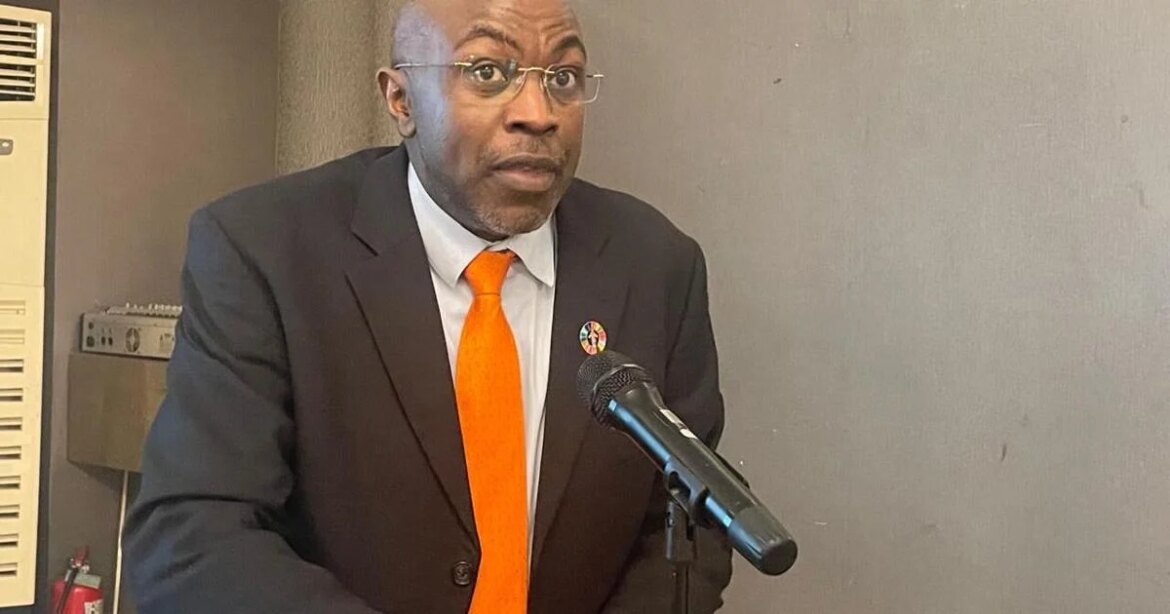
The United Nations Population Fund (UNFPA) has called for the removal of user fees imposed on survivors of gender-based violence (GBV) at public health facilities, warning that financial barriers are delaying critical medical treatment and undermining efforts to secure justice for victims.
Leonard Kamugisha, UNFPA Officer-in-Charge, said the continued imposition of fees presents a major systemic hurdle to Liberia’s efforts to combat gender-based violence, particularly as the government seeks to reduce GBV incidents by 50 percent by 2029 under its development agenda.
Speaking at a high-level policy dialogue on removing service fees for GBV survivors, Kamugisha said survivors who summon the courage to report abuse or seek medical attention should be met with immediate care rather than financial demands.
“When a survivor of gender-based violence summons the courage to break the silence, flee an abusive home or seek medical attention at their public health facility, the first thing they encounter should not be a registration desk demanding a service fee,” he said.
Kamugisha acknowledged that user fees are often imposed by health facilities because of operational and financing challenges, rather than deliberate attempts to deny survivors care. He said inadequate budgetary support sometimes forces facilities to collect out-of-pocket payments to cover basic running costs and keep services operational.
However, he warned that such financial barriers can have serious consequences, particularly for survivors who require time-sensitive treatment following sexual violence.
According to health-sector data cited by UNFPA, 91 percent of survivors of sexual violence reported at health facilities over the past five years were adolescent girls between the ages of 10 and 19, while 61 percent were between 10 and 14 years old.
Kamugisha said the figures highlight the vulnerability of children and adolescents and raise serious concerns about requiring young survivors to pay before accessing essential medical services.
The data further shows that only 47 percent of women who reported rape reached a health facility within 72 hours, the critical period for receiving some forms of post-rape care.
Of those survivors, only 31 percent received HIV post-exposure prophylaxis within 72 hours, while just 26 percent received emergency contraception, according to the figures presented by UNFPA.
Kamugisha said the statistics demonstrate the gaps in Liberia’s response to sexual violence and suggested that financial constraints, including user fees, are among the barriers preventing survivors from accessing the full package of care.
He warned that delays in accessing health services can also affect the pursuit of justice because health facilities are often the first point where medical evidence related to sexual violence can be documented and collected.
“Survivors do not get justice sometimes not because they do not want to seek justice, but because the first point of call, which is the health facility, has got some of these barriers,” Kamugisha said.
He explained that when relevant evidence is not collected at the health facility, it can become more difficult to build and prosecute a sexual violence case.
Kamugisha said the removal of service fees should therefore be viewed not only as a health intervention but also as an important step toward strengthening access to justice for survivors.
He commended the Liberian government and national partners for progress made in preventing and responding to GBV, including strengthening reporting mechanisms, mobilizing community support and improving the clinical management of rape and other forms of gender-based violence.
He also praised lawmakers, particularly female legislators, for championing efforts to address GBV and called for practical solutions that can be implemented across the country.
Kamugisha stressed that addressing the problem requires coordinated action from all branches of government, noting that while the legislature has an important role in developing policies and laws, the executive and judiciary must also contribute to removing barriers and ensuring accountability.
“Everyone has got a role to play,” he said, urging government institutions and development partners to work together toward Liberia’s goal of reducing GBV and harmful practices.
He said UNFPA remains committed to supporting Liberia’s development agenda, including the goal of achieving a 50 percent reduction in GBV incidents by 2029.
The UNFPA official also welcomed the policy dialogue as an opportunity to develop recommendations that could eventually lead to the removal of user fees for GBV survivors at treatment facilities.
He said such a policy would represent a significant milestone for the health, dignity and justice of survivors, particularly women and girls who are already among the most vulnerable members of society.
The dialogue was organized by the Community Healthcare Initiative (CHI) with support from UNFPA. CHI is an implementing partner of UNFPA under the Spotlight Initiative 2.0, supporting GBV prevention and response, survivor assistance and multisectoral monitoring.
Kamugisha said UNFPA would continue working with the Liberian government, legislators, health institutions, justice actors and other stakeholders to ensure that survivors can access timely and appropriate services without financial barriers.
See more Liberia News Network stories in Google Search by adding LNN as one of your Preferred Sources.
★ Add LNN as a Preferred Source