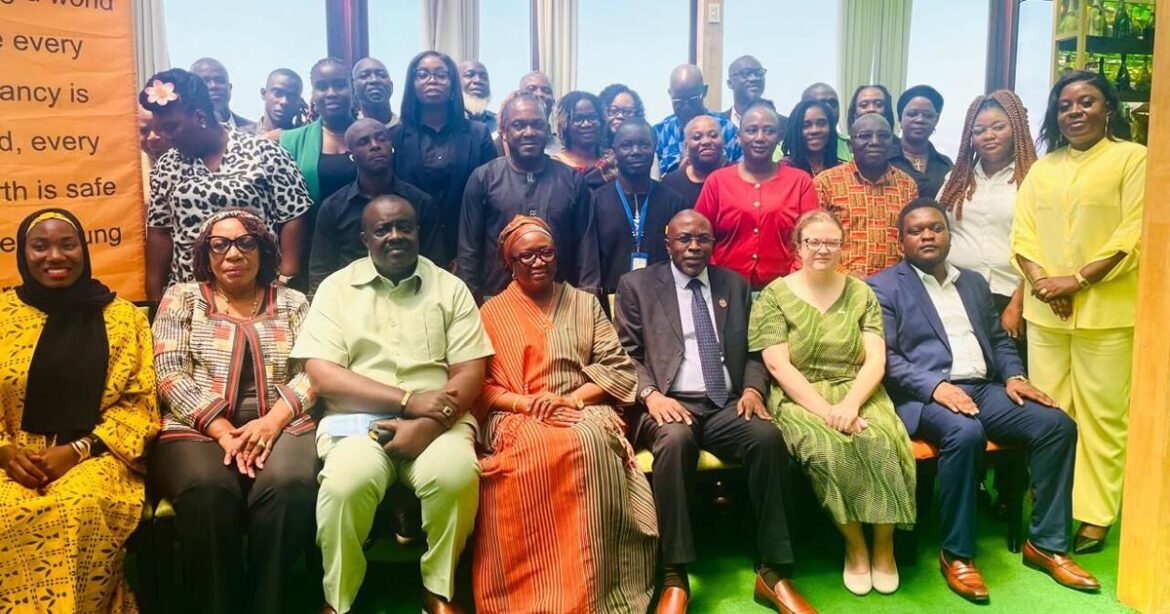

The United Nations Population Fund (UNFPA) is urging Liberia to accelerate efforts to improve the health and well-being of women, girls and young people as declining global development assistance puts increasing pressure on programmes supporting vulnerable populations.
The call came during UNFPA’s 2026 Mid-Year Programme Review and Planning Meeting at the Boulevard Palace in Sinkor, Monrovia. The two-day meeting brought together UNFPA, government institutions, implementing partners and development partners to review programme achievements, challenges and lessons from the first half of 2026 and identify adjustments needed for the remainder of the year.
Representing UNFPA Country Representative Dr. Mady Biaye, the agency’s representative said the review provides an opportunity to assess progress since the launch of the Government of Liberia-UNFPA Sixth Country Programme in January and challenge partners to deliver greater results.
The programme is guided by four priorities under the UNFPA Strategic Plan 2026–2029: reducing the unmet need for family planning, ending preventable maternal deaths, eliminating gender-based violence and harmful practices, and addressing demographic changes through evidence- and rights-based policies.
UNFPA reported progress in strengthening health facilities and expanding emergency obstetric and newborn care, particularly in Montserrado County and hard-to-reach rural communities. The agency said improved integration of reproductive health commodities into the national supply chain has also contributed to reduced stock-outs of contraceptives and life-saving maternal health medicines.
In protection, UNFPA has supported community-led mechanisms, one-stop centers for survivors of violence and advocacy against gender-based violence and female genital mutilation. It has also expanded comprehensive sexuality education, youth-friendly health services and menstrual hygiene support for adolescent girls.
The agency is additionally responding to growing drug and substance abuse among young people through partnerships with community leaders, schools, youth groups, civil society organizations and government institutions. The interventions include rehabilitation, skills development and youth participation in peacebuilding.
UNFPA has also supported development of Liberia’s national migration policy in collaboration with the Liberia Refugee Repatriation and Resettlement Commission, focusing on population dynamics, data, gender, youth and protection.
Senator Dabah M. Varpilah, Chair of the Senate Committees on Health and Population and Development, said challenges remain, citing unplanned pregnancies, early marriage and harmful traditional practices as threats to girls. He also identified maternal mortality as a major national concern.
Varpilah called for increased domestic financing for programmes benefiting women, girls and marginalized communities.
“Laws without adequate domestic resource mobilization are merely words on paper,” he said, pledging legislative support for stronger budget allocations to healthcare, gender-based violence prevention and other vulnerable-population programmes.
Assistant Minister for Preventive Services at the Ministry of Health, Dr. Cuallau Jabbeh Howe, praised UNFPA’s support for training and deploying midwives, upgrading facilities and expanding emergency maternal and newborn services.
He highlighted the Careysburg Health Center, which now has the capacity to perform Caesarean sections, as well as support to the John F. Kennedy Medical Center’s maternity and gender-based violence survivor services.
The review comes amid declining global development assistance, prompting calls for greater efficiency and increased domestic financing. Mel Beare, Development Lead at the Embassy of Ireland, said women and girls often bear the greatest burden when aid declines, while praising UNFPA’s continued support for health facilities, health workers and life-saving equipment.
UNFPA also reaffirmed its zero-tolerance policy toward sexual exploitation, abuse and harassment, as well as fraud, corruption, bribery and financial negligence.
The review is expected to identify implementation gaps and strategic adjustments for the second half of 2026, with UNFPA maintaining its goal of ensuring every pregnancy is wanted, every childbirth is safe and every young person can realize their full potential.
See more Liberia News Network stories in Google Search by adding LNN as one of your Preferred Sources.
★ Add LNN as a Preferred Source