
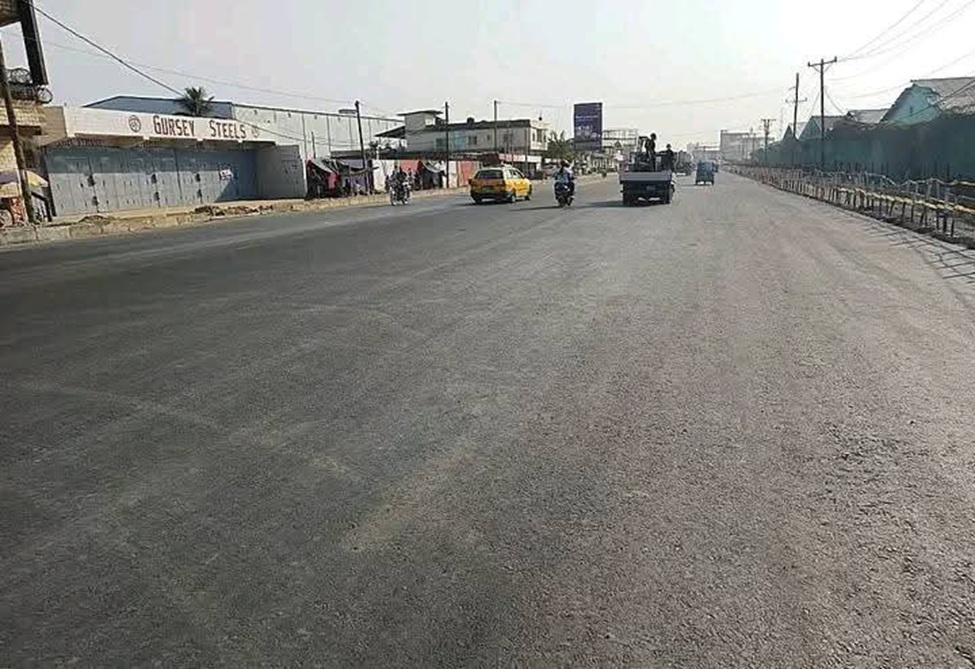
MONROVIA, LIBERIA — Concerns are mounting over the quality of the initial construction work on the Vai Town–St. Paul Bridge Road, with questions being raised about the drainage structures being built and whether the work, as currently observed, meets the professional standards required for a durable road project.
An examination of the ongoing work has raised concerns about what appears to be the construction of makeshift drainage structures without clearly visible outlets to carry water away. If these observations reflect the final design, questions arise about the effectiveness of the drainage system and whether public funds are being invested in infrastructure capable of withstanding Liberia’s heavy rains.
What is the purpose of constructing drains that have nowhere to discharge water?
Drainage is a critical component of road construction, particularly in Liberia, where heavy rainfall and poor water management can quickly undermine road surfaces. Properly designed drainage systems must provide a functional route for collecting and discharging water to suitable outlets. Without that, water may accumulate, weaken the road foundation, cause erosion, and eventually damage the completed pavement.
While the project remains at an early stage, the initial appearance of the drainage work has prompted concerns that deserve immediate attention from the relevant authorities.
The issue is not simply about how the drains look today. It is about whether the construction follows an approved engineering design and whether the completed road will deliver lasting value to the public.
Ministry of Public Works Must Demand Answers
The Ministry of Public Works has a responsibility to ensure that contractors execute road projects according to approved designs, technical specifications, and acceptable engineering standards.
If the drainage structures are incomplete, the Ministry should clarify whether the current work is merely a temporary stage of construction or whether the contractor is proceeding without adequate provisions for water discharge.
The Ministry should also ensure that qualified engineers inspect the drainage structures before further work proceeds. Where deficiencies are identified, the contractor should be required to correct them before the project advances.
Public infrastructure projects should not be judged solely by the visible presence of construction activity. The real measure of success is whether the finished road is safe, functional, durable, and worth the money invested in it.
Will the Road Survive Liberia’s Rainy Season?
The concerns surrounding the initial drainage work raise a broader question about the road’s long-term durability.
Liberia has repeatedly experienced the damaging effects of poor drainage on roads and other public infrastructure. Where water is not properly managed, even newly constructed roads can deteriorate prematurely, leaving taxpayers to bear the cost of repairs and reconstruction.
If the concerns observed along the Vai Town–St. Paul Bridge Road are not addressed, there is a risk that weaknesses in the drainage system could undermine the road after completion.
The public deserves more than a road that looks newly constructed but begins to deteriorate after a short period of use. It deserves infrastructure built to withstand local weather conditions and serve communities for years.
Public Money Must Not Go Down the Drain
The government must ensure that every dollar allocated to road construction produces measurable public value.
Questions about drainage design, construction quality, and engineering supervision should therefore be treated seriously. If the work is found to be inconsistent with the approved specifications, corrective measures should be taken before the project reaches an advanced stage, when repairs could become more expensive.
The contractor should be held accountable for meeting the required standards, while the Ministry of Public Works should provide the necessary oversight to protect the public interest.
At the same time, the contractor should be given an opportunity to explain the drainage design and clarify whether the structures currently being observed are complete or form part of a larger system.
A Call for Immediate Inspection
The concerns surrounding the Vai Town–St. Paul Bridge Road warrant a timely inspection by the Ministry of Public Works and the engineers responsible for supervising the project.
The Ministry should explain the intended drainage arrangements, confirm that the construction complies with the approved engineering plans, and provide assurances that the road is being built to withstand Liberia’s rainfall.
If the work is professional and consistent with the approved design, the Ministry should demonstrate that to the public. If deficiencies exist, they should be corrected before taxpayers are left with a road that requires expensive repairs shortly after completion.
The central question is straightforward: Is the Vai Town–St. Paul Bridge Road being constructed to last, or are the early warning signs being ignored?
The Ministry of Public Works must ensure that the final product answers that question through quality construction, effective drainage, and lasting value for the Liberian people.
See more Liberia News Network stories in Google Search by adding LNN as one of your Preferred Sources.
★ Add LNN as a Preferred Source