
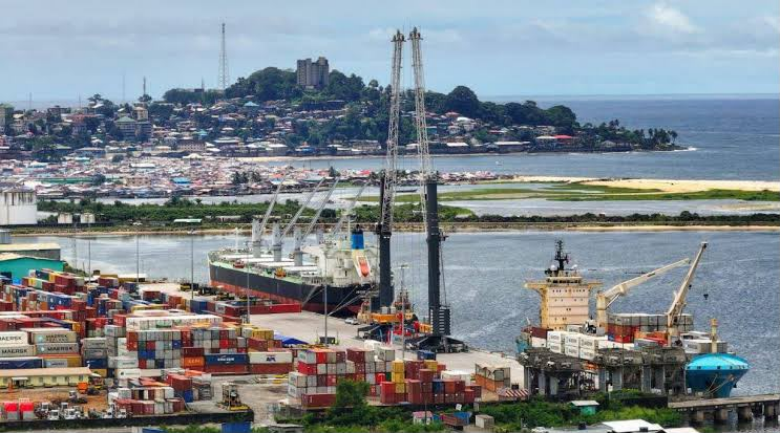
WHEN LIBERIA’S MARITIME Commissioner, Cllr. Neto Zarzar Lighe, Sr., rose at the International Maritime Organization in London this week to plead for the world’s seafarers, he spoke for a small country with an outsized stake in the world’s oceans. Liberia’s flag flies over more of the world’s merchant tonnage than any other nation’s, roughly one in every six tons of shipping afloat. When ships are hit in the Strait of Hormuz, Liberia’s flag is often among those being hit.
THAT IS WHY this newspaper adds its voice to his. The war between the United States and Iran, now in its ninth month, must end. Until it does, both sides must stop treating merchant ships, and the ordinary men and women who sail them, as fair game.
THE TOLL IS no longer an abstraction. October was the deadliest month for shipping since the fighting began on February 28. Maritime security agencies recorded more than 30 attacks in and around the strait in October alone, and 145 since the war started. A container ship, the GFS Pride, went to the bottom. Tankers have burned. Twelve crew members of the tanker On Peace were injured when a projectile tore into their ship off Oman. By the IMO’s own count, 24 seafarers have been killed, and about 6,000 are stranded on ships in the Gulf, unable to get home to their families.
LIBERIAN-FLAGGED SHIPS HAVE paid their share. The bulk carrier Minoan Pioneer was struck in August, and its third engineer has not been found. Three Liberian-flagged tankers were hit on a single day in late September. The tanker Lipsi caught fire after a strike in early October. Our Maritime Authority has had to order Liberian vessels in the area to the highest security level, Level 3.
BOTH SIDES BEAR responsibility for making the world’s most important oil route a war zone. Iran’s Revolutionary Guards have fired on and mined ships whose only offence was to sail without Tehran’s permission. Its naval commander declared that “any vessel intending to pass must get permission from Iran.” That is not how international waters work. The United States, for its part, has imposed a naval blockade on Iranian ports and has openly warned ships that they may be targeted. Each side accuses the other. Meanwhile the crews in the middle, drawn from India and dozens of other nations, have no say in the quarrel and no way out of it.
THE LAW IS clear. The United Nations Convention on the Law of the Sea guarantees freedom of navigation and the right of innocent passage. A merchant ship carrying oil, grain or containers under the flag of a nation that is not a party to this conflict is not a military target. Neither is its cook, its cadet or its chief engineer. Flag states like Liberia, Panama, Singapore and the Marshall Islands lend their names to these vessels on the understanding that the world will respect them. That understanding is being shredded.
THIS IS NOT only a humanitarian matter. It is an economic one, and it reaches all the way to Monrovia. A large share of the world’s oil passes through Hormuz. When ships there are sunk, burned or trapped, oil prices rise, insurance premiums soar, freight costs climb and supply chains seize up. Countries like Liberia, which import nearly all their fuel, much of their rice and most of what is sold in our markets, feel it first and hardest. The war is fought thousands of miles away, but the bill lands at Liberian petrol stations and on Liberian market tables.
THERE HAVE BEEN chances for peace. A ceasefire brokered by Pakistan in April gave the world a glimpse of what calm in the strait could look like. Talks in Islamabad produced a memorandum in June meant to lead to a final settlement. Those efforts faltered, and the attacks returned with greater force. They must be revived, and this time both parties must negotiate as if the lives of thousands of innocent seafarers depend on it, because they do.
WE THEREFORE CALL on President Trump and on Iran’s leadership to return to the negotiating table without delay and to agree a lasting ceasefire. Pending a settlement, both sides should give an immediate, verifiable guarantee that commercial vessels of neutral flag states will not be attacked, mined, seized or blockaded. Stranded crews must be allowed to leave safely. The International Maritime Organization, under Secretary-General Arsenio Dominguez, has worked hard to protect them. It deserves the support of every member state, including the two at war.
LIBERIA HAS LITTLE power to stop a war between a superpower and a regional power. But it has a voice in the councils of the sea, and Commissioner Lighe used it well. As his statement put it, “The seas must remain corridors of peaceful commerce, international cooperation, and human progress – not theatres of conflict, violence, and human suffering.”
WASHINGTON AND TEHRAN should heed those words. End the war. Spare the ships. Let the seafarers go home, and let the world return to normal.
See more Liberia News Network stories in Google Search by adding LNN as one of your Preferred Sources.
★ Add LNN as a Preferred Source