Published: August 26, 2026
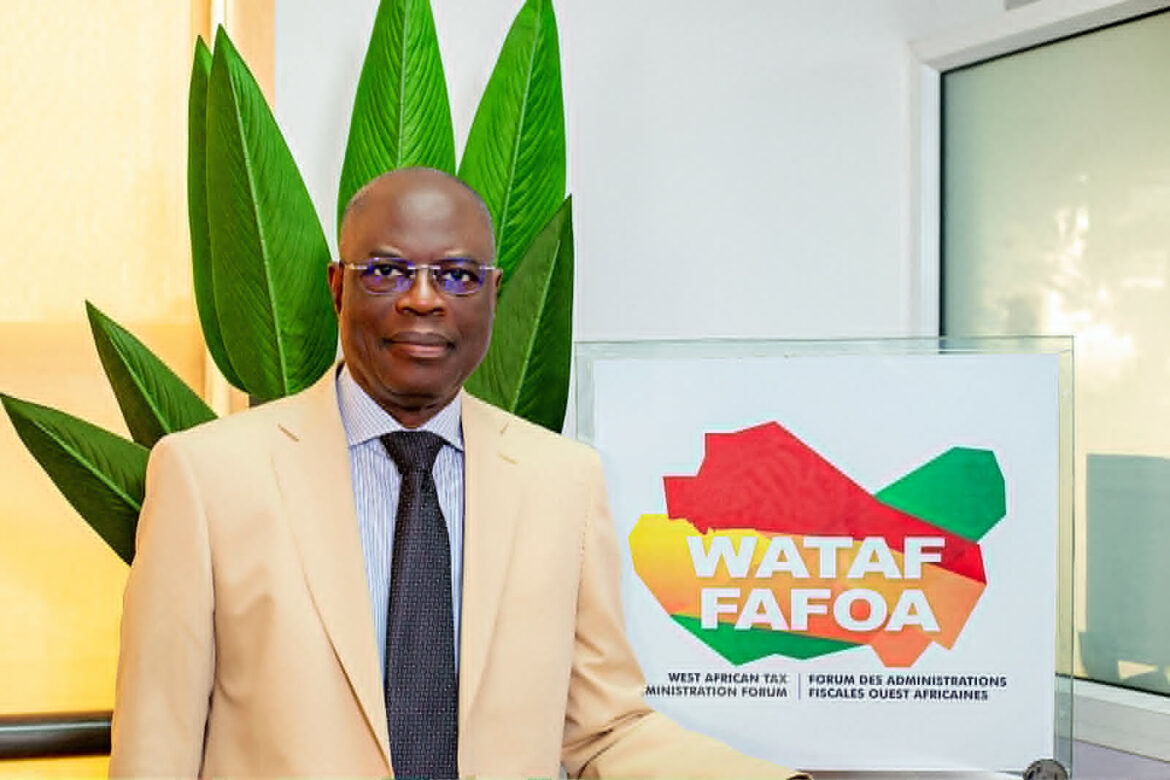
WATAF Executive Secretary Jules Tapsoba
MONROVIA — The West African Tax Administration Forum (WATAF) will bring together finance ministers, tax commissioners, policymakers, development partners, academics, private-sector representatives and international tax experts in Accra, Ghana, next month for high-level discussions aimed at strengthening domestic revenue mobilization and building more resilient tax administrations across West Africa.
The forum’s 8th High-Level Policy Dialogue and 23rd General Assembly are scheduled for September 15 to 19 and will coincide with WATAF’s 15th anniversary.
The events will be hosted by the Ghana Revenue Authority (GRA) and are expected to provide a major platform for regional tax authorities to assess emerging challenges, share experiences and develop practical responses to the changing tax environment.
The five-day gathering comes as West African governments face growing pressure to mobilize more domestic resources to finance public services and development programs while navigating economic uncertainty, rapid digital transformation, climate-finance requirements and continuing changes to international tax rules. Under the theme, “Building Stronger Tax Administrations for Revenue Mobilization and Sustainable Development,” the High-Level Policy Dialogue is expected to focus on the connection between effective tax administration and governments’ ability to finance sustainable economic and social development.
For countries across West Africa, the discussions carry particular significance as governments seek to reduce dependence on external financing and improve the efficiency, transparency and effectiveness of their domestic revenue systems.
WATAF said the Dialogue will examine emerging tax policy challenges while promoting innovation, regional cooperation and practical reforms that can improve domestic revenue collection. The gathering also provides an opportunity for tax leaders to examine how technology, changing taxpayer behavior and international tax reforms are reshaping the work of revenue authorities.
A Critical Moment for Domestic Revenue Mobilization
West African countries have increasingly recognized domestic revenue mobilization as central to sustainable development. Stronger tax systems can provide governments with more predictable resources to finance infrastructure, education, health, social protection and other public priorities. However, tax administrations across the region continue to confront a range of challenges, including limited institutional capacity, informal economic activity, taxpayer compliance gaps, cross-border transactions, digital businesses and increasingly sophisticated tax-planning practices.
The growth of the digital economy has added another layer of complexity, requiring tax authorities to modernize systems and develop new approaches to identifying taxable economic activity.
Environmental taxation and climate-related fiscal policies are also becoming increasingly important as governments explore ways to finance climate adaptation and mitigation while meeting broader environmental commitments.
Against this backdrop, WATAF said the Accra Dialogue will enable regional leaders to consider how tax administrations can become more innovative, coordinated and responsive. The discussions are expected to address leadership and regional cooperation, digital transformation, domestic revenue mobilization, environmental fiscal policy, innovation, taxpayer compliance and the future direction of tax administration in West Africa.
WATAF said the objective is not only to discuss emerging challenges but also to produce practical policy recommendations that strengthen regional cooperation and improve revenue administration.
WATAF Marks 15 Years of Regional Cooperation
The Accra gathering will also give WATAF an opportunity to reflect on 15 years of regional cooperation and capacity development. Established in 2011, WATAF has grown into a major regional network that brings together tax administrations across West Africa to promote peer learning, institutional cooperation, and knowledge exchange.
The organization said it has trained more than 5,000 tax officials, commissioners general, directors general and senior tax executives since its establishment. The scale of its capacity-building activities has increased in recent years.
Between 2024 and mid-2026, WATAF delivered 26 regional training programs that directly reached more than 2,365 tax officials. In 2025 alone, the organization disclosed that it trained 907 officials, exceeding its annual target by 58%.
Specialized programs delivered during 2026 have so far reached more than 875 officials, including participants trained in areas such as the digital economy and the Tax Administration Diagnostic Assessment Tool, an internationally recognized framework for assessing the performance of tax administrations.
WATAF said the training and capacity-building programs have strengthened institutional capabilities and supported revenue growth in member countries. The organization has also expanded its network of regional and international partners. Since 2022, WATAF said it has strengthened cooperation with more than 10 strategic regional and global institutions and secured more than eight memoranda of understanding and institutional cooperation agreements.
Those partnerships have supported initiatives involving tax administration reforms, digital transformation, regional integration and domestic revenue mobilization. Among the institutions with which WATAF works are the Economic Community of West African States, the West African Economic and Monetary Union, the African Union, the African Development Bank, the African Tax Administration Forum, the Inter-American Center of Tax Administrations, the World Bank, the United Nations Department of Economic and Social Affairs, the African Capacity Building Foundation and the Islamic Development Bank.
The partnerships have also helped strengthen West Africa’s participation in international tax-policy discussions.
WATAF Leadership Calls for Deeper Cooperation
WATAF Executive Secretary Jules Tapsoba said the 15th anniversary should be viewed not simply as a celebration of past achievements but as an opportunity to define the organization’s future direction. He said WATAF was established on the principle that stronger cooperation among tax administrations would contribute to stronger national tax systems. “Fifteen years ago, WATAF was established on the belief that stronger cooperation would build stronger tax administrations,” Tapsoba said, adding, “Today, that vision is reflected in thousands of tax officials trained, stronger regional partnerships, growing institutional influence and a shared commitment to helping our member countries mobilize the domestic revenues needed for sustainable development.”
He said the organization’s next 15 years should build on those achievements. “The next fifteen years must take us even further,” he said.
WATAF Council Chairperson Talato Eliane Djiguemdé-Ouédraogo, who is also director general of taxes in Burkina Faso, said the anniversary provides an opportunity to deepen cooperation and accelerate reforms across the region. She said WATAF’s progress demonstrates what can be achieved when tax administrations cooperate, share knowledge and develop common approaches to common challenges. “As WATAF reaches this milestone, we must build on these achievements by strengthening regional cooperation, embracing innovation and investing even more in the people and institutions that drive domestic revenue mobilisation across West Africa,” Djiguemdé-Ouédraogo said.
She invited member administrations and development partners to participate in the Accra gathering as WATAF prepares for its next phase.
Why Ghana this time?
The Ghana Revenue Authority will serve as host institution for the 2026 High-Level Policy Dialogue and General Assembly. GRA Commissioner General Anthony Kwasi Sarpong said Ghana’s hosting of the events reflects the country’s commitment to regional cooperation and stronger tax systems. “Ghana is honored to host WATAF’s 8th High-Level Policy Dialogue and 23rd General Assembly as the Forum marks fifteen years since its establishment,” Sarpong said.
He said Ghana looks forward to welcoming tax leaders and development partners to Accra for discussions aimed at strengthening domestic revenue mobilization, encouraging innovation and deepening collaboration. The choice of Ghana as host comes as tax administrations throughout the region seek to modernize their systems and improve the quality of services provided to taxpayers. The GRA’s participation will also provide an opportunity for regional counterparts to exchange experiences on tax administration reforms and innovations that could be adapted elsewhere in West Africa.
General Assembly to Set Strategic Priorities
While the High-Level Policy Dialogue will focus on major policy and administrative challenges, WATAF’s 23rd General Assembly will provide an institutional platform for the Forum’s 15 member tax administrations to review progress and determine priorities for the coming period. The General Assembly is expected to examine WATAF’s activities, deliberate on strategic priorities and strengthen institutional cooperation among member administrations.
The meeting will be particularly important as the organization enters its next phase and seeks to expand its role in supporting modern and resilient tax administrations.
A Development Partners and Donors Roundtable will also form part of the five-day program. The roundtable is expected to provide an opportunity for WATAF and its partners to discuss technical cooperation, capacity development and other forms of support for tax administration reforms across West Africa. The involvement of development partners could prove important as countries seek additional technical expertise and resources to modernize revenue institutions and respond to emerging challenges.
Digital Transformation Takes Center Stage
One of the major issues expected to feature prominently during the dialogue is digital transformation. Tax administrations worldwide are increasingly using digital platforms to register taxpayers, file returns, process payments, analyze data and improve compliance monitoring. For West African administrations, digitalization offers the potential to reduce administrative costs, improve taxpayer services and strengthen governments’ ability to identify economic activity and improve compliance.
But digital transformation also presents challenges, including the need for adequate infrastructure, cybersecurity, skilled personnel, data protection and effective legal frameworks. WATAF’s recent training activities in the digital economy indicate the growing importance of these issues to the organization’s regional agenda.
The Dialogue is therefore expected to examine how tax authorities can use technology not merely to automate existing processes, but to transform how they interact with taxpayers and manage revenue collection.
Environmental and International Tax Issues
Environmental fiscal policy is another issue expected to receive attention in Accra. As governments confront the financial implications of climate change, environmental taxes and other fiscal measures are becoming increasingly relevant to national revenue strategies. At the same time, international tax reforms are changing the environment in which multinational businesses operate, requiring tax administrations to strengthen technical capacity and improve cross-border cooperation.
For West African countries, regional cooperation can help tax authorities respond to these developments collectively while ensuring that national policies remain aligned with broader regional and international standards. WATAF’s partnerships with organizations such as the African Development Bank, World Bank, African Union and other regional and international institutions provide a foundation for such cooperation.
Looking Toward the Next 15 Years
As WATAF marks its 15th anniversary, the organization is positioning the Accra meetings as more than an annual gathering. The Forum says its next chapter will focus on strengthening regional cooperation, expanding strategic partnerships and helping member administrations develop modern, innovative and future-ready tax systems.
The broader challenge is to ensure that West African governments can generate sufficient domestic resources to finance development while creating tax systems that are efficient, fair, transparent and responsive to taxpayers.
For WATAF, that objective requires continued investment in people, institutions, technology and regional cooperation. The organization’s record of training more than 5,000 officials, expanding partnerships and facilitating regional dialogue provides a foundation for its next phase. But the evolving tax environment means the demands on tax administrations are also changing.
Digital businesses, cross-border commerce, climate financing, international tax reforms and new approaches to taxpayer compliance will require tax authorities to continuously adapt. The September 15-19 gathering in Accra will therefore offer regional tax leaders an opportunity to consider not only where West African tax administrations stand today but where they need to be in the years ahead.
WATAF has invited governments, tax administrations, development partners, regional and international organizations, academics, private-sector representatives, civil society organizations and the media to participate in the landmark gathering.
As the Forum celebrates 15 years of regional cooperation, the central message of the Accra meetings is expected to be that sustainable development will require stronger domestic institutions and more effective systems for mobilizing the resources needed to finance national and regional priorities. For West Africa, strengthening tax administration is increasingly viewed not simply as a revenue-collection exercise but as a critical part of building resilient states, supporting economic transformation and financing sustainable development.
The 8th High-Level Policy Dialogue and 23rd General Assembly will provide WATAF and its partners with a platform to translate that recognition into practical reforms and a renewed commitment to collective action across the region.
See more Liberia News Network stories in Google Search by adding LNN as one of your Preferred Sources.
★ Add LNN as a Preferred Source