
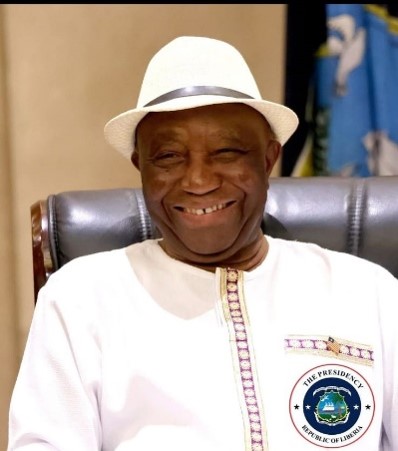
Monrovia, November 25, 2026: The Government of Liberia and Bea Mountain Mining Corporation (BMMC) are scheduled to sign a landmark US$5.7 billion infrastructure development agreement today, Wednesday, November 25, in what could become one of the most ambitious infrastructure undertakings in Liberia’s history.
The proposed agreement seeks to expand electricity generation, improve road connectivity and accelerate economic growth across the country.
Known as the Master Infrastructure Development Agreement (MIDA), the deal involves BMMC as the proposed financing partner and Turkish construction giant MAPA İnşaat ve Ticaret A.Ş. as the contractor.
The five-year infrastructure development plan encompasses the construction of four power plants, major electricity transmission lines, water reservoirs and extensive road networks.
According to a statement issued Sunday by the Ministry of Information, President Joseph Nyuma Boakai has accepted the proposed agreement submitted by the Inter-Ministerial Concession Committee following months of negotiations.
However, beyond the ambitious infrastructure promises, questions remain about the financing arrangement, corporate relationships, transparency and potential long-term financial implications for Liberia.
But what do we know about the two companies?
Bea Mountain Mining Corporation operates Liberia’s first commercial gold mine, the New Liberty Gold Mine, in Grand Cape Mount County.
Registered in Liberia in 2001 and awarded a mining license in 2005, BMMC is part of Avesoro Resources and is linked to the influential Günal family business network in Türkiye.
MAPA İnşaat ve Ticaret A.Ş., commonly known as MAPA Construction, is a privately held Turkish engineering and construction company founded in 1978 by Mehmet Nazif Günal.
The company serves as a major infrastructure arm of the business conglomerate formerly known as MNG Group, with operations across Europe, the Middle East and Africa.
Interestingly, the proposed financier and contractor share corporate ties through the Günal family business network, involving Mehmet Nazif Günal and his son, Murathan Günal.
The relationship extends beyond family ownership. BMMC has previously entered into mining equipment financing arrangements with MAPA as a related party.
MAPA’s international track record
MAPA Group reports a portfolio of more than 200 completed or ongoing projects valued at over US$18.1 billion across Europe, the Middle East and Africa.
Its expertise spans highways, bridges, tunnels, railways, dams, hydroelectric power plants, water distribution systems, airports and industrial facilities.
Among its notable projects are Terminal III of Ghana’s Kotoka International Airport, works associated with Istanbul Airport, major water infrastructure projects in Saudi Arabia and motorway construction in Romania.
The company has also undertaken projects financed by international financial institutions, including the European Bank for Reconstruction and Development and the African Development Bank.
Its international experience provides an indication of its technical capacity, although the success of the Liberian project will depend heavily on its financing structure, contractual safeguards and implementation.
The risks and rewards
Despite the contractor’s international reputation, concerns persist over whether the proposed US$5.7 billion agreement could create substantial public debt or contingent liabilities for Liberia.
Questions also surround the sustainability of a financing arrangement potentially tied to future gold revenues, particularly given fluctuations in international commodity prices.
The relationship between the financier and contractor further underscores the need for independent project valuation, transparent procurement arrangements and effective oversight to safeguard Liberia’s interests.
Government officials, however, maintain that the public has little reason to fear, arguing that the agreement presents an opportunity to convert tax revenues into tangible infrastructure rather than allowing those resources to be absorbed predominantly by recurrent expenditure.
From the government’s perspective, investments in electricity, roads and other critical infrastructure could stimulate industrialization, create employment opportunities, reduce production costs and strengthen Liberia’s economic competitiveness.
Will the gamble pay off?
For President Boakai, the proposed agreement represents an ambitious undertaking with potentially far-reaching economic and political implications.
Liberia’s infrastructure deficit is undeniable. Limited electricity supply, poor road connectivity and high production costs continue to constrain economic growth and discourage investment.
Yet, the magnitude of the agreement demands equally robust scrutiny.
The central question is not whether Liberia needs US$5.7 billion worth of infrastructure, but whether the proposed financing model can deliver that infrastructure without compromising the country’s long-term fiscal stability.
Ultimately, the success of Boakai’s gamble will not be measured by the signing ceremony or the billions of dollars announced, but by the infrastructure delivered, the economic opportunities created and the financial obligations left for future generations of Liberians.
See more Liberia News Network stories in Google Search by adding LNN as one of your Preferred Sources.
★ Add LNN as a Preferred Source