
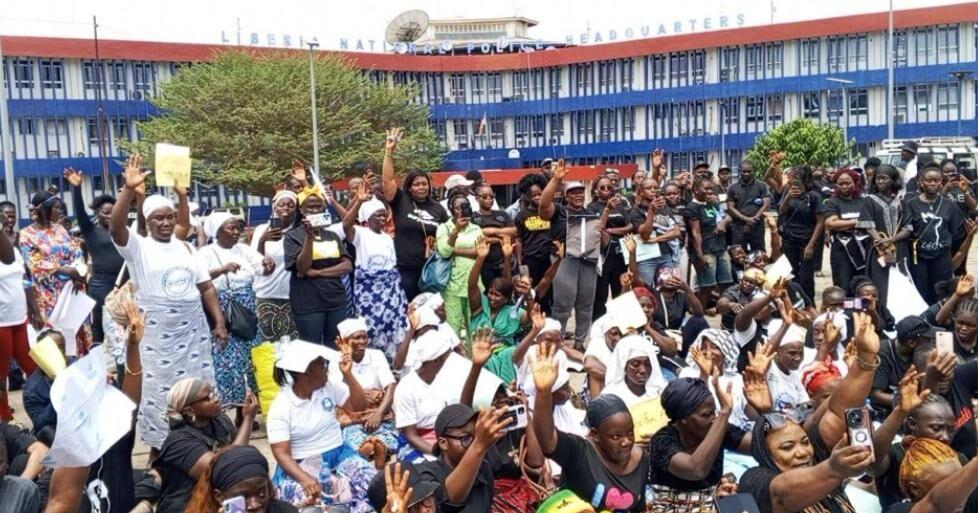
A wave of grief and indignation swept through the streets of Monrovia today as hundreds of women, activists, and concerned citizens staged a massive protest and march. The demonstration follows the tragic death of Mrs. Toni Jackson, a South African national and the wife of prominent Liberian economist Samuel Jackson, whose passing has become a catalyst for the country’s fight against Gender-Based Violence (GBV).
Holding placards that read “Justice for Toni” and “No One is Above the Law,” the marchers delivered a scathing press statement calling for an immediate, forensic-led investigation into what the Liberia National Police (LNP) has now classified as a suspected homicide.
The case has gripped the nation following reports of a deep laceration to Mrs. Jackson’s head and multiple bruises found on her body. Public concern intensified after Mr. Samuel Jackson conducted a livestream showing armed officers searching his home. Activists pointed to his “shifting public explanations” — initially attributing the death to a fall and later citing “altercations” within the relationship—as urgent red flags for domestic violence.
“This case must be investigated promptly and transparently,” a spokesperson for the Women NGOs Secretariat of Liberia (WONGOSOL) declared during the march. “We must ensure that the outcome of this investigation reinforces — rather than undermines — efforts to prevent and respond to GBV across Liberia.”
The timing of the tragedy has added a layer of bitterness to the protest. As the world’s leaders gather in New York for the 70th Session of the Commission on the Status of Women (CSW70) to discuss “strengthening access to justice,” Liberian women are pointing out the deadly gap between international rhetoric and the reality on the ground.
“It is a painful reminder that while global leaders discuss justice for women, Liberian women and girls continue to face serious threats in the very places they should be safest: their homes,” the protesters’ statement read.
The marchers highlighted a grim reality in Liberia, where estimates suggest between one-third and one-half of all women will experience violence in their lifetime. The protesters outlined several systemic failures: Lack of Resources: Underfunded protection services and a lack of shelters for survivors. Police Gaps: Limited forensic capacity and a need for trauma-informed, survivor-centered policing. Legal Hurdles: Significant barriers to legal remedies and the absence of a specialized Family Court.
The demonstration concluded with a formal list of demands addressed to the Government of Liberia, including Impartial Investigation: A swift, professional forensic probe into Mrs. Jackson’s death. The demands also included ensuring that the Attorney General pursues prosecution regardless of the suspect’s status. The immediate implementation of the Domestic Violence Act and the passage of the Women and Children’s Law. The urgent establishment of the Family Court of Liberia to handle domestic cases with sensitivity. Increased investment in medical, legal, and psychosocial services for survivors, particularly in rural areas.
The petition was presented to the police inspector general. Among them are a speedy and transparent investigation and trial in the Johnson case, increased accountability within the justice system, and improved investigative tools for handling gender-based violence cases.
They are also calling on the government to increase funding for GBV-related institutions and create safe spaces for women and girls seeking protection or justice.
Police IG Coleman also promised to present the group’s petition to President Joseph Nyumah Boakai for review. The Toni Jackson case has gained traction, with Liberians and South Africans demanding an impartial investigation to determine the actual cause of her death.
