
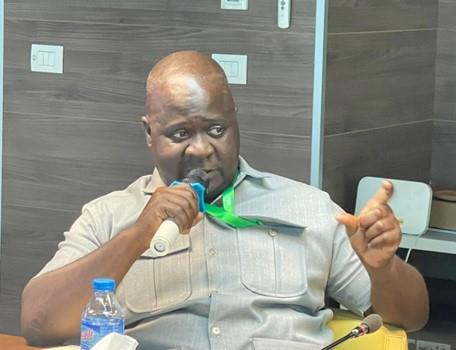
MONROVIA – Stephen M. Yekeson, Jr. did not offer senators slogans. He offered a test. Within 100 days, rice, fuel, and cement prices go public weekly in all 15 counties. That is a rare, measurable promise in Liberian public life. His Maximum Retail Price plan is a price ceiling built on a published formula. It walks a tightrope that has tripped governments before. Set too low, shelves empty; set in secret, abuse follows. His vow to verify who truly owns businesses wearing Liberian names targets long-tolerated fronting. The deeper tension is plain. Import substitution can raise prices before it lowers them. As THE ANALYST reports, the Senate now holds a scorecard, not merely a speech.
\n
Commerce and Industry Minister-designate Hon. Stephen M. Yekeson, Jr. has told the Liberian Senate that producing more at home “must never mean paying more at home,” pledging a published Maximum Retail Price formula for rice, fuel, and cement. He also promised that, within 100 days, the Ministry of Commerce and Industry (MOCI) will publish the prices of the three commodities every week in all 15 counties.
\n
Yekeson made the commitments in his opening statement at his Senate confirmation hearing on October 21, 2026. Addressing the Chairman, members of the Committee and distinguished senators, he expressed gratitude to President Joseph Nyuma Boakai, Sr. for his confidence, and respect for the Senate’s duty of advice and consent.
\n
“I have not come to ask for your trust. I have come to tell you how I intend to earn it,” he declared.
\n
Nominee Recounts Public, Private Record
\n
Yekeson traced his schooling to the Cuttington Campus School and St. Martin’s Catholic School in Gbarnga, Bong County, and to Ricks Institute. He told the Committee he is the son of the late Dr. Stephen M. Yekeson, Sr., who led both the University of Liberia and Cuttington, and of Mrs. Janet Yekeson.
\n
“From them I learned that public office is a trust held for others, a fiduciary responsibility, and that it is measured by what you leave behind,” he stated.
\n
“I have sat on both sides of the table,” Yekeson noted. He recalled that in government he served as Deputy Commissioner of the Liberia Maritime Authority (LiMA) and as Deputy Minister of Public Works, adding, “so I know how challenging it is to deliver from inside a public institution.”
\n
In the private sector, he said, he served as Chief Financial Officer of South Atlantic Capital Group and as President of Panchariya Group West Africa, where he structured transactions, raised finance for power generation, and advised investors on whether to put their money in Liberia.
\n
“I know the questions an investor asks before signing. I know the questions a Liberian business owner asks before she borrows,” Yekeson observed. He added that since September, as Acting Minister, he has seen the Ministry from the inside. “Judge me by what I deliver,” he told the senators.
\n
Ministry’s One Job: Fair Deal
\n
Yekeson told the Committee that the Ministry has one ultimate job: to make sure goods and services reach Liberians, available when needed, of good quality, and at a fair price.
\n
He described that market as made up of many players, including the farmer who will plant more if she is sure of a buyer, the importer who needs clear, predictable rules to keep the ships coming, the local manufacturer competing with imports, and the investor deciding whether Liberia is worth the risk.
\n
The market, he continued, also includes the market women and petty traders selling on thin margins, the keh keh driver who needs fuel at a fair price and, at the end of every chain, the family buying a bag of rice.
\n
“All of them need one thing from this Ministry: a fair deal. A fair profit for those who sell. Value for money for those who buy,” he said.
\n
Yekeson warned that if business cannot make a fair profit, the shelves empty, and if families cannot get value for money, trust breaks. “My job is to hold that balance,” he declared.
\n
Producing What Liberia Consumes
\n
Outlining his vision, Yekeson said that by 2029, Liberia should produce more of what Liberia consumes, using more of its own labor, land, capital, and enterprise.
\n
He described the vision as the Ministry’s contribution to the President’s ARREST Agenda for Inclusive Development (AAID).
\n
The vision, he explained, has two halves. The first is to grow and make at home more of what Liberia now buys from outside, which economists call import substitution.
\n
The second is that whatever Liberia produces must carry more Liberian hands, use more Liberian land, draw on Liberian finance, and be driven by Liberian entrepreneurs.
\n
“Today our iron ore leaves as rock, our gold as dust, and our rubber raw. The value is added somewhere else, and the jobs go with it,” Yekeson stated.
\n
He said that, working with the Ministry of Mines and Energy (MME) and the Ministry of Agriculture (MOA), MOCI will start where it can move fastest: mines and plantations buying their food, transport, and services from Liberian businesses through enhanced local content requirements.
\n
In the medium to long term, he said, the government will pursue an aggressive strategy to meet the electricity and infrastructure needs that will bring the processing of Liberia’s raw materials home. “Ultimately, we must create more and better paying JOBS and commercial opportunities for our people and for Liberia’s micro, small, and medium enterprises,” he asserted.
\n
Three Commitments Before Senators
\n
Yekeson then highlighted three commitments, the first being to put Liberia’s own spending to work for Liberians. He noted that government, concessions, and donors spend money in Liberia every day, but “too much of it buys foreign goods.”
\n
He pointed out that the Small Business Empowerment Act already requires that at least 25 percent of qualifying public procurement go to Liberian-owned small businesses, with five percent reserved for businesses owned by women.
\n
“We will publish, agency by agency, whether that law is being kept,” he stated.
\n
Yekeson added that the Investment Act already reserves businesses such as rice and cement retail, gas stations, and sand supply for Liberians, and pledged to enforce it fairly, “without hostility to anyone.”
\n
“But a Liberian name on a foreign business is not a Liberian business, so we will verify who truly owns what, and enforcement will come with real support for Liberian owners,” he cautioned.
\n
The second commitment, he said, is to build Liberian businesses that can win, starting with money “to start, to grow, and to stay open.”
\n
To start, he proposed small loans and credit guarantees that do not demand land titles and that run through banks and lending institutions, not through government. To grow, he said, a contract from government, a concession, or a donor should be good enough for a bank to consider financing.
\n
To stay open, Yekeson insisted, government and concessions must pay on time. “When payments are late, the small business borrows to survive, and pays interest on money it has already earned,” he observed.
\n
He said the Ministry will work with the Central Bank of Liberia (CBL) and Liberia’s banks to open all three doors.
\n
He further promised to make registering a business fast, and possible in every county. He also pledged to bring employers and vocational schools to the same table, “so young Liberians, women and men, train for the jobs we are creating.”
\n
The third commitment, according to Yekeson, is to cut the cost between the ship and the shop.
\n
He told the Committee that cargo can take close to two weeks to clear the Freeport of Monrovia, followed by duplicate fees, paper permits, and costly transport to the counties.
\n
“None of these add value. All of them add price,” he said.
\n
As Chair of the National Trade Facilitation Committee, Yekeson said he will work with revenue, port, and border agencies to cut clearance time, remove duplicate fees, and move permits online, so that the savings reach the shelf.
\n
Beyond Liberia’s borders, he said, the Economic Community of West African States (ECOWAS) and the African Continental Free Trade Area (AfCFTA) turn a market of five million into a market of more than a billion. “A factory in Liberia should be a factory for West Africa,” he declared.
\n
Maximum Retail Price For Staples
\n
“Beneath all of this sits one promise: producing more at home must never mean paying more at home,” Yekeson told the senators. For a narrow basket of critical goods, starting with rice, fuel, and cement, he said he will bring to Cabinet a Maximum Retail Price, which he defined as “the highest price anyone can charge you.”
\n
He said the price will not be “a number made in secret,” but a published formula built on verified import cost, lawful duties, transport, and a fair profit.
\n
When world prices or the exchange rate move, he explained, the price will move openly, and everybody will see why.
\n
“A price set too low empties the shelves. A price set in secret invites abuse. A published formula avoids both,” he argued.
\n
Yekeson said the Ministry’s inspectors will go after the real offenses: hoarding, collusion, false invoices, and short measures.
\n
He stressed that value for money means quality too, adding, “A fair price for a bad product is not a fair deal.”
\n
He further pledged that every inspection rule, fee, and penalty the Ministry applies will be published, and that every decision will carry a right of appeal. “Firm in law. Fair in enforcement,” he said.
\n
First 100 Days Benchmark
\n
“Here is one promise this Committee can check,” Yekeson said, pledging that within 100 days the Ministry will publish, every week, the prices of rice, fuel, and cement in all 15 counties.
\n
Within the year, he said, that list will grow to the 40 commodities Liberian families depend on most. “You cannot protect a price you do not measure,” he stated.
\n
The nominee said he will set up a unit to track the Ministry’s delivery, and will return to the Committee every quarter “with numbers, not promises.”
\n
He added that the full strategy will come before Cabinet, and welcomed the senators’ scrutiny of it.
\n
Closing his statement, Yekeson told the Chairman that the President has asked Liberians to love Liberia and build Liberia.
\n
“In COMMERCE, that means: Made in Liberia. Bought in Liberia and across Africa. Built by Liberians,” he said. “With your confirmation, that is the work I will lead. I thank you, and I welcome your questions.”
See more Liberia News Network stories in Google Search by adding LNN as one of your Preferred Sources.
★ Add LNN as a Preferred Source