
By Kruah Thompson
Monrovia, July 2, 2026 – Liberia is stepping up efforts to access global carbon finance through a strengthened partnership with the United Nations Development Programme (UNDP), as the government seeks to position the country to benefit from international carbon markets.
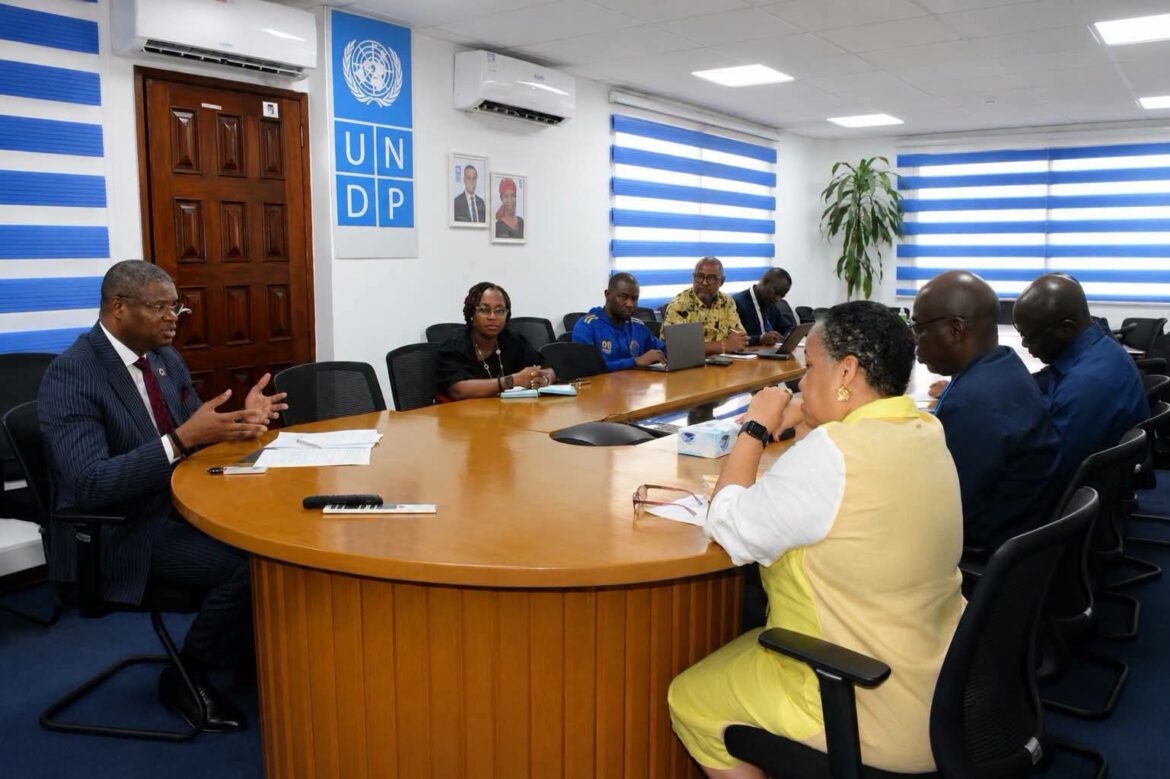
Information Minister Jerolinmek Matthew Piah said the UNDP Liberia Country Office recently hosted a courtesy meeting with the Liberia Carbon Market Authority to reaffirm their commitment to advancing Liberia’s participation in global carbon markets and expanding access to climate finance.
According to Piah, the meeting, led by Liberia Carbon Market Authority Executive Director Jenny Cooper, brought together officials of the Authority and the UNDP Liberia Country Office to strengthen collaboration on the country’s carbon market agenda.
He said UNDP Resident Representative Aliou Dia commended the Authority for the progress made in developing Liberia’s carbon market program and emphasized the importance of establishing a credible policy and regulatory framework to attract climate finance and responsible investment.
Piah said Dia described carbon markets as an opportunity for Liberia to convert its natural resources into sustainable economic value while ensuring that forest-dependent communities benefit and environmental sustainability is preserved.
Liberia is home to more than 40 percent of the remaining Upper Guinean rainforest, making it one of West Africa’s most forested countries and a key contributor to global climate change mitigation efforts.
To strengthen the country’s participation in international carbon trading, President Joseph Nyuma Boakai established the Liberia Carbon Market Authority through Executive Order No. 155, issued on October 31, 2025.
The Authority is mandated to regulate Liberia’s participation in international carbon markets, ensure compliance with global standards, and maximize the economic and environmental benefits derived from carbon credit transactions.
Through participation in carbon markets, Liberia can generate revenue by conserving its forests and reducing greenhouse gas emissions, creating opportunities for both government and local communities to benefit financially from protecting the country’s natural ecosystems.
