
By Socrates Smythe Saywon | Smart News Liberia
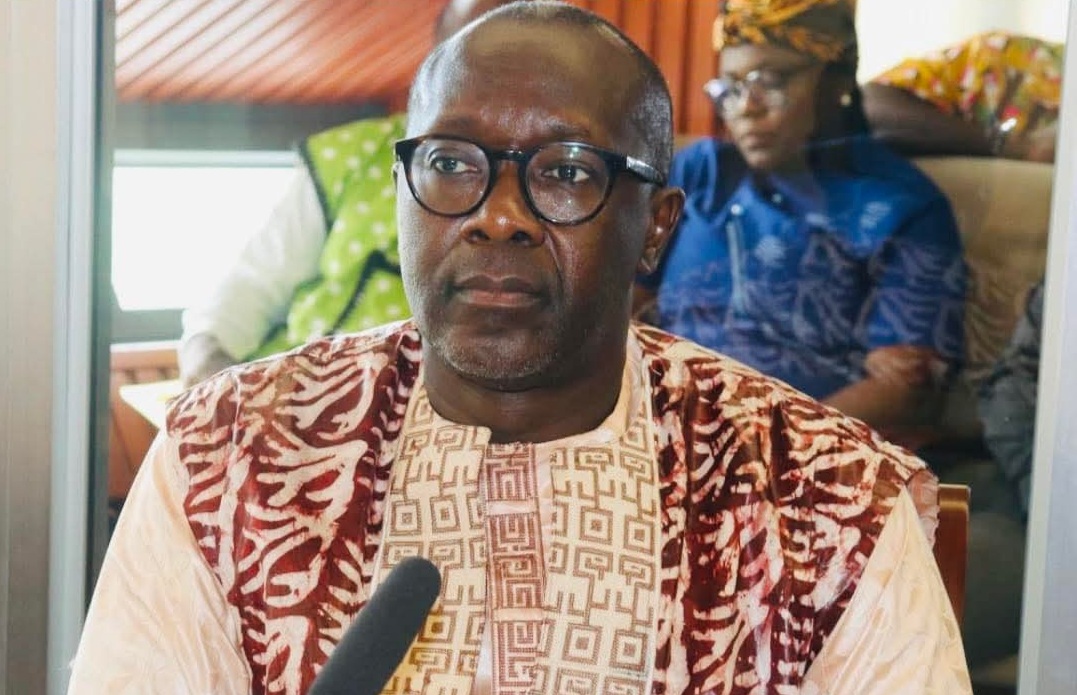
MONROVIA, LIBERIA – Gbarpolu County Senator Amara M. Konneh has questioned the effectiveness of funding allocated for national security intelligence after revealing that President Joseph Nyuma Boakai requested, and the Legislature approved, budgetary support for intelligence gathering and sophisticated detection equipment months before Liberia was rocked by the record US$19.2 million cocaine seizure at Roberts International Airport (RIA).
Konneh’s remarks have broadened the national debate surrounding the cocaine investigation, shifting attention beyond the criminal probe itself to whether the country’s security agencies effectively utilized resources appropriated to strengthen intelligence operations and secure Liberia’s ports of entry against transnational organized crime.
“We declared war on drugs, and the President requested funds to gather intelligence and purchase equipment. The Legislature allocated the money he requested specifically for intelligence gathering and acquiring sophisticated detection tools at our ports,” Konneh wrote on Thursday, July 2.
The senator noted that the approved budget lines were exempt from competitive bidding under Liberia’s public procurement law because of their national security significance. Yet, six months into the fiscal year, he argued that Liberia is confronting what appears to be both a significant intelligence failure and a serious shortage of modern detection equipment.
“How should we classify this situation?” Konneh asked. “All your major suspects are at large. Do they understand that the biggest threat to our national security is illicit drugs?”
His comments came a day after the Liberian Senate held a high profile public hearing with the Joint Security leadership to demand answers over the prolonged investigation into the cocaine shipment intercepted at Roberts International Airport on June 8.
The hearing followed a joint communication submitted by Konneh and Bomi County Senator Edwin M. Snowe, who called on the Senate to exercise its constitutional oversight authority amid growing public concern over the slow pace of the investigation and the absence of major arrests.
According to Konneh, the hearing became necessary because continued silence surrounding the investigation had fueled public suspicion while damaging Liberia’s international reputation.
“Senator Snowe and I called for this hearing because the continued silence and absence of public arrests have only intensified legitimate public suspicion and damaged our country’s international reputation,” he stated.
While acknowledging the complexity of dismantling an international drug trafficking network, Konneh said the Liberian people deserve transparency, accountability, and timely action from security institutions.
He disclosed that the Senate instructed Joint Security to accelerate the investigation and ensure that every financier, facilitator, and accomplice is identified and prosecuted regardless of political status, official position, or personal connections.
The Senate also directed its Committee on Judiciary, Petitions, and Claims to immediately investigate the court ordered release of Michael Browne, a key suspect who remains at large and whom the Liberia Drug Enforcement Agency (LDEA) reportedly considers a known drug smuggler.
“We will not tolerate cover ups,” Konneh declared, reaffirming the Senate’s commitment to safeguarding Liberia’s borders and ensuring that everyone implicated in the case is held accountable under the law.
Adding another perspective to the growing debate, Montserrado County Senator Abraham Darius Dillon argued that investigators already possess sufficient evidence to initiate prosecutions against individuals directly linked to the seized cocaine.
According to Dillon, authorities already have possession of the cocaine itself, have identified the warehouse where it was stored, and know the business entity responsible for transporting the shipment to Roberts International Airport.
“If the storehouse owners cannot say or refuse to disclose the owner of the seized drugs, and if investigators cannot locate those believed to have delivered the drugs for storage and subsequent exportation, then the drugs must reasonably belong to those who had custody of the warehouse,” Dillon argued.
He urged prosecutors to file charges including illegal possession of cocaine, obstruction of justice, criminal conspiracy, and criminal facilitation while continuing to pursue additional suspects if new evidence emerges during trial.
The senators’ growing concerns unfolded as Joint Security leaders informed the Senate that the investigation had entered a decisive phase.
Appearing before lawmakers, Liberia National Police Inspector General Gregory O.W. Coleman disclosed that investigators have moved beyond identifying “persons of interest” and are now dealing with “persons under suspicion,” several of whom have been ordered to report daily to Liberia National Police Headquarters while the investigation continues.
Coleman confirmed that forensic analysis established that the substance seized at Roberts International Airport is cocaine.
“It is clear that Liberia is being used as a hub, but cocaine is not produced here,” Coleman told senators.
He disclosed that investigators are examining the possible involvement of several government institutions, Roberts International Airport personnel, and a logistics company connected to the shipment.
According to Coleman, Paul King, identified as Operations Manager and shareholder of GLS, remains under active investigation as authorities seek to dismantle what they believe is a sophisticated transnational trafficking network.
Also appearing before the Senate, Liberia Drug Enforcement Agency Officer in Charge DCP Fitzgerald T.M. Biago revealed that investigators are examining the possible involvement of Emmanuel Kpahn and Oscar Brown of the Roberts International Airport Intelligence Division.
Biago further informed senators that several persons of interest remain at large while investigators continue reviewing previous shipments that departed Liberia, including packages destined for the United Kingdom, to determine whether they form part of a broader international drug trafficking operation.
Coleman also disclosed that several law enforcement officers are under investigation for allegedly leaking photographs and videos from the crime scene while the investigation remained active, actions he said threatened the integrity of the case.
Describing the investigation as highly complex, Coleman explained that authorities continue analyzing documentary and forensic evidence with technical assistance from international partners.
“We can assure you that there’s nothing we’re hiding,” Coleman said. “The chips will fall where they may because this investigation concerns the future of this country. We have institutions under suspicion, and we have persons under suspicion at this point in time who will be charged within the coming days.”
Although senators repeatedly pressed for additional details, Coleman declined to discuss sensitive aspects of the investigation publicly, warning that premature disclosure could compromise ongoing efforts to dismantle the transnational criminal network.
Beyond the taxi driver already in custody, Coleman confirmed that investigators have identified several additional individuals believed to have played significant roles in the alleged trafficking operation.
Joint Security officials are now expected to file formal criminal charges before the weekend, after which the Senate intends to reconvene oversight hearings to assess the progress of the prosecution.
The US$19.2 million cocaine case has already become a defining test of Liberia’s anti-narcotics response capacity. But the Senate confrontation suggests it is also becoming a test of something deeper, the stability of relations between the executive’s security apparatus and the legislature’s oversight authority.
