
By Lewis S. Teh
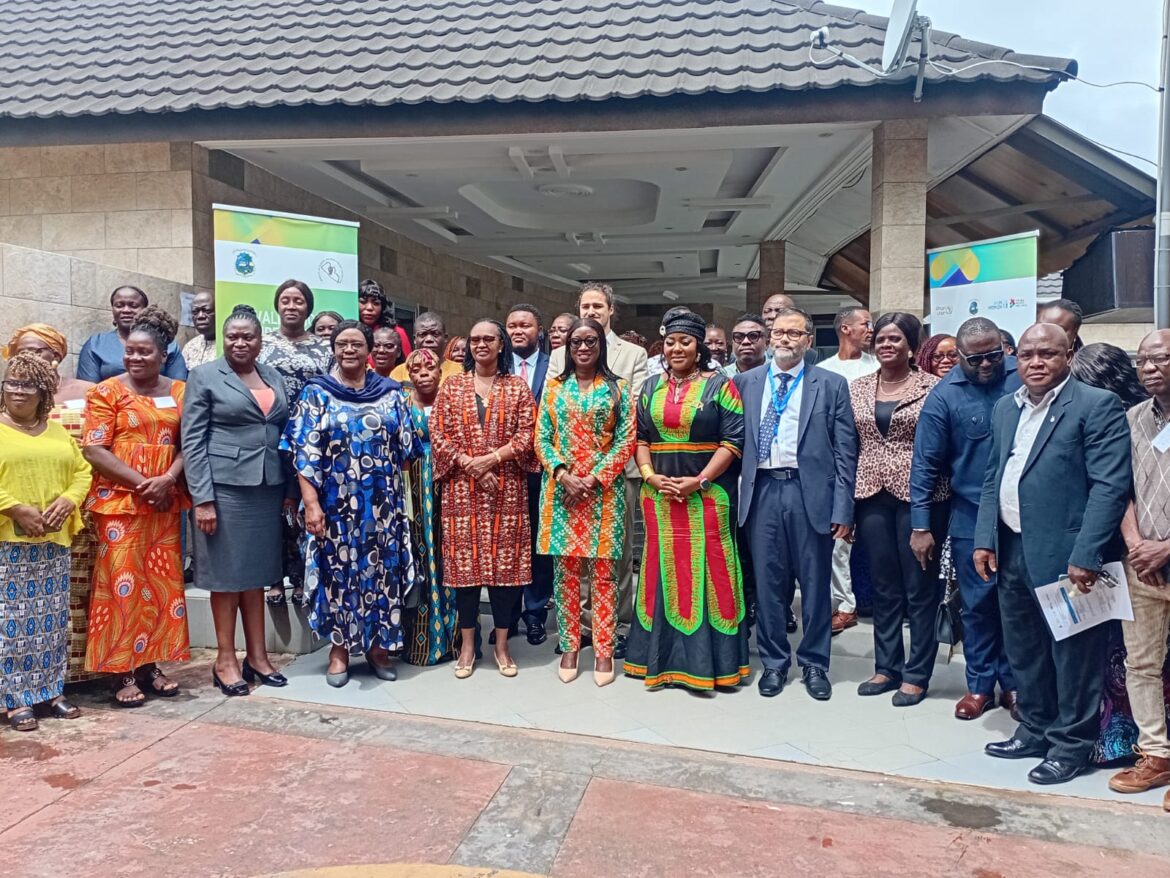
MONROVIA, July 6, 2026 — Liberia and its development partners have validated the country’s third National Action Plan on Women, Peace and Security, marking another step in Liberia’s long-running engagement with the WPS agenda.
The validation followed a two-day technical session involving government officials, civil society representatives and international partners. Fairnoh Gbilah, Director of Human Rights and Head of Women, Peace and Security, said participants had reviewed and validated the document after extensive discussions.
“As we validate the third national action plan today, after a two-day vigorous technical session, we have validated this document,” Gbilah said.
He said comments and recommendations from participants would be consolidated and submitted to the minister before the plan is finalized for official launch.
“Today, we are happy that, with all of the different issues, we have successfully validated the third National Action Plan for Liberia,” Gbilah said. “We can now move from phase one and phase two into phase three.”
Gbilah described the validation as a milestone for Liberia, which he said has been a pioneer in advancing women, peace and security since the global agenda was adopted in 2000.
He thanked the Government of Liberia, civil society organizations and development partners, including UN Women, the African Union and the Embassy of Ireland, for supporting the process.
Tsega Meles, Program Specialist with UN Women, described the session as productive and said participants made useful contributions to the draft plan.
“This has been a very intense process,” Meles said, thanking the Ministry of Gender’s NAP secretariat, Gbilah and the ministry team for their work. “We have concluded a big step today.”
Dr. Sally Wangamati, a WPS procurement specialist, congratulated the Government of Liberia and the technical team for completing the validation process, but said implementation would determine the plan’s impact.
“Now the biggest challenge is not the validation of the NAP,” Wangamati said. “The biggest challenge is making sure that the women of Liberia are able to benefit from this NAP.”
Wangamati urged officials and partners to ensure the plan is owned by women at the grassroots level, even as implementation is coordinated nationally.
“I encourage you to ensure that our NAP is implemented to the letter so that the WPS agenda can move forward,” she said.
Wangamati also cited the role of women in history, saying Liberia’s third NAP should be driven by both women and men to promote sustainable peace.
She referenced Black women in the United States during World War II who helped process large volumes of mail for soldiers, saying their work demonstrated how women’s contributions can strengthen resilience and results.
“This third NAP is being driven by women,” Wangamati said. “It is going to be implemented by the women and not only the women, but also the men of Liberia, because when we work together, we have sustainable peace.”
With validation complete, the Ministry of Gender, Children and Social Protection is expected to finalize the document for official launch. Officials said the third NAP is intended to build on Liberia’s history of women-led peacebuilding and help translate policy commitments into practical benefits for women and communities across the country.
