
By Amos Harris
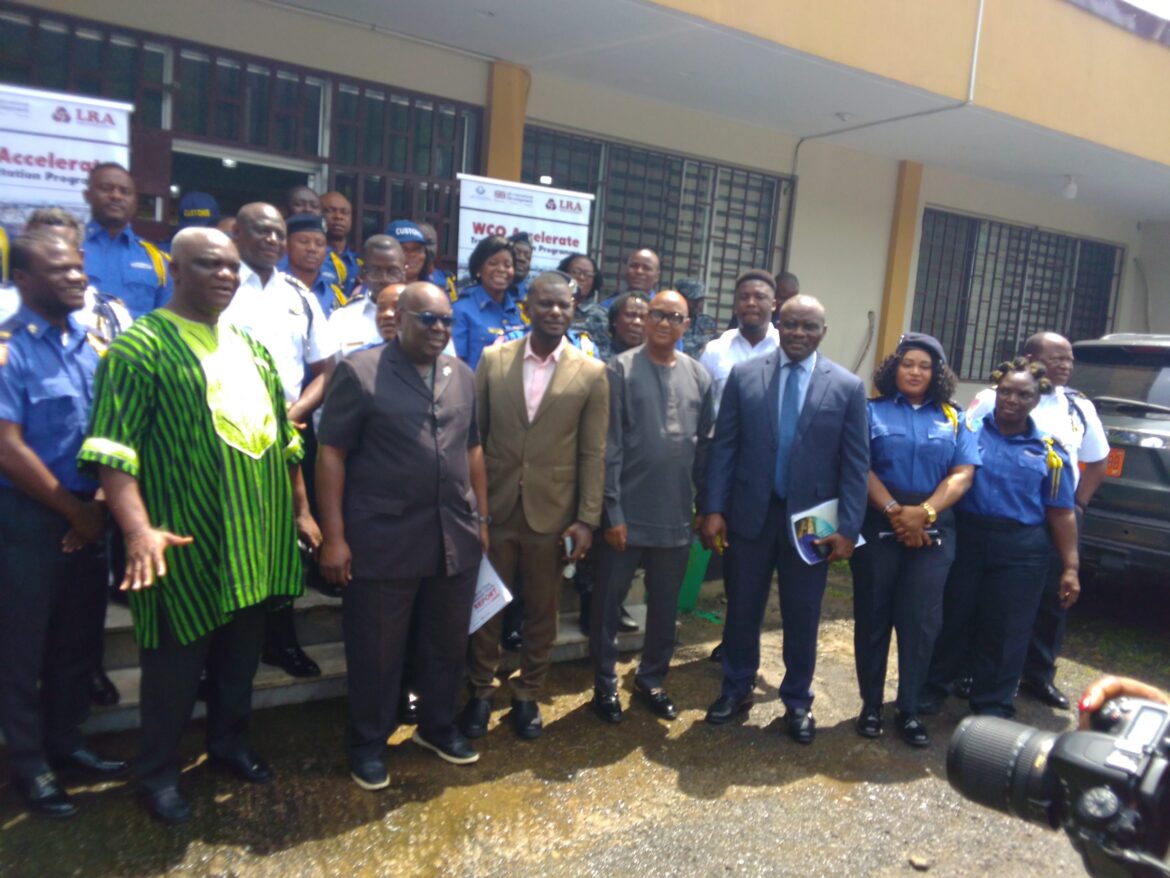
The Liberia Revenue Authority (LRA) has officially launched Liberia’s Second National Time Release Study (TRS) Report, unveiling a series of comprehensive reforms designed to reduce cargo clearance delays and improve trade facilitation at the Freeport of Monrovia. The report was launched on Monday, July 13, 2026, at the Liberia Chamber of Commerce in Monrovia, bringing together senior government officials, customs authorities, development partners, and private sector stakeholders committed to strengthening the nation’s trading environment.
Speaking at the ceremony, LRA Commissioner General and Chief Executive Officer James Dorbor Jallah described the report as a significant milestone in Liberia’s ongoing efforts to modernize customs administration, improve border management, and promote sustainable economic growth. He noted that the study demonstrates Liberia’s commitment to honestly assessing its trade performance, identifying operational bottlenecks, and implementing practical reforms in close collaboration with international partners. Jallah emphasized that the Freeport of Monrovia handles more than 90 percent of Liberia’s international trade, making efficient cargo clearance essential to national development and economic competitiveness. He added that the report provides the government with an internationally recognized benchmark to guide future reforms and fulfill Liberia’s obligations under the World Trade Organization Trade Facilitation Agreement.
According to the report, Liberia’s second Time Release Study examined 670 import declarations covering the entire cargo clearance process from vessel arrival to the final exit of goods from the Freeport. Conducted in accordance with the World Customs Organization’s internationally recognized methodology, the study assessed the performance of Customs, shipping lines, commercial banks, customs brokers, terminal operators, transporters, and other government agencies involved in trade.
The findings show that the average time required for imported cargo to move from vessel arrival to final exit is 12 days, 19 hours, and 42 minutes. While customs inspections take less than one hour on average and processing at the port exit gate takes about 34 minutes, the study found that the major delays stem from manual documentation, late submission of shipping manifests, and slow payment confirmation processes between institutions.
Despite these findings, Jallah said the results should be viewed as a roadmap for improvement rather than a setback. He stressed that Liberia now has credible data to support reforms that will make the country’s trading system faster, more transparent, and highly efficient.
To address the identified challenges, the LRA announced the construction of a modern Destination Inspection Facility at the Freeport of Monrovia. This new facility will bring Customs and key border agencies under one roof and utilize non-intrusive inspection technology to speed up joint cargo examinations while significantly reducing clearance times.
Jallah also disclosed that the LRA is upgrading the ASYCUDA World customs management system with technical support from the United Nations Conference on Trade and Development (UNCTAD). The upgraded platform will enable real-time electronic communication between Customs, commercial banks, the Central Bank of Liberia, and the LRA’s tax administration system, eliminating the reliance on paper-based payment confirmations. He further revealed that Customs connectivity has already been expanded to all Customs Business Offices across Liberia, allowing clearing agents nationwide to submit declarations and make electronic payments remotely. The upgraded system will also lay the foundation for the establishment of a National Single Window to further streamline trade procedures.
The Commissioner General called on shipping lines to submit electronic cargo manifests before vessel arrivals, urged terminal operators to digitize delivery orders, and encouraged customs brokers, importers, and government agencies to strengthen coordination and compliance. He pledged that the LRA would continue monitoring its performance through a structured implementation framework to ensure measurable progress.
Also speaking at the event, the Head of the Secretariat of the Liberia National Trade Facilitation Committee (NTFC) described the Time Release Study as an essential tool for measuring and improving the movement of goods across Liberia’s borders. The Secretariat noted that the study is not merely a data collection exercise but a demonstration of Liberia’s commitment to accountability, performance measurement, and continuous improvement. According to the Committee, the findings provide reliable evidence to identify operational inefficiencies that delay trade, discourage investment, and constrain economic development.
The Committee disclosed that although Liberia’s first Time Release Study, conducted during the COVID-19 pandemic, relied largely on electronic customs data from 112 import declarations, the latest study provides a more comprehensive assessment by incorporating information from multiple border agencies and private sector institutions. While differences in methodology limit direct comparison between the two studies, officials noted that the average cargo clearance time has improved from 12 days, 22 hours, and 8 minutes in the first study to 12 days, 19 hours, and 42 minutes in the latest assessment, representing a reduction of approximately two hours and 26 minutes.
The NTFC called for the immediate implementation of key recommendations contained in the report. These priority measures include the mandatory electronic submission of cargo manifests before vessel arrival, penalties for late manifest submissions, the full digitization of Terminal Delivery Orders, expanded electronic payment systems, stronger integration of customs, banking and port information systems, and the accelerated implementation of Liberia’s National Single Window.
Officials stressed that the true value of the report will depend on the active implementation of its recommendations rather than the quality of its analysis. They urged all government institutions, development partners, and private sector stakeholders to work collaboratively to reduce trade costs, improve competitiveness, and transform the Freeport of Monrovia into a modern gateway for regional and international commerce.
In closing, the National Trade Facilitation Committee and the LRA expressed appreciation to the World Customs Organization, the United Kingdom’s His Majesty’s Revenue and Customs, the Ministry of Commerce and Industry, the National Port Authority, APM Terminals Liberia, the Liberia Chamber of Commerce, and other development partners for their technical and financial support toward the successful completion of the study.
