
By Our Reporter | Smart News Liberia
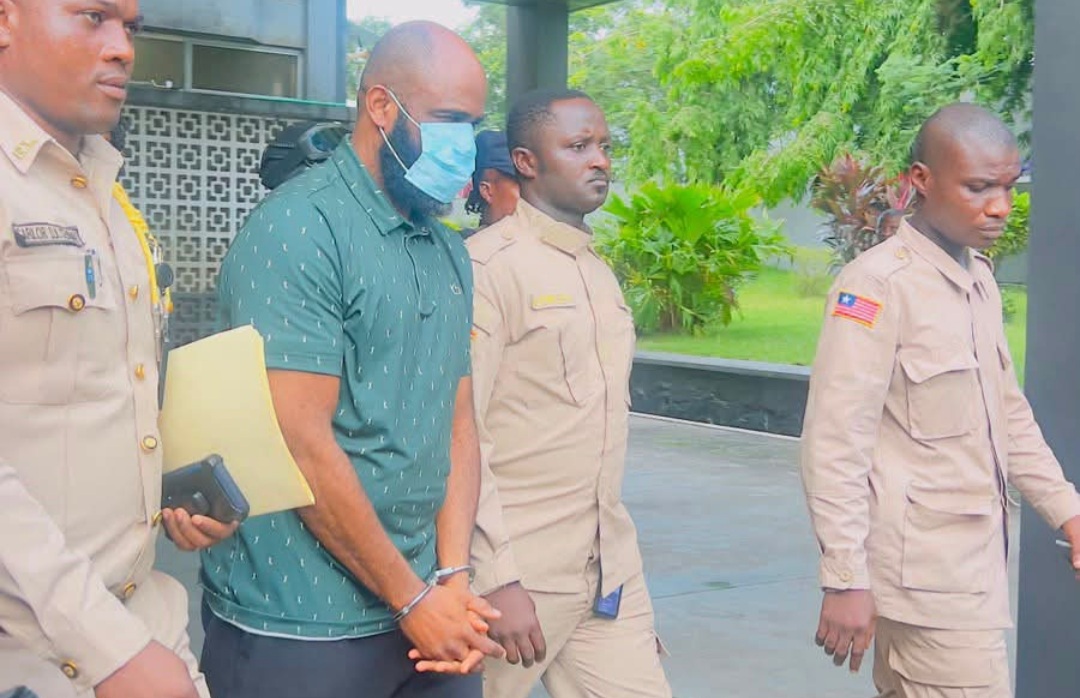
MONROVIA – The Monrovia City Court has found probable cause against Paul J. King, Operations Manager of Global Logistics Services (GLS), and several co-defendants accused of attempting to export 237.6 kilograms of cocaine valued at more than US$19 million, transferring the case to Criminal Court “C” for trial.
The ruling, delivered on Wednesday, July 15, 2026, by Stipendiary Magistrate L. Ben Barco, followed a preliminary examination requested by King, during which prosecutors presented evidence and witness testimony linking the defendants to the alleged cocaine trafficking operation.
The defendants are facing multiple charges, including unlicensed exportation, importation, possession, sale and trafficking of controlled substances, as well as criminal conspiracy, facilitation, and solicitation under Liberia’s Penal Law and the Drug Law of 2023.
Prosecutors alleged that King played a central role in coordinating the shipment of six cargo boxes that were falsely declared as containing “Maggie cubes and lappers” but allegedly concealed cocaine intended for export to England.
The shipment was intercepted at Roberts International Airport (RIA) on June 7, 2026, after airport screening reportedly detected suspicious contents, leading to a joint security investigation involving the Liberia Drug Enforcement Agency (LDEA) and other law enforcement institutions.
During the hearing, prosecutors relied on testimony from LDEA Chief Investigator Colonel Moses L. Meah and Liberia National Police Anti-Narcotics Superintendent Joseph M. Kaiffa, who provided details of the investigation and the alleged role of the accused persons.
According to the prosecution, King allegedly used false shipping documents, fictitious company names, and other individuals to facilitate the movement of the consignment.
Prosecutors further claimed that after the shipment was seized, King attempted to influence airport personnel in an effort to recover the cargo.
The state presented documentary evidence, including airway bills, receipts, photographs, and witness statements, arguing that the materials established sufficient grounds for the defendants to face trial.
However, the defense challenged the prosecution’s case, raising concerns about the investigation process, evidence handling procedures, and citing previous United States court decisions in support of its arguments.
In response, the court ruled that the foreign legal authorities cited by the defense were not controlling in Liberia’s legal system and emphasized that a preliminary examination is not a trial but a process to determine whether sufficient evidence exists to justify further proceedings.
Magistrate Barco ruled that the prosecution had established reasonable grounds to believe that King and his co-defendants may have committed the alleged offenses, and subsequently ordered them bound over to Criminal Court “C” for trial.
The case now moves to the trial stage, where prosecutors will be required to prove the allegations beyond a reasonable doubt. Until then, the accused persons remain entitled to the presumption of innocence under Liberian law.
