
By Socrates Smythe Saywon | Smart News Liberia
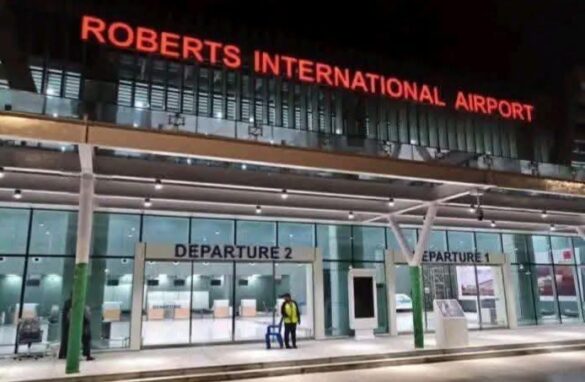
MONROVIA – A confidential intelligence report submitted to Liberia Revenue Authority (LRA) Commissioner General James Dorbor Jallah alleges the existence of a massive smuggling network operating through Roberts International Airport (RIA), raising serious concerns about customs revenue leakage, airport security, and the possible infiltration of transnational criminal organizations into Liberia’s principal international gateway.
The confidential report, dated January 6, 2026, claims weaknesses in customs enforcement, cargo handling procedures, and airport security have enabled commercial goods to be released without proper customs processing and allowed criminal networks to exploit vulnerabilities within the country’s largest airport.
According to the intelligence assessment, RIA remains Liberia’s most strategically important airport and one of the government’s largest sources of customs duties, excise taxes, and related revenue. The report warns that continued failures in cargo monitoring and customs oversight could significantly undermine government revenue collection, weaken border security, and damage Liberia’s international reputation.
One of the report’s most serious allegations concerns changes within the Liberia Drug Enforcement Agency (LDEA) at Roberts International Airport.
The intelligence brief claims that following a restructuring of the agency, all LDEA officers assigned to RIA—including the airport commander—were removed and replaced.
It further alleges that the airport detachment is now headed by Special Agent Clarence Clark, described in the report as a close associate of Acting Deputy Director General for Operations Patrick Kormazu.
The report also alleges that intelligence sources believe Clark maintains associations with suspected regional drug traffickers.
Smart News Liberia has not independently verified these allegations, and no evidence has been publicly presented establishing wrongdoing by either official. The report itself acknowledges that the claims require formal investigation and verification.
Nevertheless, the intelligence document argues that the timing and scope of the restructuring warrant scrutiny because RIA has long been identified by regional security analysts as a strategic transit point for cocaine trafficking in West Africa.
The report also directs attention to alleged irregularities involving cargo processed through the GLS Menzies cargo warehouse at Roberts International Airport.
It claims that multiple commercial consignments were removed from the warehouse without completing customs procedures or paying the required import duties.
According to the intelligence assessment, the alleged operation exploited weaknesses within the outsourced cargo handling system, particularly the reported absence of mandatory Liberia Revenue Authority Flag Receipts before cargo release.
The report further alleges that certain senior customs and LRA officials responsible for airport oversight may have facilitated the unauthorized release of goods. However, it does not identify those officials by name or provide publicly verifiable evidence establishing criminal conduct.
As part of its findings, the intelligence report references several airway bill numbers that investigators say should be examined by customs authorities.
The listed consignments reportedly originated from Lagos, Nigeria, and Accra, Ghana, before arriving in Monrovia aboard ASKY Airlines flights.
Investigators claim the cargo labels contain handwritten alterations, inconsistent routing information, varying shipment piece counts, and other documentation anomalies that could indicate manipulation of cargo records.
The report recommends that the LRA determine whether the referenced shipments were properly entered into customs databases, assessed for import duties, and supported by official payment receipts.
The confidential brief recommends that the Liberia Revenue Authority immediately verify the airway bill numbers with GLS Menzies, cross-check customs records for duty assessments and payments, confirm whether official LRA Flag Receipts were generated, trace the current location of any consignments lacking payment records, review CCTV footage from the cargo warehouse and release points, and examine access logs covering key dates in November 2025.
The report specifically highlights November 7, 2025, when the shipments were reportedly available inside the warehouse, and November 12, 2025, between 12:00 p.m. and 1:00 p.m., as a critical period for reviewing surveillance footage and warehouse access records.
The intelligence document concludes that the alleged combination of weakened drug enforcement oversight, vulnerabilities in outsourced cargo handling, and irregular cargo documentation points to what it describes as a deeply entrenched smuggling architecture operating at Liberia’s most important international airport.
It warns that if the alleged activities continue unchecked, they could further deprive the government of lawful customs revenue, weaken border security, and allow transnational criminal organizations to expand their influence within critical state infrastructure.
As of publication, neither the Liberia Revenue Authority, the Liberia Drug Enforcement Agency, GLS Menzies, nor the officials named in the confidential report had publicly responded to the allegations.
Because the report contains unverified intelligence allegations, the claims remain subject to official investigation. No court or law enforcement agency has made findings establishing wrongdoing by any individual or institution named in the document.
