
By Seltue Robert Karweaye Sr.
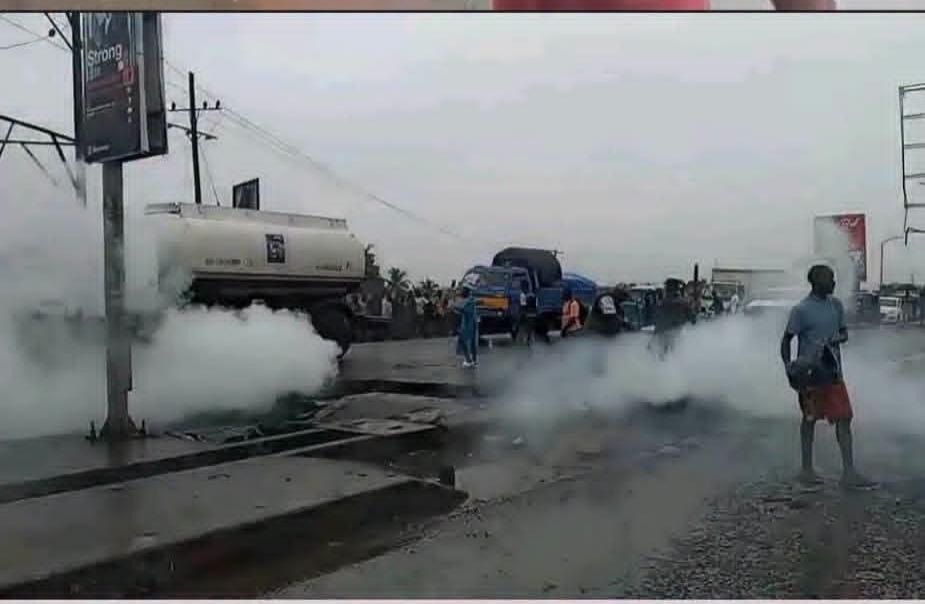
On July 18, 2026, tensions flared around the Jamaica Road Bridge as another land dispute unfolded, drawing large crowds and raising concerns about public safety. According to residents interviewed by Spoon TV and other media outlets, a woman is claiming ownership of a vast stretch of land extending from Logan Town to New Georgia. Community members allege that the claim amounts to an attempt to take over their community and say they mobilized to resist what they describe as an unlawful encroachment.
Regardless of how this particular dispute is ultimately resolved, it serves as another reminder that land ownership remains one of Liberia’s most explosive national challenges. Across the country, disagreements over land boundaries, inheritance, customary ownership, private deeds, and competing claims continue to generate fear, litigation, displacement, and, in some cases, violence.
Liberia’s land crisis did not begin with the Boakai administration, nor will it end with it. For decades, weak land administration, overlapping deeds, fraudulent surveys, multiple sales of the same property, corruption, and delays in the judicial process have created an environment where conflicts over land have become increasingly common. Montserrado and Margibi Counties, in particular, have witnessed numerous confrontations arising from competing ownership claims.
Against this backdrop, President Joseph Boakai’s public statement that “God is not making new land” has generated significant public debate. While some interpreted the remark as a reminder that land is a finite and valuable national resource, others believe it could be misunderstood or invoked by individuals seeking to justify aggressive land claims.
Whether intended or not, statements from the President of the Republic are never ordinary remarks. They carry the authority of the nation’s highest office and often influence public perception, administrative conduct, and political discourse. On highly sensitive matters such as land ownership, every presidential statement deserves careful consideration because it can shape how citizens interpret government priorities and policies.
Land is more than property in Liberia. It represents identity, family heritage, economic survival, and community security. Throughout Liberia’s history, disputes over land have divided families, strained relations between neighboring communities, created tensions between customary landowners and concessionaires, and fueled lengthy court battles. In some cases, these disputes have resulted in violence and loss of life.
This is precisely why national leadership must communicate with clarity and precision. Any statement capable of multiple interpretations can unintentionally increase uncertainty in an already fragile environment. Even if that was never the President’s intention, the government has a responsibility to ensure that its public messaging strengthens confidence in the rule of law rather than creating room for speculation.
Instead of relying on broad statements, the administration should reassure Liberians that every land dispute will be resolved strictly according to the Constitution, the Land Rights Act, and the decisions of competent courts and land authorities. No citizen should believe that political connections, financial influence, intimidation, or force can determine land ownership. Justice—not power—must remain the guiding principle.
The government must also confront the structural causes of Liberia’s land conflicts. That means strengthening the Liberia Land Authority, improving land registration systems, eliminating fraudulent deeds, prosecuting individuals involved in double land sales, modernizing cadastral surveys, and ensuring that court decisions on land matters are enforced promptly and impartially. Without meaningful institutional reform, land disputes will continue regardless of which political party occupies the Executive Mansion.
Liberia’s history provides painful lessons about the consequences of unresolved grievances. Political exclusion, disputes over resources, and failures of governance have all contributed to periods of national instability. Land possesses the same potential to divide communities if disputes are allowed to fester or if citizens lose confidence in the institutions responsible for protecting their rights.
The recent confrontation near Jamaica Road Bridge should therefore serve as a warning—not only to government officials but to every Liberian. Preventing future conflicts requires more than public appeals for calm. It requires credible institutions, transparent land governance, impartial law enforcement, and leaders whose words consistently reinforce respect for the rule of law.
I am not suggesting that President Boakai’s statement alone created Liberia’s land disputes. Those disputes long predate his presidency. However, because the office of the President carries tremendous influence, public statements on such a sensitive issue must be carefully framed. In times of growing anxiety over land ownership, Liberians need reassurance that the government stands firmly on the side of justice, legality, and equal protection under the law.
The President’s words should calm tensions, unite communities, and strengthen confidence in our institutions. Every Liberian, regardless of political affiliation, tribe, religion, or economic status, must know that land ownership will be determined by evidence, due process, and the rule of law—not by influence, intimidation, or competing interpretations of political rhetoric.
Liberia cannot afford to allow land disputes to become the next major national conflict. The warning signs are already visible. The time to strengthen land governance, restore public confidence, and protect the rights of all citizens is now.
About the Author
Seltue Robert Karweaye Sr. is a Liberian policy analyst, researcher, and prolific commentary writer with interests in governance, public finance, economic development, and public policy. He can be contacted at seltuek@gmail.com
