
By Lewis S. Teh
MONROVIA, July 28, 2026 — The National Port Authority’s new automated gate system at the Freeport of Monrovia is nearing completion as part of efforts to strengthen security, reduce human interaction and modernize port operations.
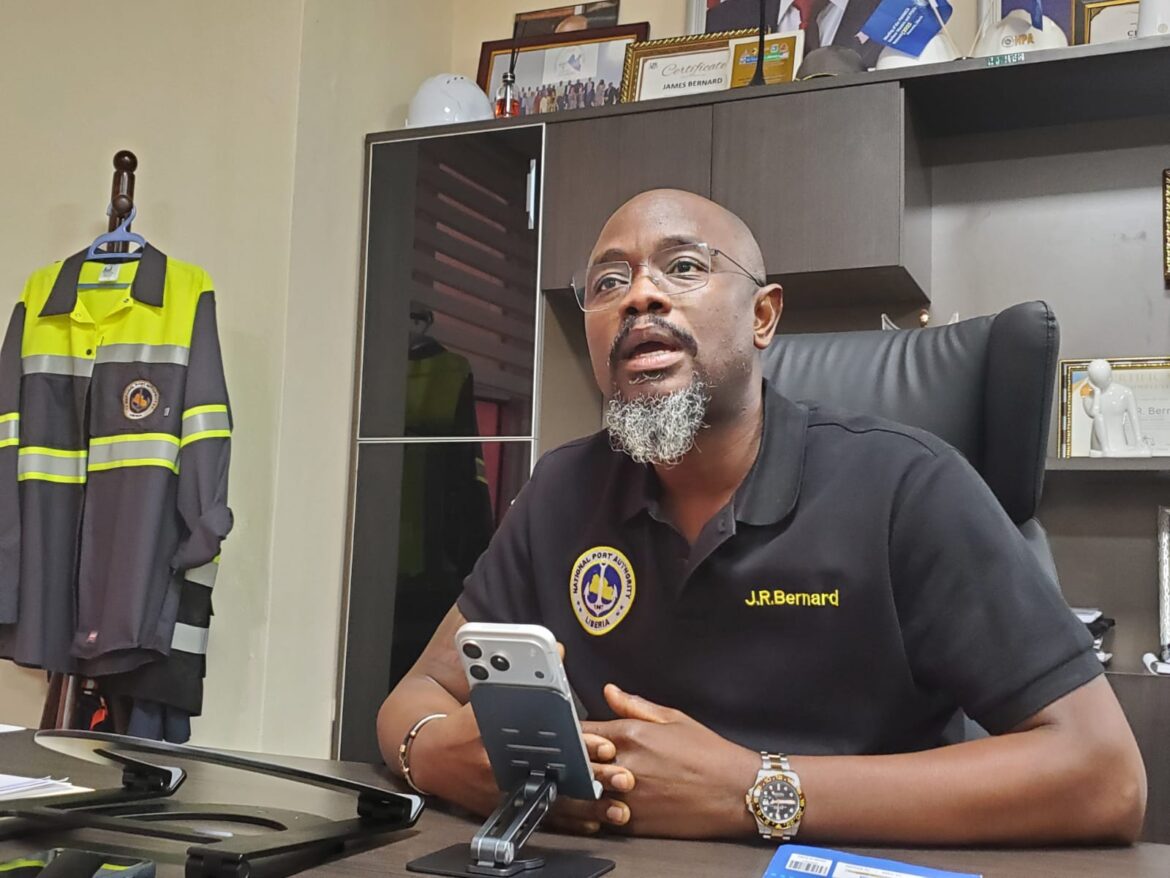
NPA Deputy Managing Director for Administration James R. Bernard said the project forms part of broader reforms intended to improve Liberia’s competitiveness in the regional and global maritime industry.
Bernard spoke to journalists following a guided tour of the facility.
“As a country, we’ve been lacking, due to the civil war, key infrastructure that positions Liberia for global excellence in the maritime industry,” Bernard said. “In this business, to be competitive, you have to be on par with the rest of your competitors.”
He said the system would help the Freeport comply with the International Ship and Port Facility Security Code, a global framework establishing security requirements for ports and vessels.
According to Bernard, Liberia previously faced restrictions for about 15 years because of non-compliance, resulting in delays and additional screening for vessels bound for the country.
“If you look, you will see we’re raising the walls of the gate,” he said. “We’re closing off all access. There will be restricted access and designated access points. All of that is in conformity.”
Bernard said the Freeport is assessed annually by the United States Coast Guard, which identifies security deficiencies and gives the NPA deadlines to correct them.
“If we do not correct them, then we get blacklisted,” he said, warning that such action would have serious national consequences because more than 90 percent of Liberia’s cargo passes through the Freeport.
The new system will require port users to obtain identification cards and complete basic occupational health and safety training before receiving access passes.
Regular users will enter through identification scans, biometric verification and facial-recognition technology. Visitors and occasional users will receive time-limited day passes that automatically expire.
The system will also record the presence and location of port users, allowing authorities to account for people during emergencies.
“If there’s a fire outbreak, that automated process tells us exactly where you are at any given time in the port,” Bernard said.
He explained that security personnel would remain at entry points to assist users experiencing technical difficulties, stressing that the system was designed to improve safety and efficiency rather than reduce the workforce.
The Liberia Revenue Authority is also constructing a designated inspection facility where trucks and other vehicles will undergo automated scanning.
Bernard said the gate project is part of continuing efforts to upgrade port infrastructure after years of limited investment.
“Now, we’re in the process of revamping,” he said. “We’re playing catch-up.”
Responding to criticism of the administration’s reforms, Bernard said officials remained focused on carrying out their assigned responsibilities.
“I have a responsibility,” he said. “I was entrusted to do a piece of work by His Excellency. It only motivates us to do what we’re here to do.”
The NPA said the reforms are intended to restore the Freeport of Monrovia as a competitive regional trade center while strengthening Liberia’s position in international shipping.
