
By Socrates Smythe Saywon | Smart News Liberia
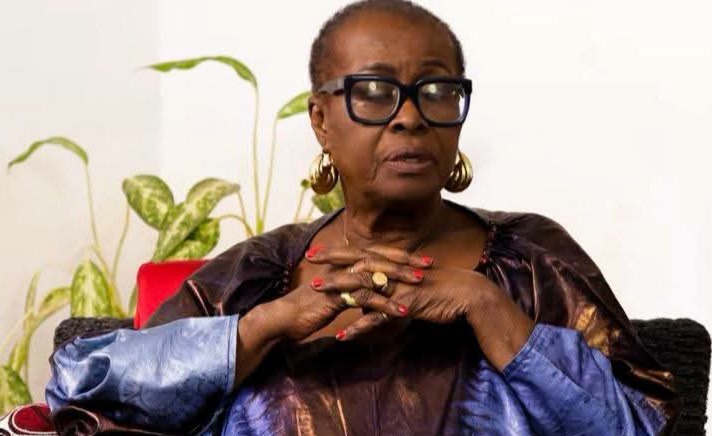
MONROVIA – Renowned Liberian musician and social activist Miatta Fahnbulleh has stirred fresh political debate after criticizing former President George Manneh Weah, describing his administration as “a disaster” while arguing that former President Ellen Johnson Sirleaf bears lasting responsibility for his rise to power.
Fahnbulleh made the remarks during an interview on Monday, July 27, 2026, with Ghanaian journalist Kafui Dey under the theme, “We Cried in Liberia, They Danced in Ghana When Nkrumah Fell.” The interview has since generated widespread discussion on social media, with supporters and critics sharply divided over her comments.
The celebrated voice behind the internationally recognized song “Everybody Likes Saturday Night” used the interview to reflect on Liberia’s political leadership, offering pointed criticism of both Sirleaf’s political judgment and Weah’s tenure in office.
When asked what she considered the defining legacy of Ellen Johnson Sirleaf, Fahnbulleh delivered a response that has quickly become one of the interview’s most talked-about moments.
“Her lasting legacy will be that she unleashed George Weah on us. That’s the legacy I give to Mrs. Sirleaf.”
She argued that Sirleaf played a decisive role in elevating Weah into national leadership by publicly endorsing him during the country’s political transition.
According to Fahnbulleh, Weah’s emergence as president was not simply the product of political momentum but was significantly aided by Sirleaf’s support.
“At the end of the day, how did he get into the political class? Mrs. Sirleaf, like I said, foisted him on us, literally held up his hand as the successor.”
Turning her attention directly to Weah, Fahnbulleh acknowledged his remarkable achievements as one of Africa’s greatest footballers but questioned whether sporting excellence should have translated into national political leadership.
“He’s a fantastic football player. But the background that I come from, we didn’t see football players as national political leaders. They should stick to their professions.”
She reinforced her argument by comparing Weah with Ghanaian football legend Abedi Pelé, suggesting that sporting fame alone does not qualify someone to govern a nation.
“George Weah is an Abedi Pelé. Could you imagine Abedi Pelé for President? He’s not a politician.”
Fahnbulleh’s strongest criticism came when assessing Weah’s six-year administration, which she characterized as deeply damaging to Liberia.
“He was a disaster for the country. Go to Liberia now, they will tell you. He was a disaster.”
She insisted her comments were not driven by personal hostility but by her assessment of his performance while in office.
“It’s not damning. It’s just the truth. I even have sympathy for George because I know his limitations.”
The veteran activist further alleged that Weah lacked genuine interest in the responsibilities of governing, accusing him of focusing more on the prestige of holding office than on managing the affairs of the state.
She also questioned whether he possessed the technical capacity required to oversee the complex responsibilities of the presidency, citing the demands of reviewing lengthy national budget documents and navigating public administration.
Drawing another comparison, Fahnbulleh said she once asked Nigerian friends whether they would entrust their country to former football star Nwankwo Kanu, arguing that the question prompted reflection on the distinction between athletic success and political leadership.
Her remarks have generated mixed reactions across Liberia and beyond.
Among those responding was Liberian journalist Charles Yates, who criticized Fahnbulleh’s tone despite acknowledging the importance of political debate.
Writing on his official Facebook page, Yates stated:
“I think Miatta Fahnbulleh was being rude and disrespectful to former President Weah in that interview with the Ghanaian journalist. You don’t speak to national leaders in such a manner.”
The interview has renewed public discussion about the legacy of the Weah administration, Sirleaf’s political influence in Liberia’s democratic transition, and the question of leadership qualifications in African politics.
While Fahnbulleh’s comments have been praised by some as candid political criticism, others argue that her characterization of the former president was unnecessarily harsh and disrespectful.
As public reactions continue to unfold, neither former President George Weah nor former President Ellen Johnson Sirleaf had publicly responded to Fahnbulleh’s remarks at the time of publication. The interview has nevertheless reopened longstanding political debates over leadership, governance, and accountability in Liberia.
