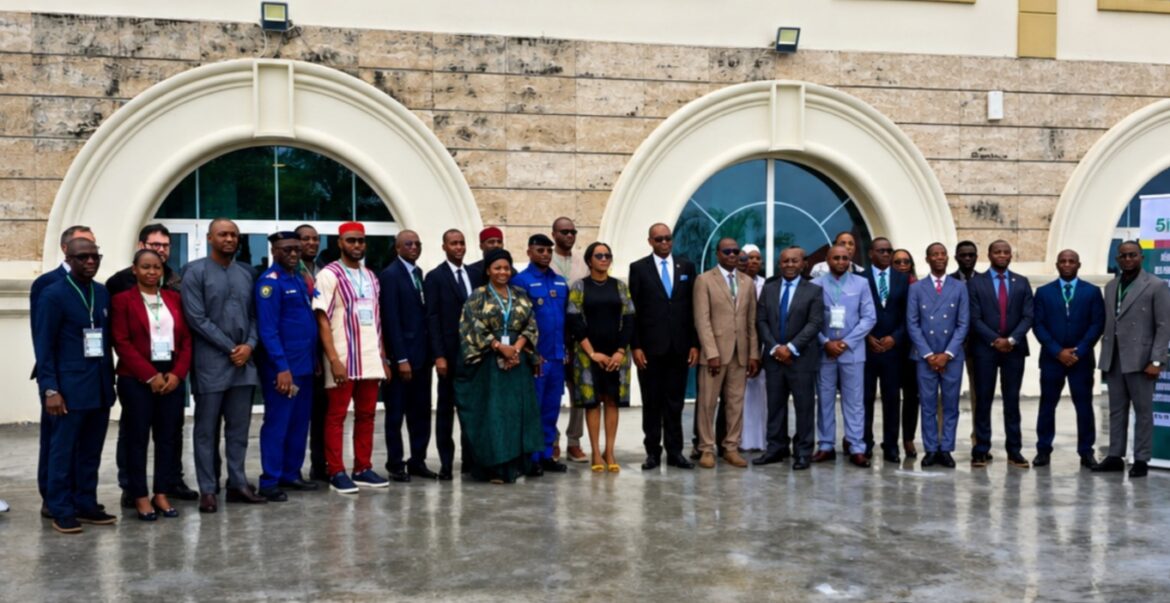
CONAKRY, GUINEA – The West African Tax Administration Forum (WATAF) has called for stronger regional cooperation, greater harmonisation of excise duty policies and more effective tax administration measures as ECOWAS Member States meet in Conakry, Guinea, to review the ECOWAS Directive on excise duties applicable to tobacco products.
The Regional Meeting for the Review of the ECOWAS Directive on excise duties applicable to tobacco products, taking place from 10 to 12 August 2026, brings together tax policy officials from ECOWAS Member States, the ECOWAS Commission, the UEMOA Commission, the World Health Organization, the World Bank, ATAF, WATAF and other partners. The meeting is assessing the current implementation of the regional framework for tobacco excise duty management and examining proposed recommendations aimed at strengthening public health outcomes, tax compliance and domestic revenue mobilisation.
Speaking on behalf of WATAF, its Executive Secretary, Mr Jules Tapsoba, described tobacco taxation as a strategic public policy tool capable of supporting both domestic revenue optimisation and improved public health outcomes.
“For WATAF, the issue of tobacco is therefore of particular importance because of the role that tax and customs administrations can play in implementing anti-tobacco policies,” Mr Tapsoba said. “Taxation is one of the instruments available to public authorities to influence the price and affordability of tobacco products. A relevant tax policy can help reduce the consumption of products harmful to health while enabling States to mobilise additional revenue to finance public policies, particularly in the health sector.”
According to the ECOWAS Commission presentation delivered by Mr Darlingston Y. Talery, Acting Director of the Directorate of Customs Union and Taxation at the ECOWAS Commission, the proposed 2026 Directive seeks to replace the 2017 framework, which, as of 2024, had not been fully implemented by any ECOWAS Member State. The presentation noted that tobacco products remain significantly undertaxed in the region, undermining both tax revenue mobilisation and public health objectives.
The proposed reforms include an increase in the minimum specific excise duty, from USD 0.80 per pack of tobacco in Phase 1 to USD 1.40 per pack in Phase 3. They also seek to introduce a mandatory specific or mixed excise structure; an annual adjustment corresponding to the higher of 5 percent or inflation measured by the Consumer Price Index after Phase 3; the inclusion of heated tobacco products and electronic nicotine delivery systems; and stronger administrative controls against illicit trade.
The ECOWAS Commission presentation further projected that the proposed reforms could increase regional tobacco tax revenues by 300 percent compared to the 2024 baseline, the year in which no ECOWAS Member State had fully implemented the 2017 Directive. It also targets a reduction of more than 30 percent in smoking prevalence, a 20 percent decline in cigarette sales volumes, a 70 percent excise burden on cigarettes as a share of retail selling price, and a 50 percent reduction in smoking among young people under 25.
Mr Tapsoba said the figures reinforce WATAF’s consistent position that revenue mobilisation and public health protection should not be treated as separate objectives.
The meeting opened with words of appreciation and welcome to participants, including representatives of Member States, the World Health Organization, the World Bank Group, the ECOWAS Resident Representative, the UEMOA Commission and the ECOWAS Commission. The Minister of Economy and Finance of the Republic of Guinea also delivered the opening address on excise duties as a public health policy and revenue mobilisation tool.
Across the opening interventions, speakers stressed the need for regional unity in confronting the harmful effects of tobacco consumption, reducing illicit trade, strengthening tax compliance and ensuring that excise duty systems contribute more effectively to sustainable domestic revenue mobilisation.
For WATAF, the Conakry meeting represents another important step in advancing regional efforts to strengthen tobacco taxation and combat illicit trade. In July 2023, WATAF participated in the Regional Meeting of National Experts on Tobacco Taxation and Illicit Trade in ECOWAS Member States, held in Accra and organised with the participation of ECOWAS and the World Health Organization. WATAF also contributed in 2025 to the validation of the Tobacco Excise Tax Simulation study in Abuja, where it stressed the need for tobacco tax policies to take into account the realities of cross-border trade in West Africa.
The three-day meeting will examine the state of implementation of the current Directive, assess excise duty structures and revenue performance at national level, analyse barriers to harmonisation, share international experiences and formulate recommendations toward a regional action plan. Discussions will also focus on tracking and tracing systems, controls against illicit trade, tax administration solutions, data systems, audit capacities and technical assistance needs.
The Conakry meeting is expected to conclude with priority recommendations and a communiqué intended to guide Member States and regional institutions in modernising the ECOWAS framework on excise duties applicable to tobacco products.
About WATAF
The West African Tax Administration Forum (WATAF) is a regional body that brings together tax administrations across West Africa to strengthen domestic resource mobilization through cooperation, capacity development, and knowledge sharing. WATAF plays a leading role in shaping regional tax policy dialogue and supporting the modernization and harmonization of tax systems in line with regional and international standards.
See more Liberia News Network stories in Google Search by adding LNN as one of your Preferred Sources.
★ Add LNN as a Preferred Source