By Lewis S. Teh
MONROVIA, August 12, 2026 — President Joseph Nyuma Boakai Sr. has put government officials on notice over poor performance and implementation delays, warning that his administration must move beyond plans and rhetoric to deliver tangible results under the ARREST Agenda for Inclusive Development (AAID).
President Boakai said officials who fail to perform could be removed, as he demanded greater accountability, timely implementation of development programs and responsible management of public resources.
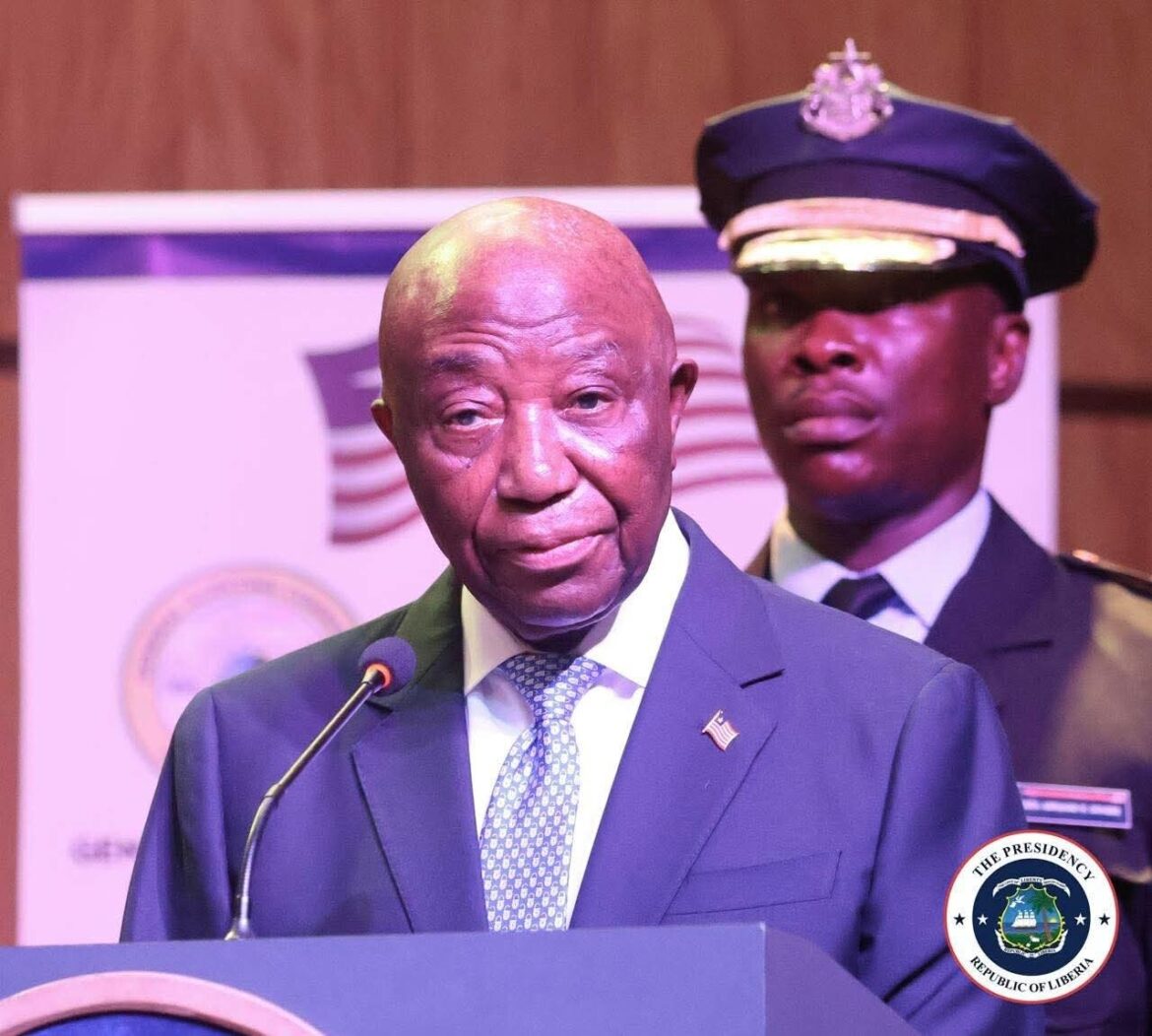
The President spoke Tuesday at the National Steering Committee Meeting on the AAID held at Monrovia City Hall, where government officials and partners reviewed progress and challenges in implementing the national development plan.
“We must be honest with ourselves that the achievements have not been consistent,” Boakai said, citing implementation gaps, delays and institutional bottlenecks. “These issues demand immediate action.”
He placed government institutions “on notice” to implement planned sector interventions without further delay and warned against absenteeism and poor performance.
“In instances when we see that people are not measuring up, with all due respect, we have to ask you to move elsewhere,” Boakai said.
“Progress must be tracked. Results must be reported transparently. Where implementation is lacking, corrective action must be taken.”
The President said appointments and continued service in government should be based on performance rather than personal relationships.
“If you have a leadership, it is based on your performance. Don’t bring people to your office because they relate to you or they are family or friends. What you want is achievement,” he said.
The meeting reviewed implementation of the AAID since its launch on January 15, 2025, focusing on progress made, existing gaps and measures needed to accelerate delivery.
Boakai said his administration’s commitment is to translate the development agenda into improvements that citizens can see and experience.
“Our promise to the Liberian people was to move beyond plans,” he said. “We want to deliver tangible results. Improve livelihoods. We want to drive on better roads. We want to be able to drink better quality water.”
The President said substantial progress has been made over the past 12 months in aligning national programs with the government’s development priorities and improving coordination among institutions.
He credited government ministries and agencies, the private sector, civil society, development partners and Liberians in the diaspora for contributing to the implementation of the agenda.
Despite the progress, Boakai said more work is required to address delays and institutional weaknesses that continue to affect implementation.
He identified job creation and improved access to education, healthcare, telecommunications, water, security and infrastructure among areas requiring sustained attention.
Boakai also cautioned public corporations and other government institutions against using state resources for personal benefit, insisting that public money must be directed toward national development.
“All of those resources are for the development of this country,” he said. “Every dollar must be managed with the highest level of integrity.”
The President also demanded timely and accurate reporting from ministries, agencies and development partners, describing reliable data as critical to measuring the government’s performance.
“Without accurate, up-to-date information, we can’t fully measure progress,” Boakai said.
He warned that repeated delays, inconsistencies and incomplete reports would no longer be accepted and said action would be taken against institutions that fail to comply.
According to him, the government intends to strengthen its data systems to improve real-time monitoring of programs and projects under the AAID.
Boakai also called for stronger collaboration with development partners and urged them to align their interventions with Liberia’s national priorities to reduce duplication and maximize impact.
He encouraged the private sector to take advantage of opportunities under the AAID to invest, innovate and industrialize, while describing civil society organizations as important partners and a bridge between the government and citizens.
Earlier, the President called on Liberians to take greater responsibility for the country’s development, arguing that national transformation cannot be left entirely to the government.
“Everything that is required to make life right here is living in abundance. We have to do it ourselves,” he said.
He urged citizens to demonstrate personal responsibility, including maintaining clean communities, while challenging public officials and institutions to improve their performance.
“This is a very important gathering and something that we believe is good for the country, good for all of us,” Boakai said. “Your presence here shows your commitment and your love for the progress of the country.”
See more Liberia News Network stories in Google Search by adding LNN as one of your Preferred Sources.
★ Add LNN as a Preferred Source