By Lewis S. Teh
MONROVIA, August 12, 2026 — Finance and Development Planning Minister Augustine Kpehe Ngafuan says Liberia’s economy continues to show signs of improvement, with economic growth projected at 5.5 percent in 2026 and domestic revenue collections reaching US$761.1 million by the end of June.
Ngafuan said the performance reflects encouraging macroeconomic gains during the first year of implementation of the ARREST Agenda for Inclusive Development (AAID), although challenges remain in translating economic stability into jobs, improved public services and better living conditions.
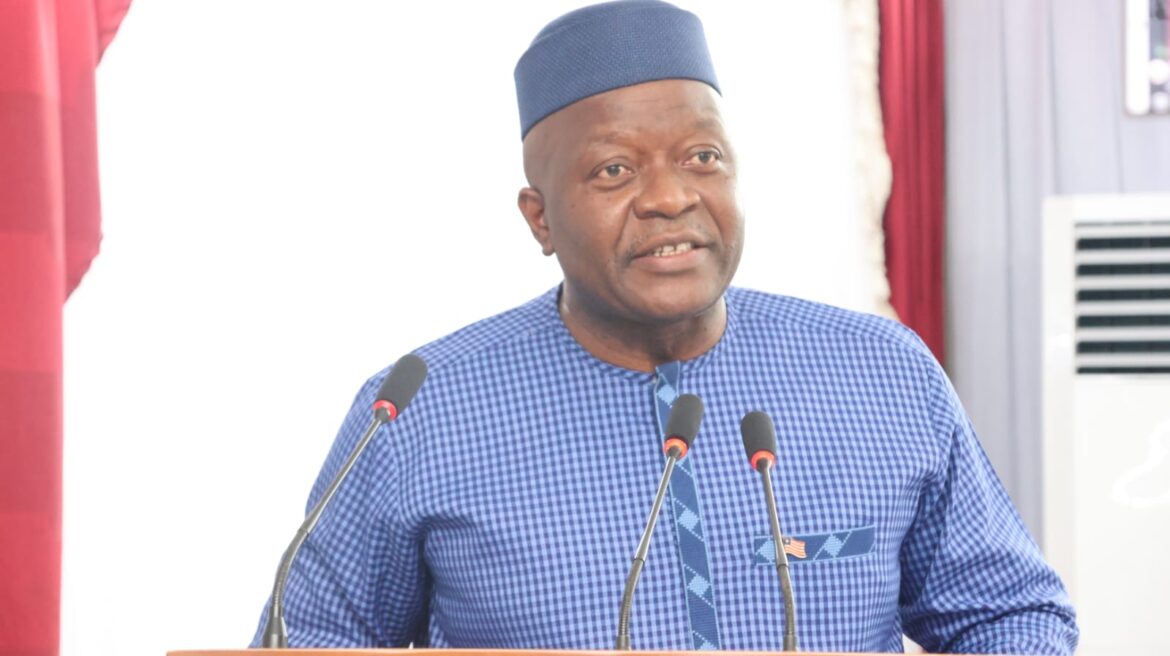
He spoke Tuesday at the National Steering Committee (NSC) meeting on the AAID at Monrovia City Hall, where government officials and partners reviewed progress in implementing the national development agenda.
According to Ngafuan, Liberia’s real Gross Domestic Product (GDP) growth increased from 4 percent in 2024 to 5.1 percent in 2025 and is projected to rise to 5.5 percent in 2026.
He said GDP per capita also increased from US$849 in 2024 to US$861 in 2025 and is projected to reach US$961 in 2026, bringing the country closer to the AAID target of US$1,050 by 2029.
“The implementation reports reflect both encouraging achievements and areas requiring greater attention,” Ngafuan said. “We see improvements across several sectors, undergirded by continued macroeconomic stability.”
The Finance Minister reported that inflation remained largely within single digits throughout 2025 but increased from 3.2 percent in January 2026 to 5 percent in June.
He attributed the increase primarily to global fuel price shocks and their effects on domestic prices.
Ngafuan also reported an improvement in Liberia’s public debt position, saying the debt-to-GDP ratio declined from 56.1 percent in 2024 to 54 percent in 2025 and is projected to fall further to 49.6 percent in 2026.
The projected figure, he said, remains below the AAID threshold of 56.4 percent.
On domestic revenue, Ngafuan said collections increased from US$699 million in 2024 to US$848 million in 2025, while US$761.1 million had been collected by June 2026.
“This trajectory indicates that we remain firmly on course to meet the approved 2026 revenue target of US$1.3 billion,” he said.
Despite the positive indicators, Ngafuan acknowledged that macroeconomic figures alone would not determine the success of the government’s development agenda.
He said the ultimate test would be whether economic stability translates into jobs, improved public services and better living conditions for Liberians.
According to him, the first year of AAID implementation focused on laying the foundation for inclusive growth through improved coordination, stronger public investment and budget execution, enhanced planning and monetary frameworks, and better alignment of sector programs with national priorities.
“Governance and planning reforms have strengthened our ability to track commitments and assess performance,” he said.
However, Ngafuan acknowledged that implementation remains uneven across some government institutions, pillars and programs due to delays in project execution, reporting gaps and capacity constraints.
The Finance Minister urged members of the National Steering Committee to go beyond reviewing achievements and focus on identifying obstacles that continue to slow implementation.
He pledged that the Ministry of Finance and Development Planning would continue working with implementing institutions to strengthen planning, financing, monitoring and reporting.
“The Ministry of Finance and Development Planning will continue to work with all implementing institutions to strengthen planning, financing, monitoring and reporting, while ensuring that scarce public resources are directed with measurable development impact,” Ngafuan said.
“Our objective is straightforward: to ensure that government programs remain aligned with national priorities and that available resources are effectively translated into measurable development outcomes for our citizens and residents.”
The NSC meeting was held under the theme, “Consolidating AAID Gains: Accelerating Implementation into Measurable and People-Centered Outcomes.”
President Joseph Nyuma Boakai Sr., who chairs the National Steering Committee, attended the meeting along with government officials, development partners and other stakeholders involved in implementing the AAID.
See more Liberia News Network stories in Google Search by adding LNN as one of your Preferred Sources.
★ Add LNN as a Preferred Source