
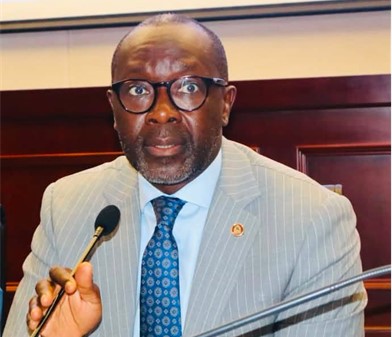
MONROVIA – Senator Amara Konneh has turned a searing spotlight on how Liberia prosecutes its multimillion-dollar narcotics cases. His central charge is that justice falls hardest on junior officers while senior commanders stay protected. The claim strikes at the credibility of the government’s much-advertised war on drugs. Konneh argues that suspending or dismissing small officers, without trial, manufactures a spectacle rather than accountability. He warns that shielding the powerful signals that rank and connections can place individuals above the law. The stakes, in his telling, reach beyond any single case toward the rule of law itself. Whether the administration answers the allegation or dismisses it as noise will test its anti-narcotics resolve, as THE ANALYST reports.
Senator Amara Konneh has accused the government of applying a double standard in its handling of Liberia’s cocaine investigations. In a strongly worded statement, he argued that junior security officers are routinely suspended or dismissed while senior commanders escape scrutiny.
Konneh said that whenever multimillion-dollar cocaine syndicates are uncovered, low-ranking officers are punished, often without due process. He charged that senior officials who supervise those officers remain in place and are sometimes authorized to oversee investigations into their own institutions.
Charge of Double Standard
According to the senator, small officers are sacrificed to create a false media spectacle while the true architects walk free. He said the pattern erodes public trust and mirrors the disputed handling of an earlier narcotics case under the previous administration.
Konneh contended that Liberians can see the powerful protected while others are punished. He argued that such selective treatment shows the anti-narcotics fight is driven by political convenience rather than national security.
Warning on Silence
The senator criticized what he described as official attempts to silence critics by telling them to watch their mouths. He said such warnings only deepen a culture of fear and impunity rather than strengthening the security sector.
Konneh warned that drug trafficking devastates the youth, finances criminal networks and destabilizes the country, particularly along the strained northern border with Guinea. He said a government that punishes the grassroots while shielding the powerful is protecting a cartel network rather than fighting one.
Rule of Law Questioned
Removing compromised officials without presenting them before a judge, Konneh argued, directly undermines the rule of law. He said it signals that certain individuals are beyond criminal accountability even when their conduct threatens national security.
The senator insisted that international narcotics operations cannot be treated as mere administrative matters. He said quiet suspensions and transfers do not amount to justice, and that unequal treatment reduces the government’s “Kush Must Go” campaign to a slogan.
Konneh recalled that his support for President Boakai came with a demand for action against illicit drugs and impunity, not a request for position. He said Liberians are still waiting for that action and vowed that he and other critics would not stay silent.
