
Published: November 4, 2026
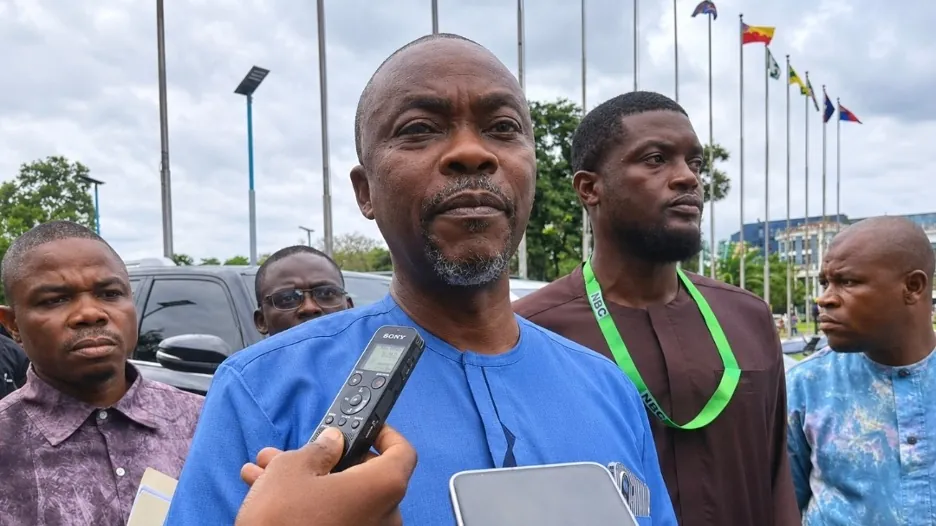
CAPITOL HILL, Monrovia — The head of the agency that monitors Liberia’s concessions says Firestone Liberia’s outsourcing of plantation work may not breach its concession agreement, a position that cuts against lawmakers’ complaints, but he wants workers who were made redundant and brought back through contractors to keep the education, housing and medical benefits their children once received.
Hassan S. Kiazolu, director general of the National Bureau of Concessions, also acknowledged that his agency’s past reviews of concessions were loosely run and promised that a new review of Firestone, planned for next year, would be conducted differently. Its findings will go to President Joseph Nyuma Boakai and the Legislature.
The House of Representatives has stepped up scrutiny of whether Firestone is complying with its concession agreement, particularly provisions on employment, housing, medical care and benefits for workers’ dependents. Lawmakers have questioned whether outsourcing lets the company keep benefiting from concession-related work while avoiding the obligations that come with employing workers directly.
Kiazolu said outsourcing in itself is not necessarily a violation. He pointed to provisions in the agreement that allow Firestone to use measures to increase production, and said contracting out work could fall within that framework if it raises output.
“If they outsource and they’re receiving more, I think it’s part of the technical activities to increase their production,” he said.
He said Firestone told him theft was preventing it from meeting projected production targets and that it introduced outsourcing partly in response. He said production rose by more than 150% afterward. The NBC has not released production data to support the figure.
But Kiazolu said the treatment of outsourced workers is a legitimate grievance. Workers who were made redundant and later returned through contractors, he argued, should not necessarily lose the benefits tied to their former employment, specifically education, housing and medical care for their children.
“That’s the point of contention,” he said.
He said the government should appeal to Firestone to reach common ground on how those workers are treated.
Kiazolu said the NBC did little concession review work in 2026 because the bureau has been undergoing reforms, but that Firestone is now part of its planning.
“For next year, we are in a planning process that includes the Firestone concession review and evaluation,” he said.
The review will use a 2019 assessment as its baseline, but Kiazolu said he does not intend to repeat how earlier reviews were done.
“I don’t want to do the review under my watch like before,” he said. “I deploy people on the field and they go and just bring anything and we resolve it in report.”
Before investigators are deployed this time, he said, NBC staff will conduct a preliminary test review to set out the issues to be examined and the standards they must follow.
The NBC’s record gives that promise weight. A 2026 General Auditing Commission assessment found major weaknesses in the bureau’s historical monitoring of concessions, concluding that it lacked effective monitoring systems and that a Firestone monitoring exercise begun in 2021 never produced a final report.
Kiazolu said any proven breach of the agreement could carry consequences, depending on the findings and policymakers’ decisions. But he cautioned that the government cannot impose obligations the agreement does not contain.
“Agreement are law,” he said.
Any new requirements, he said, would have to be negotiated with Firestone, with the government seeking concrete assurances that Liberians benefit.
He also urged government officials not to put relationships with concessionaires ahead of Liberians’ interests.
“We need to actually listen to the cry of our people most times,” he said. “Not a concession here, because one day they will leave, our people will be here.”
The Firestone dispute comes amid wider questions about whether Liberia’s concessions deliver the economic and social benefits promised to host communities. Earlier this year, the NBC recommended renegotiating the Maryland Oil Palm Plantation and Cavalla Rubber Corporation agreements after compliance assessments found they no longer reflected Liberia’s economic realities.
See more Liberia News Network stories in Google Search by adding LNN as one of your Preferred Sources.
★ Add LNN as a Preferred Source